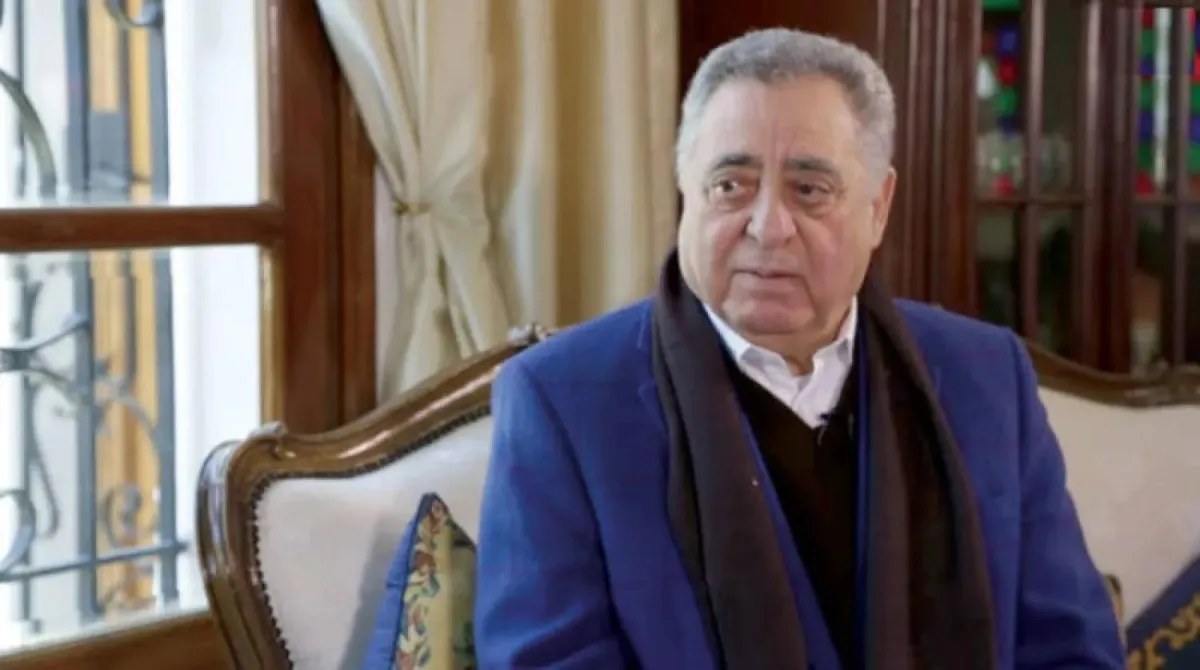
The Court of Appeal in the Moroccan capital, Rabat, issued a second ruling sentencing opposition figure and former minister Mohamed Zian to five years in prison for the charge of "embezzling and squandering public funds." This ruling came after the Court of Cassation annulled a previous three-year sentence, according to his defense team.
Zian, aged 83, served as Minister of Human Rights during the 1990s. He has been a former lawyer for the government in various cases and has been incarcerated since 2022 following a conviction in another case. At the beginning of 2024, a new case was opened against him concerning the embezzlement of public funding he received during the electoral campaign for the Moroccan Liberal Party, which he led in 2015.
Details of the Case
Despite Zian's denial of the charges against him, claiming that his prosecution is politically motivated, authorities assert that the two cases are criminal and unrelated to his political activities. He was initially sentenced to five years in prison in the second case, but the penalty was reduced to three years on appeal last May. However, the Court of Cassation annulled this ruling and returned the case to the Court of Appeal, which issued its final sentence of five years.
His son and lawyer, Ali Reda Zian, confirmed that "the Court of Cassation found the elements of the case unclear," indicating that a new appeal will be submitted to the Court of Cassation. In this context, Zian was previously convicted in a prior case following a complaint from the Ministry of Interior concerning eleven charges, including "insulting judicial officials" and "defamation."
Background & Context
The events of the first case date back to late 2020 when Zian accused a senior security official of fabricating a video showing him naked with one of his clients. The Ministry of Interior responded by announcing that it would prosecute him for attacking state institutions by promoting false accusations. These cases have sparked widespread controversy in political and human rights circles in Morocco, with some viewing them as part of a crackdown against dissenters.
Zian, who has played a prominent role in Moroccan political life, is considered a symbol of opposition. Human rights activists have expressed their support for him, demanding his release and asserting that his prosecution is part of a political vendetta.
Impact & Consequences
These rulings raise questions about the independence of the judiciary in Morocco and the extent to which politics influences justice. They also reflect the current political divide in the country, where cases involving opposition figures are seen as part of a larger struggle between the government and opposition parties.
These developments coincide with rising calls for political reforms in Morocco, as many citizens demand improvements in economic and social conditions, alongside the enhancement of human rights and public freedoms.
Regional Significance
The Zian case exemplifies the challenges faced by Arab countries in the realm of human rights, where governments are under local and international pressure to balance security and stability on one hand, and individual rights on the other. This case may also affect relations between Morocco and Western countries that closely monitor human rights conditions in the region.
In conclusion, the case of Mohamed Zian remains a focal point for observers, as attention turns to how events will unfold in the future and whether they will lead to changes in the Moroccan political landscape.