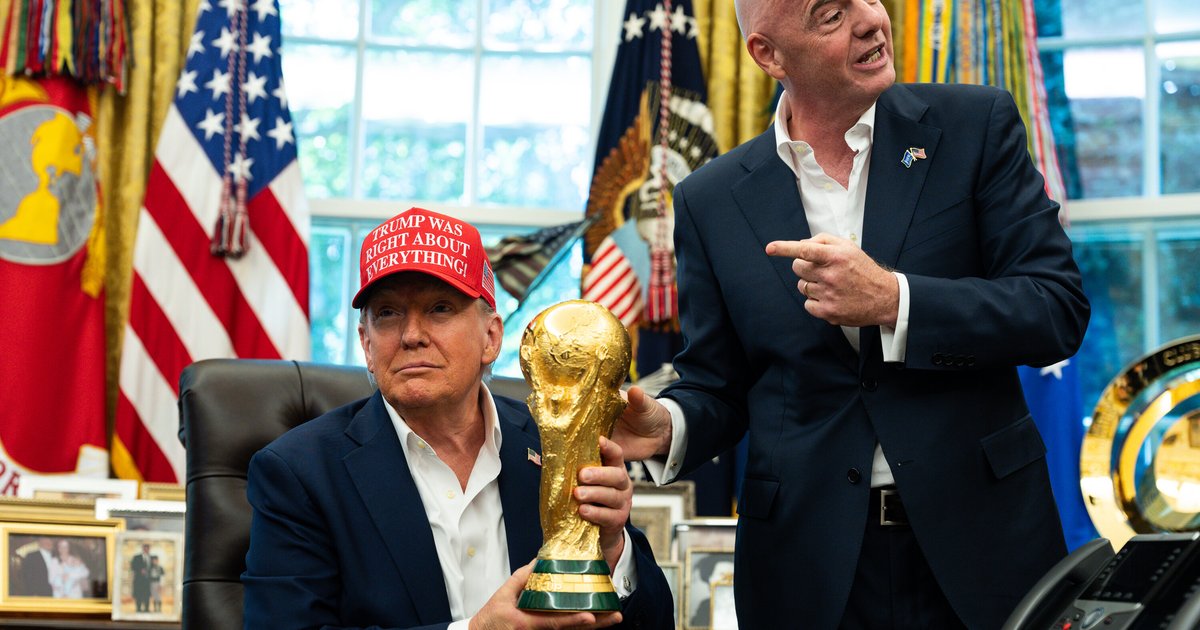
In a move that has sparked widespread controversy, Liz Klaveness, the president of the Norwegian Football Federation, has urged the International Football Federation (FIFA) to abolish the Peace Prize it awards, in order to avoid being drawn into political issues. Klaveness asserted that such awards should be left to the Nobel Institute in Oslo, which has an independent reputation in this field.
During an online press conference, Klaveness stated that the Norwegian Federation does not believe that awarding a Peace Prize falls within FIFA's jurisdiction, noting that the Nobel Institute carries out this task independently. She explained that FIFA and continental federations should strive to avoid any positions that may raise questions about their independence from state leaders.
Details of the Event
These statements come at a time when FIFA is facing severe criticism for awarding the inaugural Peace Prize to former U.S. President Donald Trump last December during the draw ceremony for the 2026 World Cup. Many viewed this award as a consolation prize for Trump, who has long expressed a desire to receive the Nobel Peace Prize.
Klaveness also confirmed that the Norwegian Federation will send a message supporting calls for an investigation into the awarding of the prize, following claims from the non-profit organization FairSquare that Infantino and FIFA may have violated their ethical guidelines.
Background & Context
Historically, FIFA has awarded similar prizes on previous occasions, but the controversy surrounding the Peace Prize highlights the importance of good governance in sports institutions. Given the complex political circumstances many countries are experiencing, it is essential for sports institutions to remain neutral and focus on developing the game rather than getting involved in politics.
The Peace Prize awarded by FIFA to Trump exemplifies how politics and sports can intertwine, raising questions about FIFA's ability to maintain its independence. The negative reactions from numerous national federations indicate an urgent need to reconsider how awards are granted.
Impact & Consequences
These criticisms could affect FIFA's reputation and its ability to attract sponsors and investors, as any political association may lead to a decline in financial support. Additionally, this issue may open the door for further discussion on how FIFA manages governance and transparency matters.
Moreover, such criticisms could lead to changes in FIFA's internal policies, potentially enhancing the institution's independence from political pressures. If FIFA responds to these calls, it could have a positive impact on its public image.
Regional Significance
In the Arab region, this issue may influence how sports federations deal with political matters. As political pressures increase in many countries, it becomes crucial for sports to remain distanced from these tensions, emphasizing the importance of good governance.
This issue may also inspire Arab federations to reassess their policies regarding awards and incentives, contributing to enhanced transparency and credibility in the world of sports.
In conclusion, the Peace Prize awarded by FIFA to Trump serves as an example of the challenges faced by sports institutions in maintaining their independence and neutrality in a world filled with political complexities.