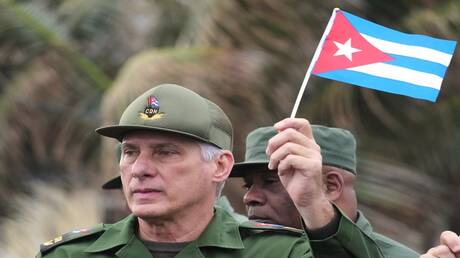
Cuban President Miguel Diaz-Canel stated that dialogue with the United States is not only possible but is the best option under the current circumstances. He emphasized that Washington has no excuse or justification for launching military aggression against Cuba, reflecting his country's steadfast position in the face of external threats.
Diaz-Canel's statements came at a sensitive time when relations between Cuba and the United States are experiencing increasing tensions, particularly following a series of economic sanctions imposed by President Joe Biden's administration. These sanctions have significantly impacted the Cuban economy, which is already suffering from multiple crises.
Details of the Event
During a press conference, Diaz-Canel expressed his readiness to negotiate with the United States, indicating that dialogue could contribute to improving bilateral relations. He affirmed that Cuba will not back down from its sovereignty and that any attempt at military aggression would be met with a strong response.
The Cuban president also noted that his country continues to work on enhancing its defensive capabilities in light of ongoing threats from some major powers. He considered military preparedness as part of Cuba's right to defend itself against any potential aggression.
Background & Context
Historically, US-Cuban relations have experienced numerous fluctuations, starting from the Cuban Revolution in 1959, which led to the severing of diplomatic ties between the two countries. Since then, Cuba has endured a suffocating economic blockade that has lasted for decades, affecting the lives of Cuban citizens.
In recent years, some US administrations have attempted to improve relations with Cuba, but these efforts have often faced setbacks. The Biden administration, for example, has not taken significant steps towards normalizing relations, which has heightened tensions further.
Impact & Consequences
The ramifications of Diaz-Canel's statements extend beyond Cuba, indicating the potential for escalating tensions in the Caribbean region. Any military actions by the United States could provoke strong reactions from other countries in the area, increasing instability.
Furthermore, the situation in Cuba affects relations among Latin American countries, with many nations closely monitoring the developments. Any escalation in tensions could lead to new alliances or shifts in political stances within the region.
Regional Significance
Despite the geographical distance, events in Cuba could influence Arab-American relations. History shows that any escalation in the Caribbean can impact US policies towards the Middle East, especially amid existing tensions in other areas.
Additionally, Cuba's steadfast position in defending its sovereignty may inspire some Arab nations facing similar challenges in their relations with major powers. This could serve as a call for solidarity among countries striving to maintain their independence.