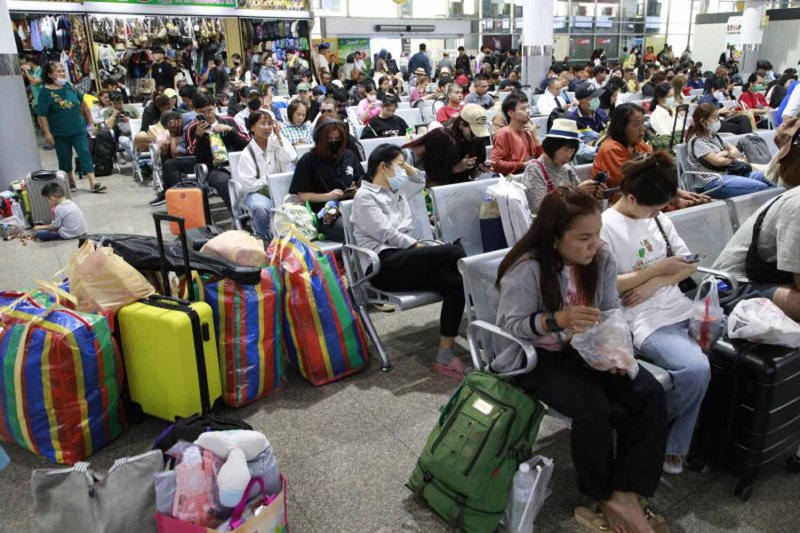
Bus and taxi companies operating between provinces in Thailand have announced that they will be forced to reduce their services starting Thursday if the government does not intervene to compensate for the rising costs resulting from global crises. Representatives from these companies warned of the possibility of suspending some services during their gathering at the headquarters of the ruling Palang Pracharat Party.
Asani Sherdchai, the president of the Thai Bus Operators Association, pointed out that operational costs have risen significantly, with increases ranging from 10,000 to 100,000 baht per day for small fleets, while larger operators face costs rising to 1 million baht daily. He emphasized that this increase makes it difficult for companies to cover expenses, which may force them to halt part of their fleets.
Details of the Announcement
This announcement comes just before the traditional Songkran holiday, a time when demand for transportation services surges dramatically. However, companies are facing significant financial pressure due to the rising prices of diesel, which have increased from less than 30 baht per liter before the global crises to over 50 baht currently. Asani noted that the government imposes restrictions on price hikes, further exacerbating the companies' struggles.
The potential reduction in services could significantly impact transportation during the Songkran holiday, as millions of urban residents are expected to travel to rural areas to celebrate. Deputy Minister of Transport, Siri Bong Ankasakulkiat, met with company representatives, confirming that the ministry will support bus operators' costs during the Songkran holiday until April 19, indicating that a new pricing structure will be introduced afterward.
Background & Context
The transportation sector in Thailand plays a crucial role in meeting the mobility needs of its citizens. With the approach of the Songkran holiday, which is one of the most significant festivals in the country, the demand for public transport typically spikes. However, the current economic climate, characterized by rising fuel prices, poses a serious threat to the sustainability of these services.
Many transport operators have expressed their concerns regarding the government's inability to provide timely support in the face of escalating operational costs. The ongoing global crises, including supply chain disruptions and geopolitical tensions, have made it increasingly challenging for these companies to maintain their service levels without incurring significant losses.
Impact & Consequences
The potential cuts in bus services could lead to severe congestion and mobility issues during the Songkran holiday, as many people rely on public transportation to travel to their hometowns. The anticipated surge in passenger numbers could overwhelm the remaining services, leading to longer wait times and overcrowding.
Moreover, the economic implications of reduced transport services could be far-reaching, affecting local businesses and tourism, which heavily depend on the influx of travelers during this festive period. The transport operators' calls for government support highlight the urgent need for a coordinated response to mitigate the impact of rising fuel prices on public transport.
Regional Significance
In Thailand, public transport services are essential for meeting the mobility needs of the population, and any reduction in these services could significantly affect the movement of citizens and the local economy. The government's response to this crisis will be closely watched, as it could set a precedent for how similar challenges are managed in the future.
As the situation develops, stakeholders in the transport sector are hopeful for a resolution that will allow them to continue providing essential services without compromising their financial viability. The outcome of this issue will not only affect transport operators but also the millions of passengers who depend on these services during one of the busiest travel times of the year.