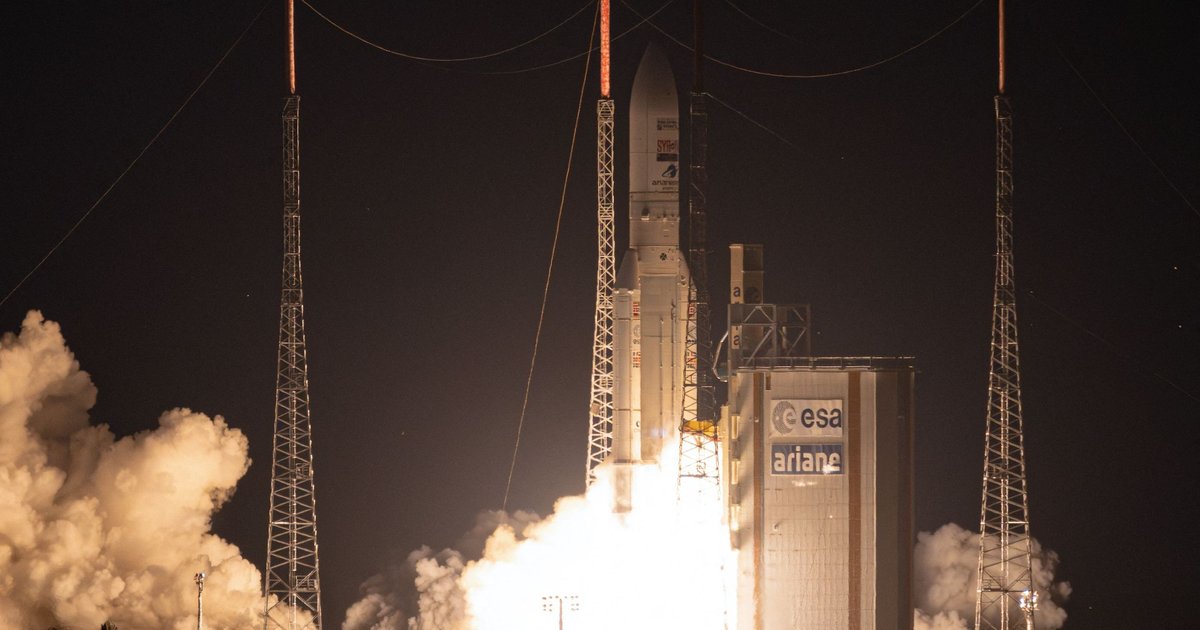
The European Space Agency has announced a delay of at least two weeks for the final space mission of the Ariane 5 rocket. This decision comes at a sensitive time for the agency, as the mission was intended to launch a set of important satellites.
The postponement reflects the challenges faced by the agency under current circumstances and follows a series of delays that have affected European space programs in recent years.
Details of the Event
The Ariane 5 rocket was scheduled to launch from the Kourou Space Center in French Guiana, carrying a payload of satellites that would enhance global communications. However, reports indicate that the agency requires more time to conduct necessary checks on the rocket before launch.
This delay is not the first of its kind, as the agency has experienced previous postponements due to technical issues and scheduling conflicts. Additionally, the delay may impact future launch plans, placing greater pressure on the agency to meet its objectives.
Background & Context
The Ariane 5 rocket is one of the leading rockets in the European space program and has proven its efficiency in many previous missions. However, the technical and financial challenges faced by the European agency have affected its ability to adhere to set timelines.
These developments occur amid increasing competition among global space agencies, each striving to achieve new milestones in space exploration. This competition has influenced the strategies of the European agency, prompting it to reassess its priorities.
Impact & Consequences
The delay of the Ariane 5 mission could impact the reputation of the European Space Agency, as many rely on its ability to execute missions on time. Furthermore, the postponement may affect companies that depend on space launches to provide their services, potentially leading to financial losses.
Moreover, the delay could open opportunities for other space agencies, such as the NASA or the Russian Space Agency (Roscosmos), to strengthen their positions in the market, intensifying competition.
Regional Significance
The Arab region is part of the global space landscape, with many Arab countries striving to develop their space programs. The delay of the Ariane 5 mission may affect cooperation between Arab countries and the European agency, as some nations rely on European technology for their space projects.
Additionally, the delay may raise questions about the ability of Arab countries to achieve their space objectives amid global challenges, necessitating enhanced regional and international cooperation in this field.
In conclusion, the postponement of the Ariane 5 mission serves as a wake-up call for the European Space Agency, which must address current challenges to ensure the success of its future missions.