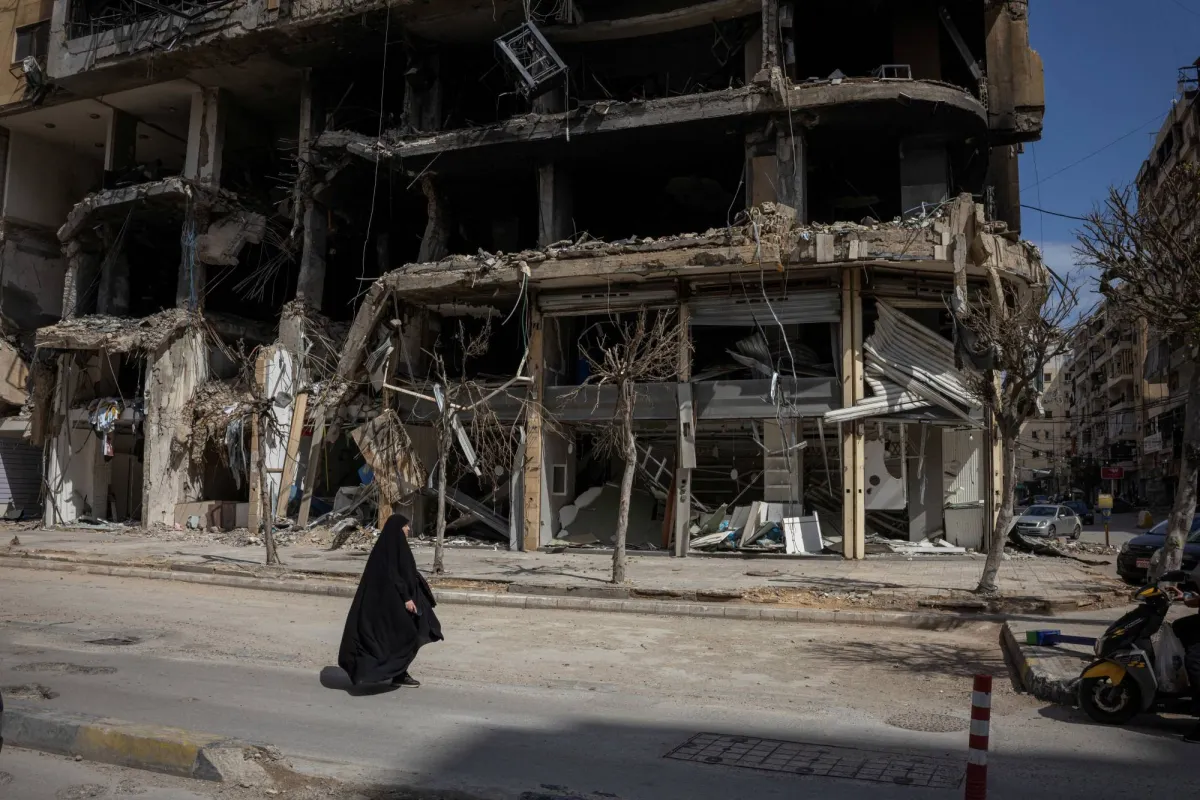
The suffering of Lebanese citizens in the south and the southern suburbs of Beirut continues due to the Israeli war, with many losing their homes and lives since the escalation began in October 2023. Jihad Sarour, one of the victims, shares his painful story.
From Aita al-Shaab in the far south of Lebanon to the Hadath and Hayy al-Salam in the southern suburbs of Beirut, the losses of Lebanese citizen Jihad Sarour (67 years old) are a result of the Israeli war that began on October 8, 2023, following Hezbollah's decision to support Gaza from Lebanon. Sarour states, "I lost most of what I own due to the repeated wars that have affected the south and Beirut." He explains, "I owned three houses; one in Aita al-Shaab that was destroyed in the last war, another in Hadath that was demolished about a month ago during the latest round of fighting, and an apartment in Hayy al-Salam in the southern suburbs of Beirut that was damaged on the Wednesday that witnessed heavy shelling on Beirut and the suburbs."
Details of the Incident
Jihad does not list his possessions as much as he documents their collapse: "Today, I practically have only a simple roof and a car," he says, before adding a sentence that encapsulates the experience: "The loss is no longer a single event, but represents a continuous path that renews with every round of shelling and escalation." The irony is that the man who spent 33 years in the United States and returned to Lebanon 15 years ago is facing what he has not experienced anywhere else. He states, "This experience is harsh and new to me; I have never encountered this level of destruction, war, and displacement, nor this feeling of losing stability completely."
Jihad is one of dozens of Lebanese who have lost their properties in various locations due to the war. Residents of the border area in the south, who own homes in Beirut or its southern suburbs, often reside there during the school season, enabling their children to receive university education while they work in the city during this period, and move to their villages in the south for summer vacations. Given the simultaneous shelling in the south and the suburbs, some have lost their livelihoods in both places.
Background & Context
The shelling has forced residents to choose a safe place in the capital or its eastern suburbs or Mount Lebanon. Sarour states, "Today, we reside in a house owned by my wife in Beirut, after I lost my homes, and we also have relatives from displaced families from the south and the suburbs," noting that the number of residents in the apartment "approaches 35 people living in the same house, ranging in age from one to 75 years." In this sense, the home is no longer a private space but a collective shelter, as he describes: "Living this way summarizes the scale of the crisis, where homes turn into collective shelters, in the absence of any clear horizon for a solution or return."
When asked about the future, he does not respond with expectations but with a state: "Honestly, we cannot plan for anything; we live day by day," adding, "A person becomes as if in a state of anesthesia, not thinking about the future; because reality imposes itself with all its weight." In the border town of Aitaroun, destruction does not end with the cessation of shelling. There, another chapter of the story begins. Hassan states, "What the town is experiencing today is not a passing incident, but a new link in a long chain of assaults, but this time at a more intense pace and greater scope."
Impact & Consequences
This time, the difference, as he sees it, is not just in intensity but in method: "Destruction was not limited to airstrikes during military operations, but continued after the ceasefire through the systematic bulldozing of homes using bulldozers." Hassan recalls the 2006 war by saying, "The house I lived in was bombed and severely damaged; back then, we did not just lose stones, but we lost much more than that." He pauses for a moment and then adds, "I lost my entire library, along with years of memories, papers, and books that cannot be replaced. This loss cannot be measured materially."
Today, the same fear returns, but more intensely; he adds, "It is no longer just a passing bombardment, but the possibility of losing the entire home due to bulldozing, which means repeating the same experience, but permanently this time." The loss does not stop with him personally; he says, "Three of my brothers lost their homes entirely during the support war," adding, "The loss is no longer individual, but has extended to the entire family."
Regional Significance
The conclusion, according to Hassan, is harsh and clear: "What is happening today seems like a redrawing of the town in all its aspects. We are not just losing homes, but losing an entire history." In Bint Jbeil, the story takes on another dimension; a house that began to be destroyed nearly half a century ago has not escaped the threat even today. Nader Saad states, "The story of our house is not a single incident, but a series of consecutive wars, each one taking something from what remained."
He returns to the beginning: "In 1977, the nearby (Shalaboun) site was bombed, and our house was like an extension of it; it had a library, and fighters would come there to rest or shower." Then comes the pivotal moment, revealing: "In 1978, Israeli forces entered. They asked my grandmother to leave, then blew up the house completely. That was the first time." But the striking thing is that destruction was not the end, but the beginning of a longer path; he adds, "In 1984, my father began rebuilding, and in 1985, he completed the foundations and some columns, living in a tent next to what he built."
The house remained that way for many years; columns without rooms, and walls without life: "It remained as it was until 2000, when we returned and began rebuilding gradually, without any real ability to finish it." Even when it survived complete destruction, it remained fragile before every round. He states, "In the 2006 war, the house was damaged by shrapnel, and our car was destroyed, but it was not completely demolished." He adds, "As for the 2024 war, a house very close was bombed, and the explosion was so strong that it removed the doors and windows from our house." Then comes the most painfully ironic twist: "Today, through satellite images, we see tanks positioned around the house, but we do not know if it has been completely destroyed or not."
He concludes with a sentence that summarizes half a century: "This house, which was first destroyed in 1978 and has not been completed to this day, every war brings it back to square one, as if time has stopped at the first demolition!"