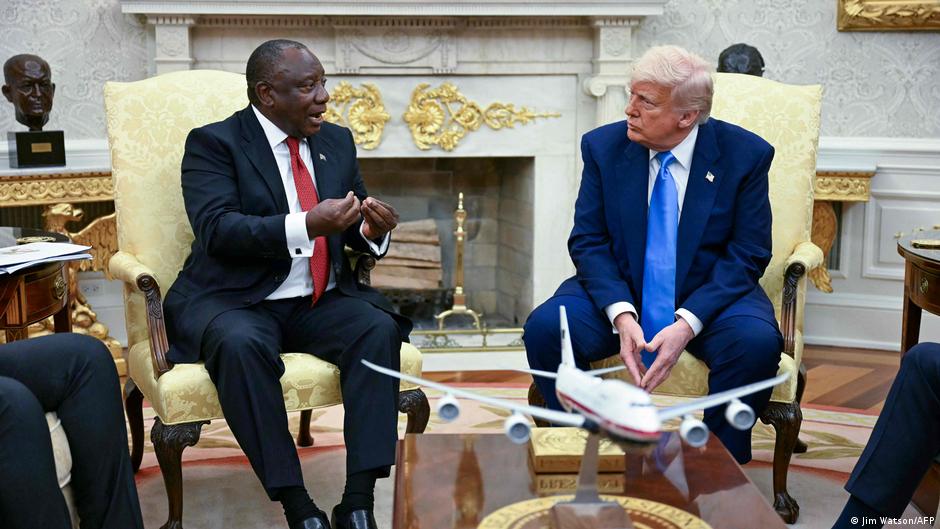
Relations between the United States and South Africa have significantly deteriorated since President Donald Trump resumed office in 2025. Trump has accused the Ramaphosa government of committing human rights violations, leading to escalating tensions between the two countries. At a conference for the African National Congress, Ramaphosa criticized "global right-wing forces," a clear reference to Trump, reflecting the depth of disagreements between the two parties.
The roots of this tension go back several years, as relations began to deteriorate long before Trump returned to the White House. According to analyst Daniel Silk, South Africa has shifted its foreign policy orientation away from the United States and the West, moving towards the BRICS nations, a group of emerging economies aimed at balancing the Western G7.
Details of the Event
In recent years, the Ramaphosa government has worked to strengthen its relationships with BRICS countries, including Russia and China. This shift has raised concerns in the United States, which views it as a threat to its economic dominance. Trump also boycotted the G20 summit hosted by South Africa, further deepening the rift between the two nations.
Trump, who promotes the idea of a "genocide" against the white minority in South Africa, has provided no evidence to support his claims, prompting the Ramaphosa government to categorically reject these accusations. At the same time, the United States has begun granting asylum to white South Africans, exacerbating tensions.
Background & Context
Historically, relations between the United States and South Africa have been complex. The 1980s witnessed international pressure on the apartheid regime, yet former President Ronald Reagan was not interested in imposing comprehensive sanctions against the system. This dynamic changed after the end of apartheid in 1994, when the United States became an important trading partner for South Africa.
However, the ideological shift to the right in the United States, especially under the Trump administration, has placed the country on a collision course with the African National Congress government, which continues to question Washington's intentions.
Impact & Consequences
The implications of this tension extend beyond bilateral relations, as it could affect regional stability in Africa. South Africa plays a pivotal role in African politics, and any deterioration in its relations with major powers like the United States may impact development and security efforts in the region.
Moreover, the new alliances South Africa is seeking to form with BRICS countries could lead to a reshaping of the global order, threatening American dominance in global markets. Additionally, ongoing U.S. support for Israel in the Palestinian conflict may complicate relations further, especially after South Africa accused Israel of committing crimes against humanity.
Regional Significance
The Arab region is also affected by the developments in U.S.-South Africa relations. South Africa's new orientations towards Iran and BRICS countries may bolster these nations' positions in the face of American pressures. Furthermore, Arab support for Palestinian rights may resonate more strongly in light of the deteriorating relations between Washington and its traditional allies.
In conclusion, it appears that relations between the United States and South Africa will remain tense as long as Trump remains in power, which could impact international politics in the coming years.