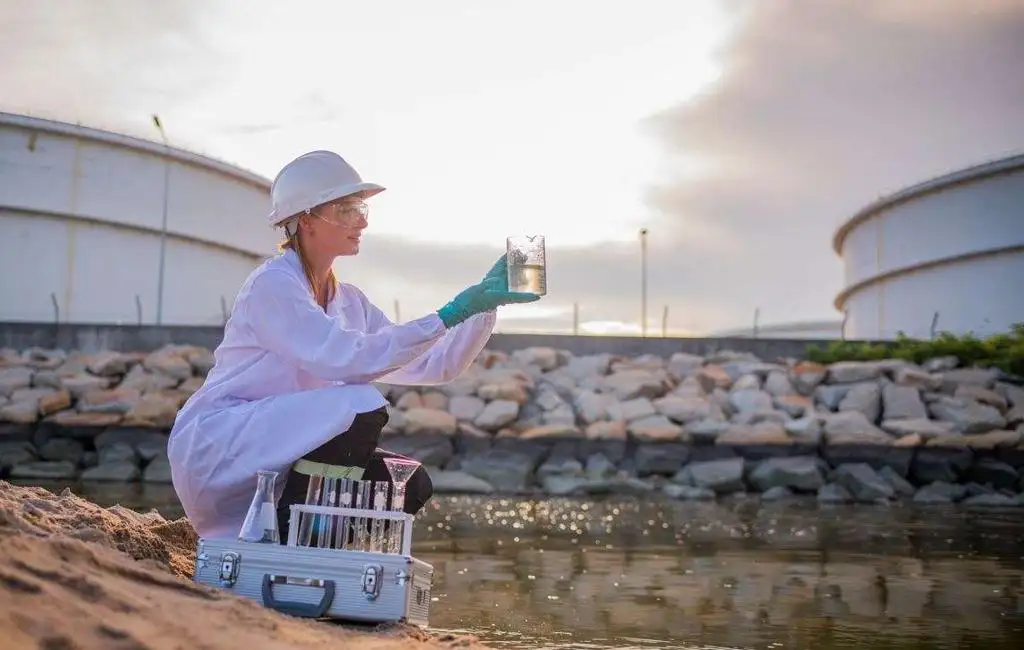
In an innovative step aimed at addressing the problem of water pollution by heavy metals, researchers from the Indonesian Nuclear Technology Institute (Poltek Nuklir) under the National Research and Innovation Agency (BRIN) announced the development of a new technology that relies on the use of modified activated carbon. This technology specifically targets the removal of copper (Cu²⁺) from contaminated water, reflecting Indonesia's commitment to improving water quality and protecting the environment.
Dr. Zita Aryanti, the head of the research team, explained that these innovations represent a practical solution to the problem of treating contaminated water. She noted that modified activated carbon has demonstrated a high capacity for absorbing heavy metals more quickly and efficiently compared to traditional activated carbon. Positive results have been achieved in record time, enhancing the potential for applying this technology in treating polluted water.
Details of the Development
The process of developing this technology involves the use of gamma rays to modify activated carbon, improving its surface structure and increasing its capacity to absorb heavy metals. Activated carbon has been combined with Methyl Ester Sulfonate (MES), which is considered an environmentally friendly alternative to traditional chemicals. Research has confirmed that using this compound contributes to enhancing the effectiveness of activated carbon in absorbing copper.
Experiments have shown that modified activated carbon can effectively absorb copper within a time frame of no more than 15 minutes, using a gamma ray dose of 10 kilogray, reflecting the efficiency of this new method.
Background & Context
The issue of water pollution by heavy metals is one of the pressing environmental challenges in many countries, including Indonesia. These metals adversely affect human health and the environment as a whole. Industrial and mining activities have increased pollution levels, necessitating the development of effective technologies for treating contaminated water.
Historically, water treatment technologies have relied on traditional methods that may be ineffective or costly. However, innovations like those developed in Indonesia represent an important step toward achieving sustainable solutions. The use of nuclear technology in water treatment reflects the potential to leverage modern science in the fields of environmental protection and public health.
Impact & Consequences
This advancement in water treatment technology marks a significant step toward improving water quality in Indonesia and may have positive impacts on public health and the environment. By reducing pollution levels, this technology can contribute to enhancing the quality of life for local populations.
Furthermore, these innovations could open new avenues for international cooperation in research and development, as other countries may benefit from this experience and apply it in similar contexts. This technology may also contribute to strengthening the local economy by providing effective solutions for industries facing water pollution issues.
Regional Significance
Many Arab countries face similar challenges regarding water pollution, especially in industrial areas. The Indonesian innovations could serve as a model for the region, where modern water treatment technologies can be adopted to improve water quality and reduce health risks.
Given the increasing environmental challenges, it is essential for Arab countries to adopt innovative and sustainable solutions to address water pollution issues. Cooperation among Arab nations in research and development can contribute to achieving sustainable development goals.