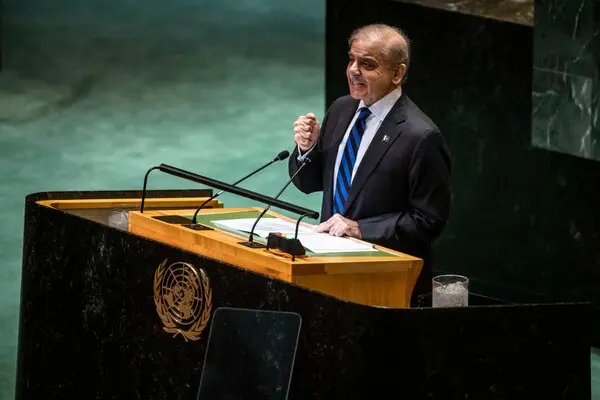
Pakistan is preparing to host the foreign ministers of Saudi Arabia, Turkey, and Egypt in the capital, Islamabad, where talks will begin on Sunday as part of the country's efforts to seek a diplomatic solution to the escalating crisis in the Middle East. This step comes at a sensitive time as Pakistan aims to enhance its role as a mediator in the region.
Saudi Foreign Minister Prince Faisal bin Farhan Al Saud, Turkish Foreign Minister Hakan Fidan, and Egyptian Foreign Minister Badr Abdel Atti will hold in-depth discussions on regional tensions over the two days. They are also scheduled to meet with Pakistani Prime Minister Shehbaz Sharif to discuss ways to enhance regional cooperation.
Event Details
These talks come at a time when Pakistan is facing a severe energy crisis, highlighting the importance of seeking diplomatic solutions to regional crises. Recently, Pakistan has intensified its efforts to communicate with the United States and Iran, with Pakistani leaders sending messages between the two parties in an attempt to ease tensions.
In a related context, Prime Minister Shehbaz Sharif had a phone conversation with Iranian President Masoud Pezeshkin, where Sharif condemned the ongoing Israeli attacks on Iran, including recent strikes on civilian infrastructure. Sharif also briefed Pezeshkin on Pakistan's efforts to communicate with Washington and Gulf states to facilitate dialogue and reduce tensions.
Background & Context
Historically, Pakistan has played a pivotal role in regional politics, especially in the relations between Iran and Saudi Arabia. Pakistan shares a border of approximately 900 kilometers with Iran, making it directly concerned with any disturbances that may arise in the region. Additionally, Pakistan hosts one of the largest Shia communities outside Iran, complicating the political landscape further.
Moreover, Pakistan faces internal challenges, including the ongoing conflict with Afghanistan, where air operations have resulted in the deaths of many civilians. These conditions make it essential for the Pakistani government to adopt a balanced policy towards all parties involved.
Impact & Consequences
If the conflicts in the region continue, they could exacerbate sectarian tensions, threatening stability in Pakistan. The ongoing conflict may also negatively impact energy supplies, increasing economic pressures on the country. Analysts believe that Pakistan is seeking through these talks to avoid being drawn into a wider conflict, as Farhan Hanif Siddiqui, a professor of international relations, emphasized that Pakistan aims to promote dialogue and communication.
Concerns are growing that the ongoing conflict could worsen the economic situation in Pakistan, which is already suffering from multiple crises. Therefore, the success of these talks could have significant implications for the stability of the entire region.
Regional Significance
These developments come at a sensitive time for the Arab region, where Arab countries are striving for stability amid increasing tensions. Pakistan's success in mediation could contribute to improving relations between Arab states and Iran, potentially leading to a reduction in regional tensions.
In conclusion, these talks represent an important opportunity for Pakistan to enhance its role as a regional mediator, and they may have far-reaching effects on stability in the Middle East. The success of these efforts could open new avenues for cooperation between Arab states and Iran, contributing to achieving peace and stability in the region.