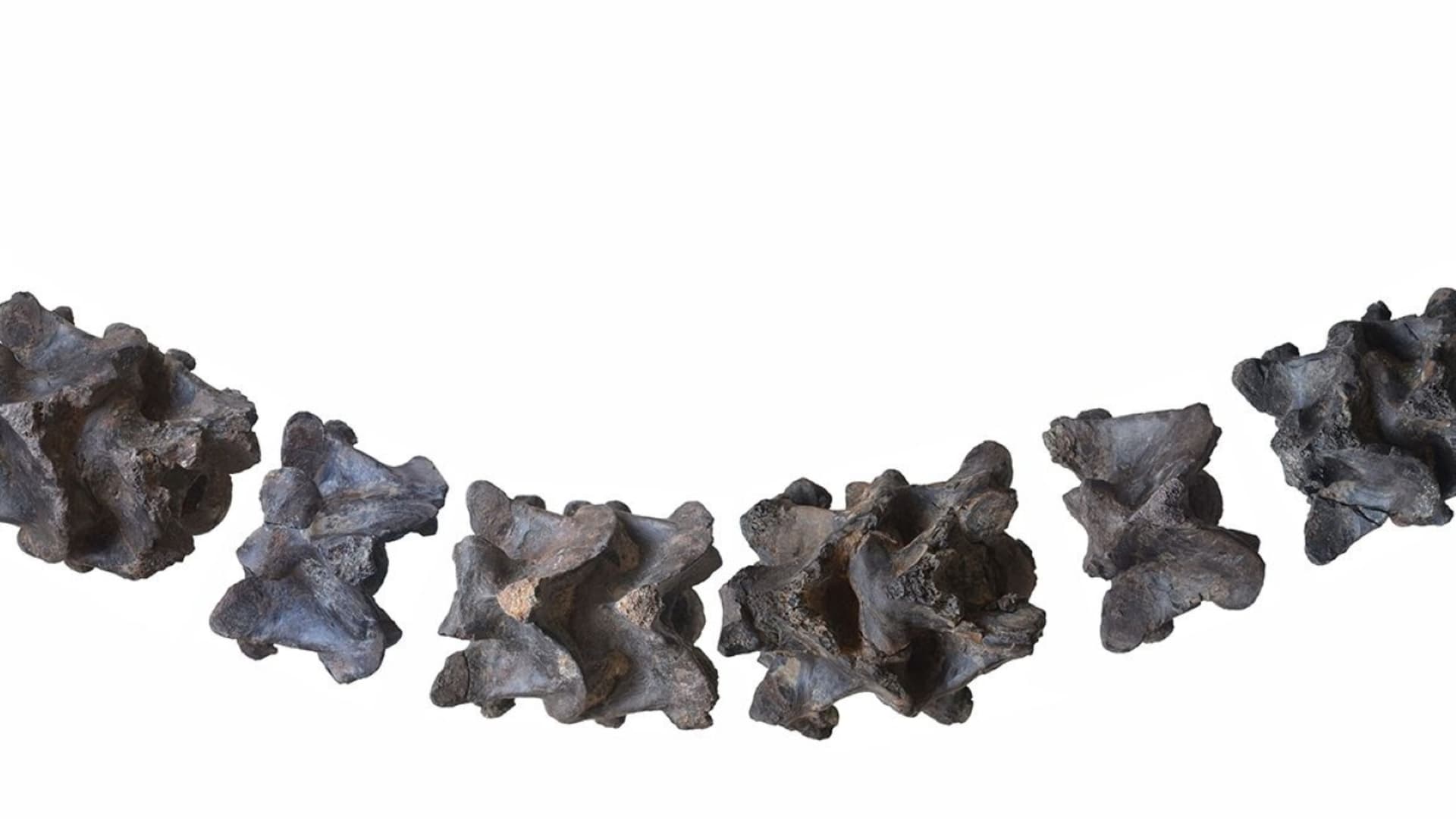
An international team of researchers, led by scientists from Egypt, has revealed fossils of an ancient species of monkey that lived around 18 million years ago during the Miocene epoch, marking the first discovery of its kind that confirms the presence of these creatures in North Africa.
The Miocene epoch is a significant geological period that lasted from about 23 to 5.3 million years ago, characterized by major climatic and environmental transformations. During this time, the Egyptian environment resembled a green paradise, filled with giant trees, diverse plants, rivers, and swamps.
Details of the Discovery
This monkey has been named Masripithecus moghraensis. Shorouk Al-Ashqar, a researcher at the Mansoura University Center for Vertebrate Paleontology and the lead author of the study, explained that the name reflects the Egyptian identity of the discovery. The genus name "Masripithecus" is derived from the word "Egypt," referring to the country of discovery, while the species name "moghraensis" refers to Wadi Al-Moghra, the site where the fossils were found.
Shorouk stated in an interview with Al Jazeera that this discovery "provides scientists with a new window to understand the early beginnings of higher primates," a group that today includes creatures such as orangutans, gorillas, and chimpanzees. She emphasized that this discovery represents a pivotal moment in the history of research on higher primates, whose origins remain a subject of ongoing scientific debate.
Background & Context
The research team began its project in 2021, facing initial challenges and not finding much evidence. However, after arduous efforts, parts of the jaw and incisors were discovered, leading to what has been described as a "scientific treasure." Shorouk expressed her excitement when transporting the samples to Mansoura University for necessary examinations.
The fossils of Masripithecus exhibit unique anatomical features that reveal a strong chewing apparatus and a flexible diet primarily based on fruits, indicating an early ability to adapt to changing environments. This trait is fundamental to the success of higher primates in spreading across the globe.
Impact & Consequences
Hesham Salam, an Egyptian paleontologist and the leader of the research team, stated that the team spent over five years searching for higher primate fossils in the Al-Moghra area, with the challenge being to locate them. These efforts have resulted in a significant discovery that opens new horizons for scientific research.
Eric Severt, a paleontologist at the University of Southern California, noted that the research was based on unprecedented analysis involving around 60,000 genetic bases, which helped build an accurate phylogenetic tree and precisely locate the fossil.
Regional Significance
The study was published in the journal Science, marking a notable achievement for Egyptian scientific research. Science is one of the most prestigious and influential scientific journals, with an acceptance rate of less than 6% for submitted research. This achievement is not only individual but reflects the capacity of the research environment in Egypt to produce globally competitive knowledge, despite the challenges facing scientific research in the region.
In conclusion, this discovery represents an important step in understanding the history of higher primates and enhances Egypt's status as a center for scientific research in the field of paleontology.