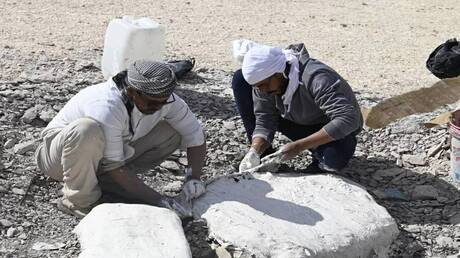
The New Valley University in Egypt has announced an unprecedented scientific discovery, documenting the remains of the first giant leatherback sea turtle from the Cretaceous period, approximately 66 million years ago. This discovery represents a significant achievement in the field of paleobiology and reflects the ongoing efforts of researchers in Egypt to explore the history of life on Earth.
Sea turtles are a crucial part of the marine ecosystem, having lived in oceans for millions of years. The new discovery highlights the diversity of marine life in ancient times and enhances our understanding of the evolution of marine organisms.
Details of the Discovery
The remains of this giant turtle were found in the New Valley region, where a team of scientists and researchers studied and analyzed the discovered bones. Estimates suggest that this turtle lived in a rich marine environment, reflecting the biological diversity that existed during that period.
It is believed that this turtle was one of the largest marine creatures that lived during that era, making it a point of interest for scientists seeking to understand how organisms adapted to their various environments. This discovery adds to a collection of archaeological finds in Egypt that shed light on the natural history of the region.
Background & Context
Historically, Egypt has been a center for numerous archaeological discoveries dating back to prehistoric times. Recent findings in the New Valley reflect the importance of the region as a site rich in natural history. The Cretaceous period, which spanned from about 145 to 66 million years ago, witnessed significant diversity in both marine and terrestrial life, including dinosaurs and sea turtles.
Sea turtles are among the oldest living creatures on Earth, with a history dating back over 200 million years. This new discovery underscores the importance of studying these organisms to understand how they have evolved over time and how environmental changes have impacted their lives.
Impact & Consequences
Scientific discoveries like this open new horizons for research and study in the fields of paleobiology and geology. They also enhance Egypt's status as a scientific hub in the region, attracting researchers and scientists from around the world. Such discoveries can also contribute to boosting scientific tourism in Egypt, allowing visitors to explore archaeological sites and learn about the history of marine life.
Furthermore, understanding the evolution of marine organisms can aid in the protection of contemporary sea turtle species that face numerous threats, including climate change and pollution. This discovery highlights the importance of preserving biodiversity and marine life in the modern era.
Regional Significance
This discovery represents an important step in enhancing scientific understanding of natural history in the Arab region. It also reflects ongoing efforts to preserve Egypt's natural and cultural heritage. By promoting scientific research, other Arab countries can benefit from these discoveries to develop educational and research programs that enhance public understanding of natural history.
Ultimately, this discovery presents an opportunity to strengthen cooperation among Arab countries in the fields of scientific research and natural heritage conservation. It also opens the door for further discoveries that could contribute to our understanding of the environmental and cultural history of the region.