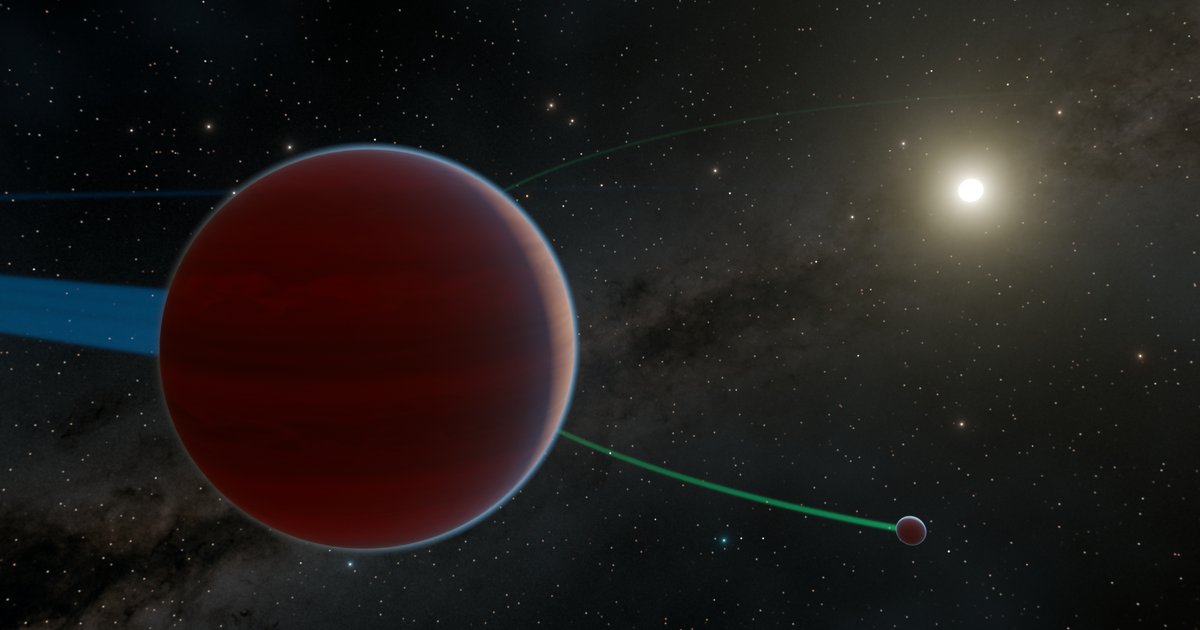
In a significant scientific achievement, astronomers have announced the discovery of a rare planetary system orbiting the star TOI-201. Researchers can now observe changes in the orbits in real-time. This discovery marks an important step in studying planetary systems and their formation, reflecting technological advancements in the field of astronomy.
The star TOI-201 is located approximately 150 light-years from Earth and is among the stars observed by NASA's TESS (Transiting Exoplanet Survey Satellite). This planetary system contains several planets, and data has shown that the orbits of these planets change significantly, providing scientists with an unprecedented opportunity to study planetary dynamics.
Details of the Discovery
This discovery is notable for its ability to provide precise information on how planets interact with each other and their star. By employing advanced observation and analysis techniques, scientists have been able to measure changes in the orbits with high accuracy, showcasing the significant progress in modern astronomical tools.
The findings are crucial for understanding how planetary systems form and evolve over time. They also pave the way for future studies on the potential for life on similar planets in other systems.
Background & Context
Historically, the study of planetary systems relied on traditional observation methods. However, with technological advancements, new techniques such as infrared observation and big data analysis have become available. This discovery comes at a time when astronomers are increasingly interested in searching for exoplanets.
The star TOI-201 is part of a group of stars identified as primary targets for study, representing an opportunity to understand how planetary systems form in different environments.
Impact & Consequences
This discovery could change our understanding of how planetary systems form, as it may help explain how environmental factors influence planet formation. Additionally, observing real-time changes in orbits can contribute to the development of more accurate models of planetary dynamics.
Furthermore, this research can enhance international collaboration among scientists and researchers in the field of astronomy, leading to the exchange of knowledge and expertise in this advanced area.
Regional Significance
For the Arab region, this discovery represents an opportunity to boost interest in astronomical and space sciences. This achievement could encourage universities and research centers in Arab countries to invest in astronomy and space programs, contributing to the development of scientific expertise in this field.
Moreover, this discovery could open new avenues for collaboration between Arab countries and developed nations in astronomical research, enhancing the region's standing in the global scientific arena.