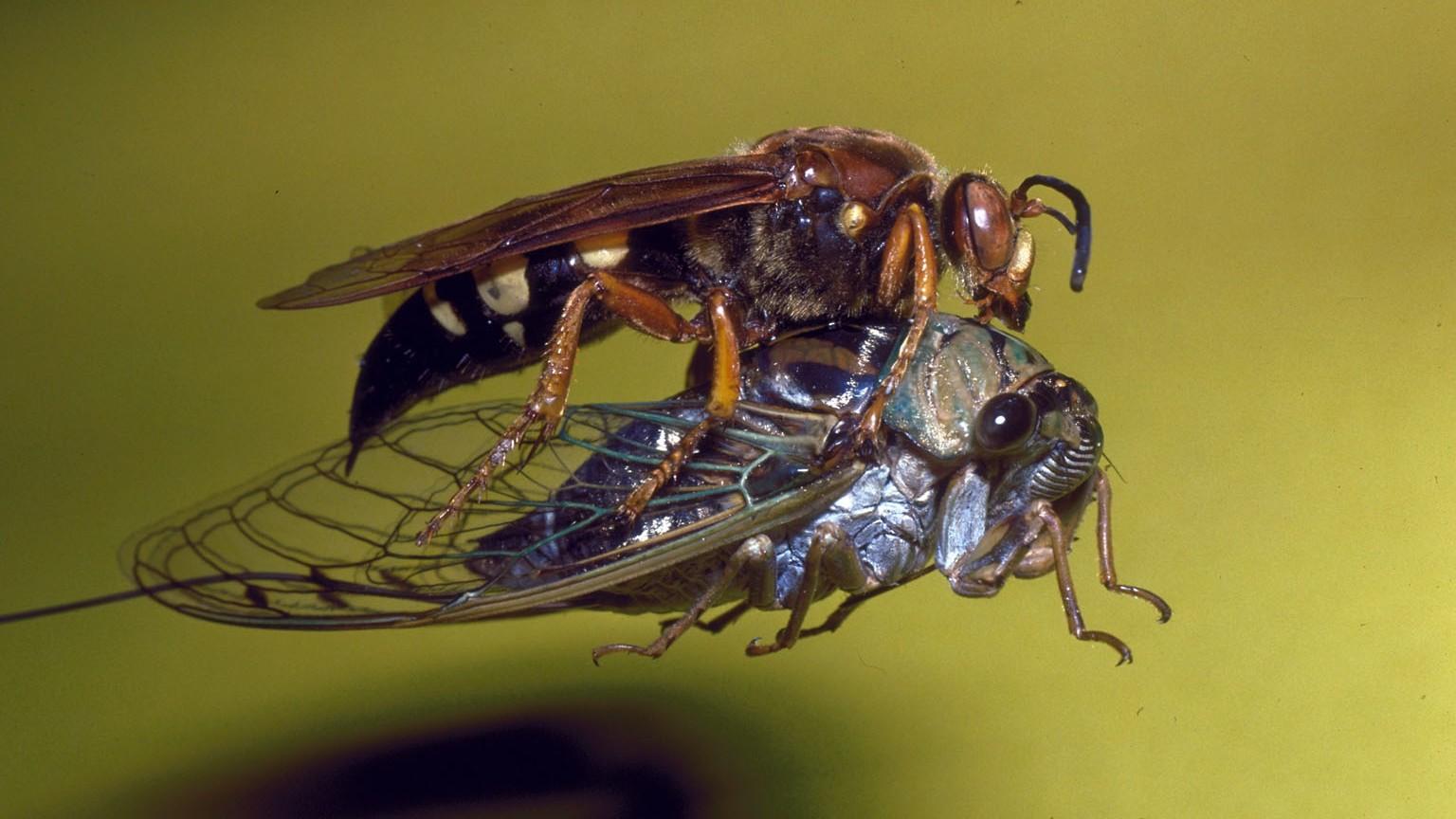
A recent international study has uncovered that a mutualistic relationship lasting over 10 million years between tropical plants and their resident ants in the forests of Malaysian Borneo is beginning to face unexpected disruption. Scientists have observed predatory wasps taking control of the internal structures of plants that are used to house ant colonies.
The study, published in the journal PeerJ, was conducted by an international team from Queen Mary University of London, the Royal Botanic Gardens, Kew, and the Czech Academy of Sciences, among other research institutions. The research focused on a tropical plant known as Macaranga peltata, one of the 'ant plants' that have developed cavities within their stems over millions of years to provide shelter for ants, in exchange for the ants protecting the plant from herbivorous insects like larvae.
Details of the Discovery
However, the study reveals that this delicate system is beginning to show clear signs of disruption, as researchers noted that a type of predatory wasp has started to exploit these plant cavities for its own benefit, becoming a 'new invader' of these vital structures. During the examination of young plant stems in partially cleared forest areas and oil palm plantations, researchers found that the wasps immobilize flies and store them inside the plant cavities to feed their larvae, a behavior that turns the plant into what resembles a 'food store' for the wasps instead of the ants.
The researchers pointed out that plants located in oil palm plantation areas were much more susceptible to hosting these wasps compared to those found in less disturbed forests. It was also observed that the plants dominated by wasps contained significantly smaller ant colonies, indicating a potential displacement of ants from their natural habitats.
Background & Context
Scientists speculate that human-induced changes in natural habitats play a significant role in this transformation, whether through deforestation or conversion to agricultural land, creating unstable environments that allow this new behavior to proliferate. It remains unclear whether these wasps are a native species or an invasive one in the ecosystem.
Dr. Kalsum Yousa, a co-author of the study, warns that this change could affect the plant's ability to recover in degraded areas. The loss of its 'natural protection' from ants may weaken its resistance to pests and impact forest regeneration.
Impact & Consequences
Dr. Tom Wylie, a co-researcher in the study, emphasizes that these findings reveal a deeper aspect of human impact on ecosystems. The effect is not limited to species loss but extends to the dismantling of intricate relationships between living organisms, which could lead to long-term shifts in the structure and ecological balance of tropical forests.
This type of research highlights the importance of preserving biodiversity, as any change in mutualistic relationships can lead to unforeseen consequences for the ecosystem as a whole.
Regional Significance
Although this event is occurring in the forests of Borneo, the effects of environmental changes may extend to other regions, including the Arab world. Climate change and biodiversity loss are global issues affecting all ecosystems.
In the Arab region, ecosystems may be under pressure from human activities, necessitating urgent action to protect biodiversity and maintain mutualistic relationships among living organisms.
In conclusion, understanding the impact of human activities on ecosystems is vital for environmental conservation. We must be aware of the changes occurring in nature and strive to protect biodiversity to ensure the sustainability of life on our planet.