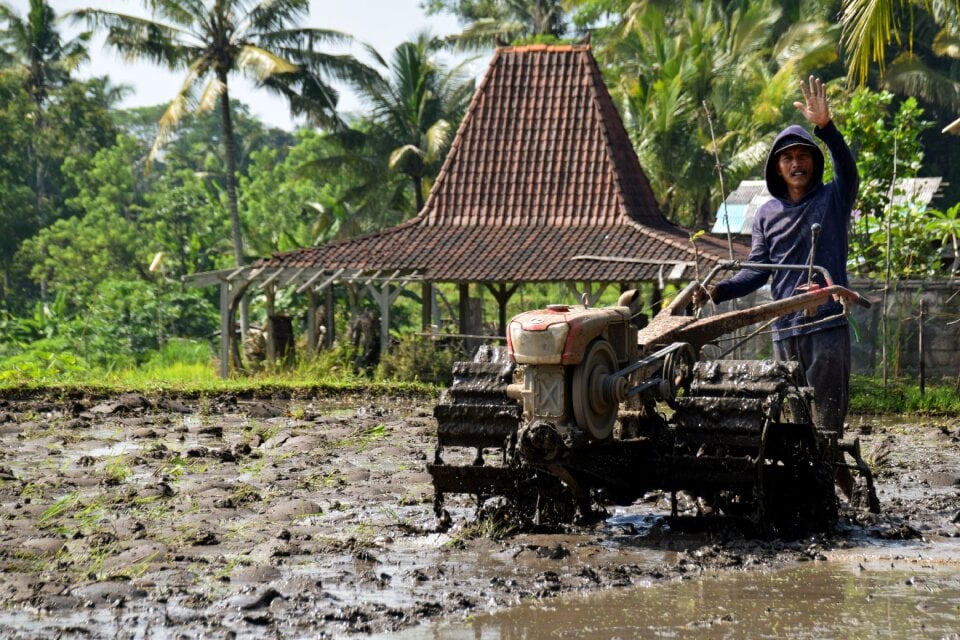
Indonesia has achieved a major milestone in sustainable agriculture through its saline rice cultivation program in the Jibara region, producing 176 tons of rice on 22 hectares. This program is part of a collaboration between the national gas company, the National Research and Innovation Agency, and the Jibara government, aiming to tackle the challenges faced by agriculture in coastal areas.
Saline rice is an innovative type of rice developed to adapt to harsh environmental conditions, such as increased soil salinity due to seawater intrusion and climate changes. Professor Arif Satriya, head of the National Research and Innovation Agency, stated that this type of rice can yield approximately 9 tons per hectare, making it an ideal choice for farmers in affected areas.
Event Details
The program has exceeded its initial targets, as only 20 hectares were expected to be planted. Results showed that productivity ranged between 7 to 9 tons per hectare, reflecting a significant success in achieving the program's goals. Economically, these crops are estimated to have generated a value of up to 1.23 billion Indonesian rupiah, based on market rice prices.
This initiative is a crucial step towards enhancing food security in Indonesia, where farmers are facing increasing challenges due to climate change. Christian Widagdo Adi, head of the corporate social responsibility department at the national gas company, emphasized the program's importance in enhancing farmers' capabilities and improving their livelihoods.
Background & Context
Historically, Indonesia has faced numerous agricultural issues due to climate change, negatively impacting agricultural production. With the increasing phenomenon of global warming, it has become essential to develop new agricultural methods that can adapt to these challenges. Research has shown that cultivating saline rice can be an effective solution to address these issues.
Indonesia aims to achieve food self-sufficiency, especially amid fluctuating global economic conditions. Therefore, developing new crop varieties like saline rice represents a strategic step towards achieving this goal.
Impact & Consequences
The results of this program serve as a model for other regions in Indonesia facing similar challenges. The success of saline rice cultivation can encourage more farmers to adopt new techniques, thus enhancing agricultural productivity and reducing reliance on traditional methods.
Furthermore, this program can contribute to improving farmers' economic status by providing them with new opportunities for sustainable income. The collaboration between the public and private sectors in this project reflects the importance of partnerships in achieving sustainable development.
Regional Significance
Many Arab countries face similar agricultural challenges, particularly in coastal areas affected by rising sea levels. Adopting innovative agricultural techniques such as saline rice could have a positive impact on food security in the region.
Arab nations can benefit from Indonesia's experiences in developing new crop varieties that adapt to harsh environmental conditions, thereby enhancing their capacity to confront climate challenges.