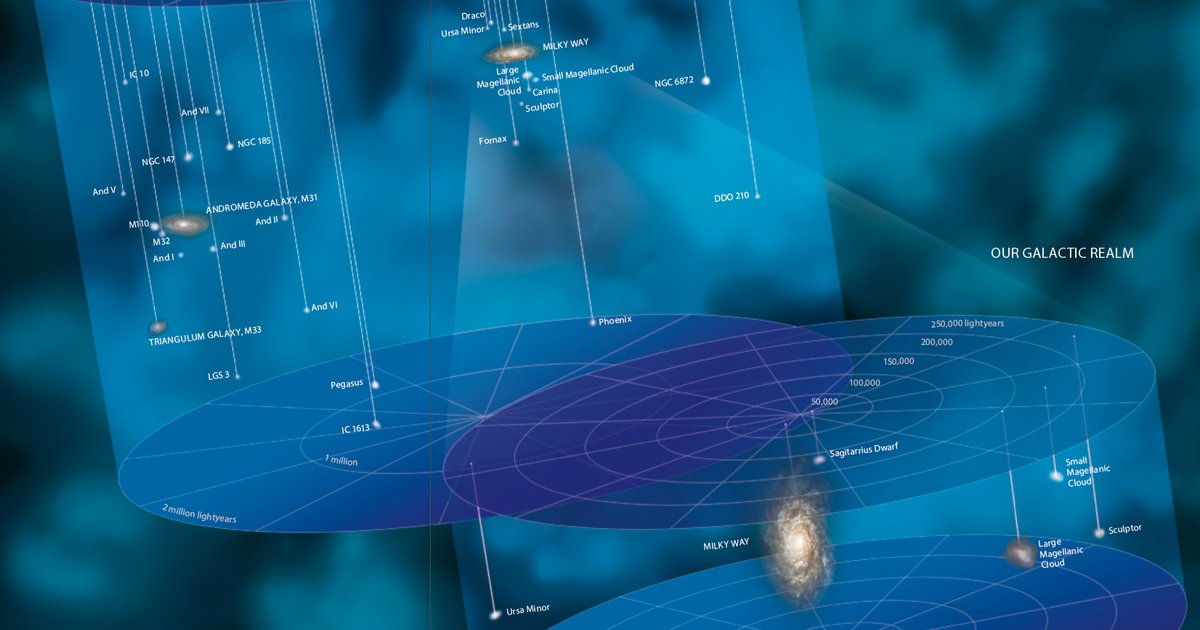
Astronomers have unveiled a new 3D map that reveals the existence of more than 47 million galaxies in the universe, reshaping our understanding of cosmic structures. This groundbreaking discovery comes at a time of heightened interest in space exploration and expanding human knowledge of the universe.
This map is the result of intensive research efforts that have spanned years, utilizing advanced techniques in astronomical imaging and data analysis. Sophisticated telescopes were employed to observe deep space, enabling scientists to gather accurate data on the distribution of galaxies.
Details of the Discovery
The new map shows that the universe contains an enormous number of galaxies that were previously unknown. These galaxies are distributed across various regions of the universe, indicating that the cosmos is larger and more complex than previously thought. Scientists believe this discovery could contribute to a better understanding of the universe's evolution and history.
Furthermore, this map provides valuable insights into how galaxies form and interact with one another. By studying these galaxies, scientists can comprehend the physical processes that influence the formation of stars and planets.
Background & Context
Over the decades, scientists have sought to understand the universe through the study of galaxies and stars. Previous discoveries, such as those made by the Hubble Space Telescope, have expanded our knowledge of space. However, the new map represents a significant leap in this field, offering a comprehensive view of the universe.
Historically, galaxies were considered rare, but with advancements in technology, it has become possible to discover more of them. This new discovery reflects the ongoing evolution in astronomy and how modern technology is utilized in space exploration.
Impact & Consequences
This discovery has significant implications for our understanding of the universe. With over 47 million galaxies, our perception of the universe's size and structure may change dramatically. Scientists believe this could open new avenues for research in fields such as astrophysics and cosmology.
Moreover, this discovery may influence how we understand cosmic phenomena such as dark matter and dark energy, which are among the greatest mysteries in astronomy. The new data could help solve some of these enigmas.
Regional Significance
For the Arab region, this discovery paves the way for increased collaboration in astronomical research. Arab countries have begun investing in space projects, reflecting a growing interest in space exploration. This discovery could enhance cooperation among Arab nations in scientific research.
Additionally, this finding may inspire a new generation of scientists and researchers in the Arab world, emphasizing the importance of education in the fields of science and technology.
In conclusion, the discovery of a 3D map containing over 47 million galaxies represents a monumental step in our understanding of the universe. This finding is sure to lead to further research and studies in the future, contributing to the expansion of human knowledge.