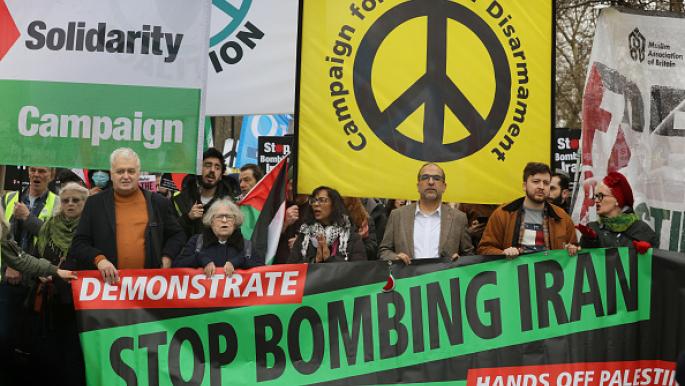
British anti-war organizations have expressed skepticism regarding U.S. President Donald Trump's commitment to the temporary ceasefire announced among the involved parties. These doubts arise at a sensitive time as tensions in the Middle East are increasing, particularly amid the ongoing conflict between the United States and Iran.
This ceasefire is seen as an important step towards de-escalating the conflict; however, British organizations believe that Trump's previous statements may indicate a lack of seriousness in committing to peace. These organizations have confirmed that history shows political promises are often neglected when it comes to strategic interests.
Details of the Event
Recently, Trump announced a temporary ceasefire aimed at reducing military escalation between the United States and Iran. However, anti-war organizations in Britain have noted several indicators suggesting that this ceasefire may be ineffective. A spokesperson for an anti-war organization stated that "the ceasefire is just words on paper if it is not genuinely adhered to."
They added that "history repeats itself, as we have witnessed many promises that were not fulfilled, raising concerns about Trump's credibility." These statements reflect a state of distrust in the current political directions, especially amid rising tensions in the region.
Background & Context
Historically, relations between the United States and Iran have been tense, witnessing numerous military and political crises. Since the U.S. withdrawal from the Iranian nuclear agreement in 2018, tensions have significantly escalated, leading to a series of military clashes and mutual threats.
This ceasefire is viewed as an attempt by Trump to ease tensions; however, it comes at a time when the world is facing a health and economic crisis due to the COVID-19 pandemic, complicating the political landscape. In this context, the importance of adhering to ceasefires emerges as a means to avoid escalating conflict.
Impact & Consequences
If the ceasefire is not adhered to, it could lead to greater military escalation in the region, affecting security and stability in the Middle East. Additionally, non-compliance may strengthen the position of armed groups seeking to exploit chaos to achieve their goals.
On the other hand, these events could impact international relations, as other countries may take varying stances based on how the situation evolves. If Trump fails to achieve peace, he may face internal and external pressures that could influence his foreign policy.
Regional Significance
The Arab region is among the most affected by tensions between the United States and Iran. Any escalation in the conflict could lead to negative repercussions for neighboring countries such as Iraq, Syria, and Lebanon, which could be directly affected by military conflicts.
Moreover, instability in the region could impact the Arab economy, especially given the heavy reliance on oil and gas. Therefore, adherence to the ceasefire is vital not only for the United States and Iran but also for Arab countries seeking stability and development.
In light of the increasing doubts about Trump's commitment to the ceasefire, hope remains for the possibility of achieving peace in the region. All involved parties must work diligently to avoid escalation and maintain security and stability.