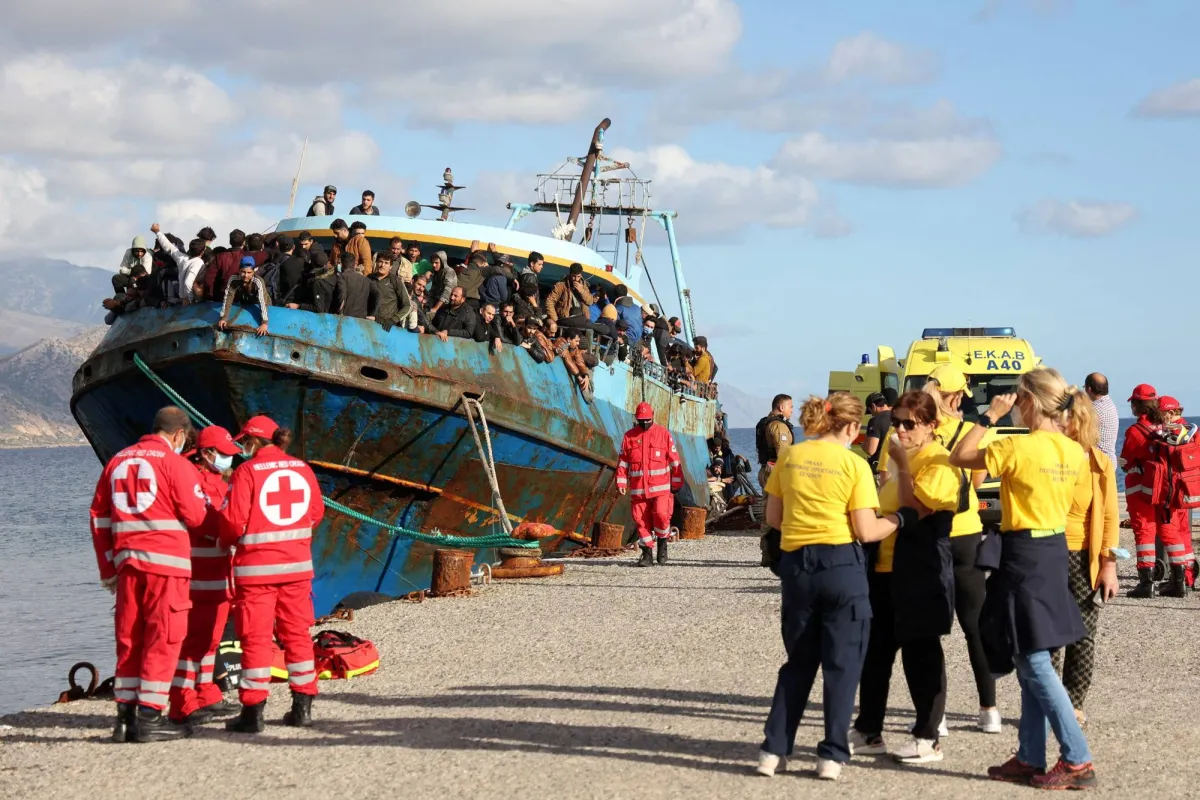
Twenty-two migrants lost their lives after being stranded on their rubber boat in the Mediterranean for six days, according to the Greek coast guard. The incident occurred after they set off from Libya on a perilous journey towards Greece, which is considered a major transit point for many migrants seeking asylum in the European Union.
The Greek authorities managed to rescue 26 individuals, whose nationalities have not yet been specified, including a woman and a minor, using a vessel from the European Border and Coast Guard Agency (Frontex) off the coast of Crete. Two of the survivors were transported to a hospital in Heraklion for treatment.
Details of the Incident
According to the coast guard, the boat departed from the Tobruk area in eastern Libya on March 21, heading towards Greece. Survivors reported that the boat lost its direction, resulting in them being at sea for six days without food or water. Consequently, 22 individuals perished, and their bodies were thrown into the sea on the orders of one of the traffickers.
As part of the investigations, authorities detained two young men from South Sudan, aged between 19 and 22, on suspicion of involvement in human trafficking. The rescue operation took place on Thursday, with the incident being reported later.
Background & Context
Migration across the Mediterranean Sea is considered one of the most dangerous migration routes in the world, where migrants face numerous risks including drowning, suffocation, and detention. In recent years, the number of migrants attempting to reach Europe by sea has increased, especially from North African countries like Libya.
Many humanitarian organizations are striving to highlight this issue, as reports indicate that thousands of migrants have lost their lives at sea over the past years. The economic and political conditions in their home countries push them to make perilous decisions.
Impact & Consequences
This incident underscores the urgent need to address migration and asylum issues in Europe. While European countries seek to secure their borders, they face humanitarian challenges related to protecting migrants' rights. Such incidents raise questions about the effectiveness of current migration policies.
These circumstances require a coordinated response from European nations, including improving conditions for migrants in transit countries, providing humanitarian support, and enhancing cooperation with migrant-exporting countries.
Regional Significance
Libya is a key departure point for migrants, making it a focal point of international interest. The deteriorating humanitarian conditions in Libya necessitate international intervention to improve living conditions for both citizens and migrants. Additionally, these incidents may increase pressure on Arab governments in the region as they seek to manage the influx of migrants.
In conclusion, this incident reflects a humanitarian tragedy that requires an urgent response from the international community. European and Arab nations must work together to address the root causes of migration and provide protection for migrants.