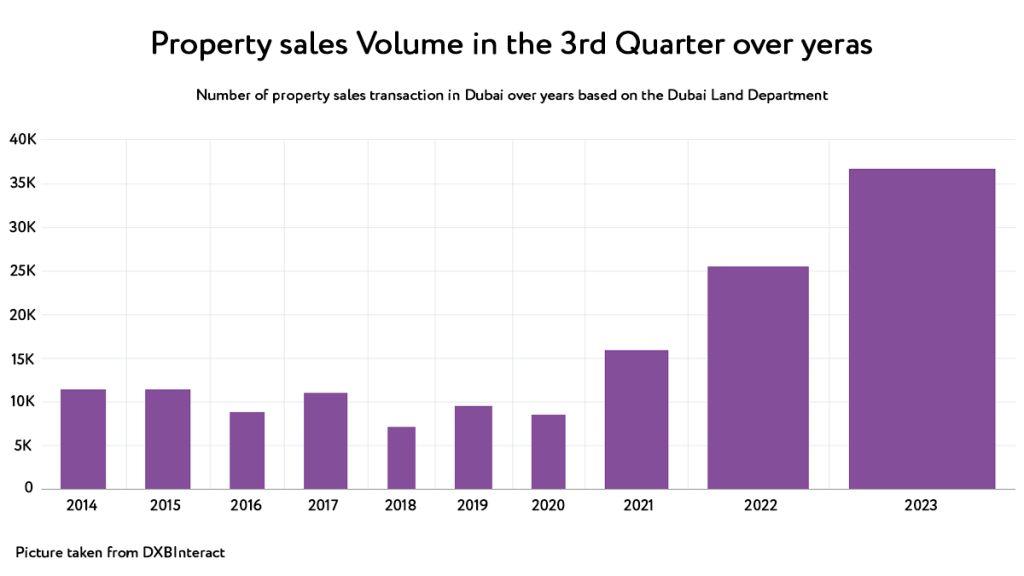
Dubai's real estate sector recorded transactions worth $4.3 billion last week, reflecting a notable recovery in the emirate's real estate market. Among these transactions, a $32 million apartment was sold, indicating the increasing demand for luxury properties in Dubai.
These figures serve as a positive indicator of the stability of the real estate market in Dubai, which has experienced fluctuations in recent years due to the impacts of the COVID-19 pandemic. However, it appears that the market is regaining its strength, as the emirate continues to attract both local and international investors.
Details of the Transactions
Reports indicate that real estate transactions in Dubai encompass a variety of properties, ranging from luxury apartments to villas and commercial projects. Positive economic factors, such as increased tourism and population growth, have contributed to the heightened demand for real estate.
Data has shown a significant increase in the number of transactions compared to previous periods, reflecting investor confidence in the market. Experts have noted that this trend may continue in the near future, further enhancing Dubai's position as a leading real estate hub in the region.
Background & Context
Historically, Dubai has witnessed a boom in the real estate sector since the turn of the millennium, with the development of numerous massive projects such as the Burj Khalifa and the Palm Islands. However, the market has been affected by several factors, including global economic crises and the repercussions of the COVID-19 pandemic.
In recent years, the UAE government has taken steps to boost the real estate market, including easing ownership procedures for foreigners and offering incentives for investors. These policies have helped attract more foreign investments, leading to a market revival.
Impact & Consequences
The recovery in Dubai's real estate sector is a sign of the overall stability of the UAE economy. The real estate market plays a vital role in the national economy and directly impacts various other sectors such as construction, tourism, and services.
This recovery is expected to create more job opportunities and increase government revenues from taxes and fees. Additionally, the rising demand for properties may lead to price increases, which could affect the purchasing power of citizens and residents.
Regional Significance
Dubai's real estate sector serves as a model for other Arab countries, which can benefit from successful experiences in attracting investments. Many Arab nations are striving to develop their real estate sectors, inspired by Dubai's success.
Furthermore, the recovery in Dubai's real estate market may enhance economic cooperation among Arab countries, as these opportunities could pave the way for joint investments and major projects.
In conclusion, the growth in Dubai's real estate sector reflects the emirate's ability to recover from economic crises, reinforcing its status as a leading economic center in the region.