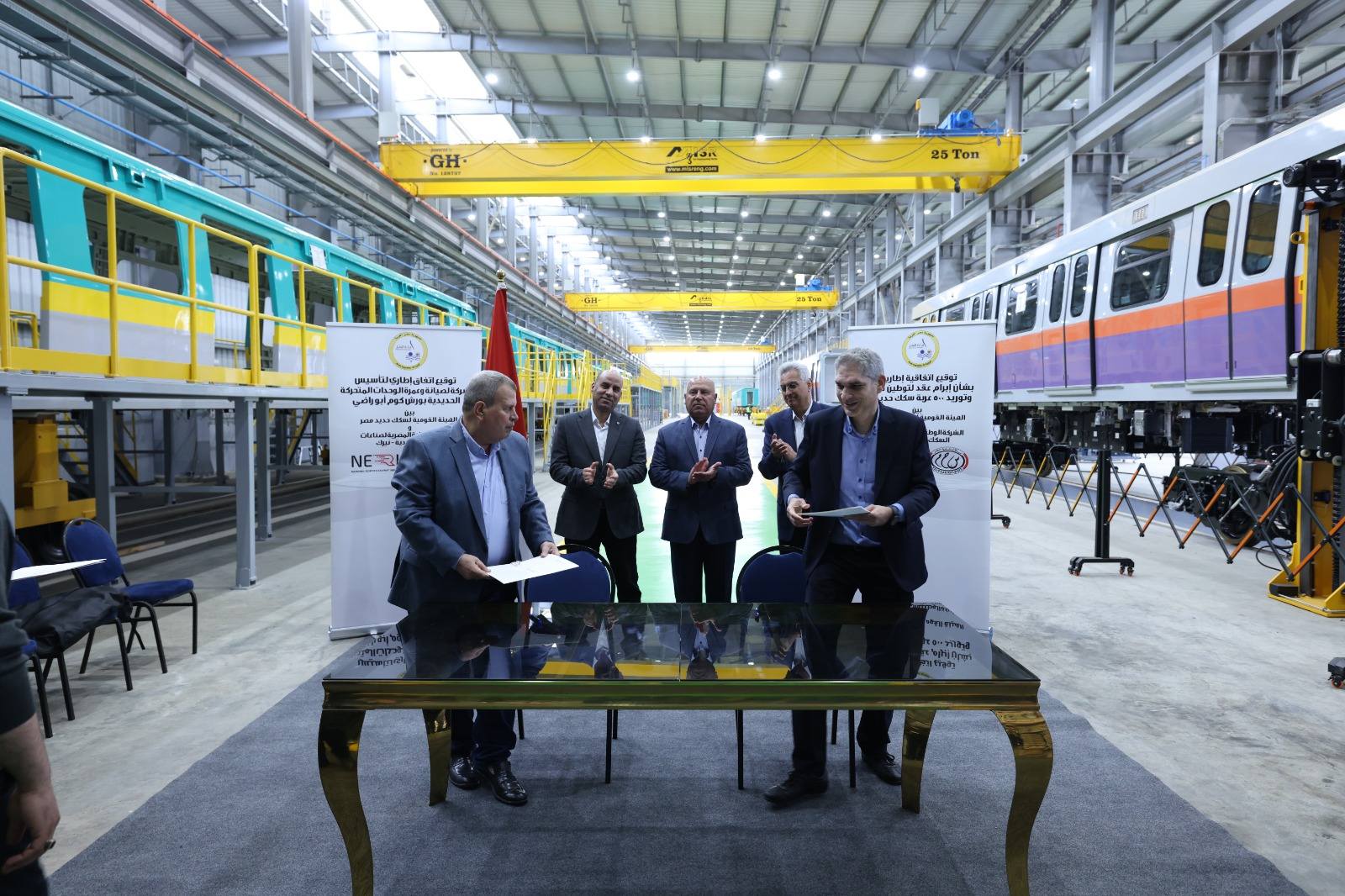
As part of ongoing efforts to strengthen national industry, Engineer Kamel El-Wazir, the Minister of Transport, witnessed the signing of two strategic agreements between the Egyptian National Railways Authority and the Egyptian National Railway Industries Company (NIRK). The signing was also attended by Mr. Hassan Raddad, the Minister of Labor, at the company's factory headquarters.
The first agreement involves the manufacturing and supply of 500 air-conditioned railway passenger cars, contributing to the modernization of the railway car fleet and enhancing the level of service provided to citizens. This step aligns with the state's direction towards relying on local manufacturing and reducing imports while establishing a competitive and export-capable industrial base.
Details of the Agreements
The agreements were signed by Engineer Mohamed Amer, Chairman of the Egyptian National Railways Authority, and Engineer Ahmed El-Mufti, Managing Director of NIRK. The Minister of Transport confirmed that this step is a continuation of a series of contracts with NIRK, which previously manufactured 40 metro trains comprising a total of 320 air-conditioned cars for Cairo Metro lines, in addition to contracting for 21 air-conditioned trains for the Alexandria Metro project.
The second agreement aims to establish a specialized company to manage and operate the Kom Abu Rady workshops affiliated with the railways. This company will focus on carrying out overhauls, repairs, and maintenance for various types of cars, thereby enhancing operational efficiency and ensuring the sustainable operation of the railway facility at a higher level.
Background & Context
These agreements come within the framework of the Egyptian government's vision to develop the transport sector and enhance infrastructure. Since President Abdel Fattah El-Sisi took office, there has been a focus on modernizing the railway network, which is one of the most important means of transportation in the country. In recent years, several projects have aimed at improving service levels and passenger safety.
The government seeks to achieve self-sufficiency in the railway industry, reducing reliance on imports and enhancing the competitiveness of local industries. This direction aligns with Egypt's Vision 2030, which aims to achieve sustainable development.
Impact & Consequences
These agreements are expected to create new job opportunities and enhance vocational training programs, thereby increasing the efficiency of the Egyptian workforce. Additionally, involving the private sector in managing and operating certain sectors of the railways enhances competition among companies, positively impacting the quality of service provided to passengers.
These steps contribute to improving the working environment for employees in the sector, increasing productivity and efficiency. Furthermore, the development of the Kom Abu Rady workshops reflects NIRK's expansion in maintenance and repair fields, supporting the system as a whole.
Regional Significance
Egypt is considered a leader in the railway sector in the region, and these steps may enhance regional cooperation in transportation. The Egyptian experience could serve as a model for other countries seeking to develop their infrastructure.
Arab countries are striving to enhance their capabilities in transportation, contributing to economic and social development. Egypt's success in localizing the railway industry may encourage other countries to take similar steps.