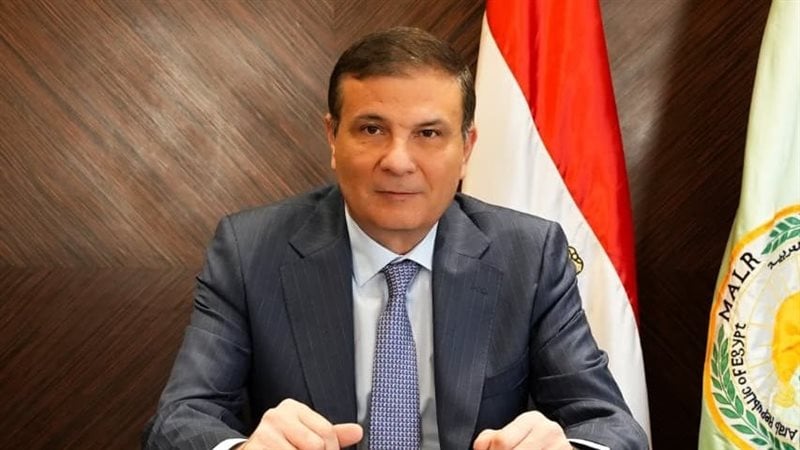
The Egyptian Ministry of Agriculture and Land Reclamation has officially announced the issuance of 812 operating licenses during the month of May, comprising both new permits and renewals of existing activities. These licenses cover diverse areas including animal production facilities, poultry farming operations, feed manufacturing plants, and milk collection centers, representing a strategic governmental step to systematically organize the sector, empower small-scale breeders, and substantially enhance local food security capabilities.
This announcement was revealed in a comprehensive report submitted to Agriculture Minister Alaa Farouk by Dr. Tarek Suleiman, who serves as head of the Animal Wealth Development Sector. Suleiman emphasized that these regulatory measures directly implement directives from the country's political leadership to systematically remove bureaucratic obstacles facing both investors and small breeders, while simultaneously ensuring strict adherence to the highest international biosecurity standards to guarantee the quality and safety of all food products entering the market.
Licensing Breakdown and Eid Preparations
The detailed report specifically outlined that the newly issued licenses include 185 activity permits dedicated to small-scale cattle breeding operations, designed specifically to empower local farmers, alongside 64 technical approvals granted for establishing new animal and poultry production projects in Egypt's desert hinterlands. These desert projects must strictly comply with preventive distance requirements and rigorous biosecurity standards. Furthermore, in comprehensive preparation for the upcoming Eid Al-Adha celebration, the ministry strategically coordinated the establishment of 600 marketing outlets—comprising both permanent fixed locations and mobile units—distributed across the republic, while partnering effectively with private sector entities to supply markets with more than 15,000 sacrificial animals at significantly discounted prices ranging between 20% and 25% below standard market rates.
Regarding strict oversight of production inputs, regulatory authorities formally approved the disbursement of EGP 111.23 million in additional funding for 80 new beneficiaries enrolled under the National Veal Project, thereby bringing the initiative's total financing to over EGP 10.6 billion that has directly benefited approximately 45,000 individual breeders nationwide. Additionally, officials successfully registered 650 feed mixtures and nutritional additives (comprising 345 locally produced and 305 imported varieties) according to stringent standard specifications, developed in close coordination with the Regional Center for Food and Feed. Concurrently, veterinary inspectors collected 699 supervisory samples from various feed manufacturing facilities to ensure full compliance with established quality and safety standards.
Background & Context
These regulatory measures fall within Egypt's broader state strategy for developing the Egyptian countryside under the presidential "Decent Life" initiative, which specifically targets transforming the nation's neediest villages into productive, self-sustaining communities by supporting small-scale breeders, unemployed youth, and rural women. The National Veal Project, which was launched several years ago as a flagship agricultural program, represents one of the most important mechanisms for achieving self-sufficiency in red meat, with total financed cattle reaching 531,000 heads since its inception.
This initiative comes amid intensified Egyptian efforts to increase self-sufficiency rates for both red and white meat, with official statistics indicating that local demand grows annually by approximately 3%, necessitating the urgent expansion of the production base and modernization of farm infrastructure nationwide. The intensive inspection campaigns conducted on feed factories and retail stores also reflect the ministry's keenness to strictly control markets and prevent commercial fraud, particularly amid ongoing global economic challenges affecting international prices of essential production inputs and animal feed components.
Impact & Consequences
These newly issued licenses are expected to significantly contribute to increasing local production volumes of meat, dairy products, and poultry, thereby helping to reduce the national import bill and conserve scarce hard currency reserves. Expanding the base of small breeders also enhances social stability in rural Egypt by providing direct and indirect employment opportunities for thousands of youth and women, while substantially improving household incomes in agricultural communities and reducing rural-urban migration pressures.
Furthermore, the notable shift toward digitalization in license issuance through integrated electronic platforms and the "Digital Egypt" initiative reflects the state's firm adoption of comprehensive digital transformation methodologies, effectively reducing bureaucratic red tape and saving valuable time for investors. This technological advancement has contributed to attracting new domestic and foreign investments in the animal production sector, particularly in desert areas characterized by lower land costs, while simultaneously facilitating export procedures to regional and international markets.
Regional Significance
Egypt's comprehensive experience in organizing and developing the animal wealth sector offers a highly replicable model for other Arab countries facing similar food security challenges and import dependency issues. Relying on small breeders as a fundamental production pillar, combined with strict governmental oversight of production inputs and quality control mechanisms, ensures long-term sector sustainability and output quality while effectively limiting smuggling and unregulated livestock trading across borders.
Moreover, Egypt has recently begun exporting fish feed and frozen poultry products to various Arab and international markets, steadily strengthening its position as an emerging regional hub for animal production and food processing industries. The documented success of the National Veal Project represents valuable technical expertise that can be transferred to neighboring Arab countries seeking to reduce their substantial red meat import bills, particularly as climate change fluctuations continue to negatively affect traditional livestock pastures across the broader Arab region.