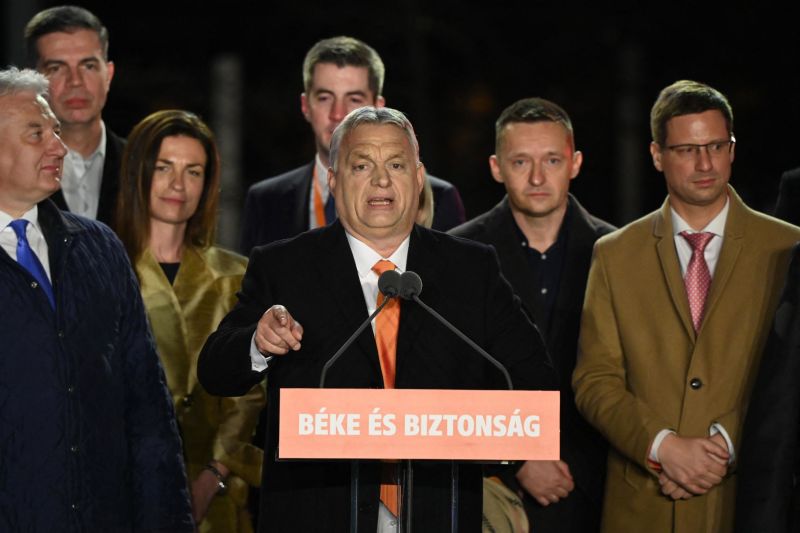
The results of the recent Hungarian elections revealed the defeat of former Prime Minister Viktor Orbán, reflecting a shift in the political mood in Europe regarding the war in Ukraine. This defeat signifies that the narrative promoted by Orbán, which claimed that few European countries support Ukraine, has lost its strength.
This outcome is seen as a blow to the projects of Russian President Vladimir Putin, who relied on the support of certain European leaders to bolster his position in the Ukrainian conflict. According to many analysts, this defeat could pave the way for increased European support for Ukraine, thereby strengthening its stance against Russian aggression.
Details of the Event
In the recent elections, Orbán faced significant challenges from the opposition, which managed to capitalize on citizens' sentiments regarding the economic and social conditions in the country. The results showed that voters were more inclined to support parties advocating for a more balanced foreign policy, rather than those favoring Russia.
This election is part of a series of events indicating changes in European policy towards Russia. Under Orbán's leadership, Hungary was one of the few countries that openly supported the Kremlin, making it a target of criticism from many other European nations.
Background & Context
Historically, Hungary under Orbán has pursued political directions divergent from the rest of Europe, seeking to strengthen its ties with Russia at the expense of relations with the West. This approach significantly impacted European politics, contributing to divisions within the European Union.
As tensions escalated between Russia and Ukraine, Orbán's position became more complicated, as he attempted to balance his country's support for Ukraine while maintaining good relations with Moscow. However, the recent electoral defeat indicates that voters are no longer satisfied with this approach, which could alter the country's foreign policy trajectory.
Impact & Consequences
Orbán's electoral defeat may lead to significant changes in Hungarian foreign policy. The new government is expected to seek to strengthen relations with other European countries, potentially resulting in increased military and economic support for Ukraine.
Moreover, this result could influence the European Union's policy towards Russia in general, prompting other countries to reassess their relationships with the Kremlin. This shift in the European stance may weaken Russia's ability to influence European politics and enhance Ukraine's position in the ongoing conflict.
Regional Significance
Considering the situation in the Arab region, these developments may affect relations between Arab countries and Russia. Many Arab nations have sought to strengthen their ties with Moscow, but with increasing European pressure on Russia, these countries may find themselves in a difficult position.
Additionally, increased support for Ukraine could foster cooperation between Arab states and Western countries, potentially opening new avenues for economic and political collaboration in the region.
In conclusion, Orbán's electoral defeat represents a significant turning point in European politics and could lead to radical changes in international relations. It is crucial to monitor upcoming developments to understand how they will impact the global political landscape.