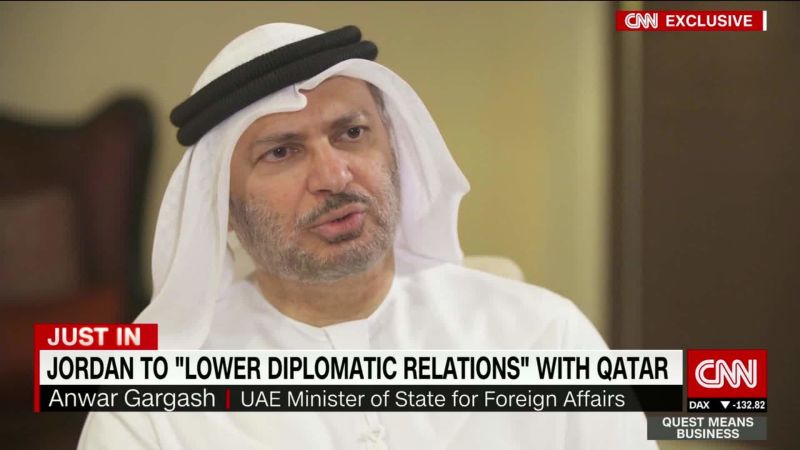
Anwar Gargash, the diplomatic advisor to the President of the United Arab Emirates, affirmed in statements made on Tuesday that his country's steadfast position regarding Iranian aggression is widely appreciated among the Gulf populace. He pointed out that the regime in Tehran poses a threat to security and stability in the region, rendering it untrustworthy.
These remarks come at a time when relations between Gulf states and Iran are increasingly strained, with growing concerns over Iranian activities that destabilize the region. The UAE, like other Gulf nations, has expressed its worries about Iranian interventions in the internal affairs of Arab states, necessitating a unified stance from all Gulf countries.
Details of the Event
Gargash discussed the importance of coordination among Gulf states to confront the challenges posed by Iran. He confirmed that the UAE's position reflects a strong desire to enhance regional security, noting that any escalation from Tehran should be met with a unified response from Arab nations.
He also mentioned that the UAE is always seeking dialogue and understanding; however, it will not hesitate to take necessary steps to protect its interests and security. He highlighted that the Gulf populace is fully aware of the risks posed by the Iranian regime, which reflects strong support for the UAE's stance.
Background & Context
Historically, relations between Iran and Gulf states have been marked by increasing tensions, especially following the Iranian revolution in 1979. These tensions have escalated with the rise of Iranian military activities in the region, including support for armed groups in Iraq, Syria, and Lebanon.
The UAE is one of the countries directly affected by such activities, experiencing heightened security threats. Over the years, the UAE has attempted to maintain a delicate balance in its relations with Iran, but recent Iranian actions have compelled it to adopt a firmer position.
Impact & Consequences
Gargash's statements could enhance cooperation among Gulf states in addressing Iranian threats, potentially contributing to the formation of new alliances in the region. This stance may also reflect the UAE's desire to strengthen its role as an active regional power.
Moreover, escalating positions could lead to increased military tensions in the region, which may impact the stability of oil markets and the global economy. The international community must closely monitor these developments, especially given the economic challenges facing many countries.
Regional Significance
The UAE's position against Iranian aggression serves as a call for other Arab nations to unite in facing common threats. Regional security requires a collective response, and there must be a clear mechanism to address any escalation from Iran.
Ultimately, the question remains regarding how other Arab states will respond to the UAE's stance and whether they will take similar steps to bolster their security and stability amid growing challenges.