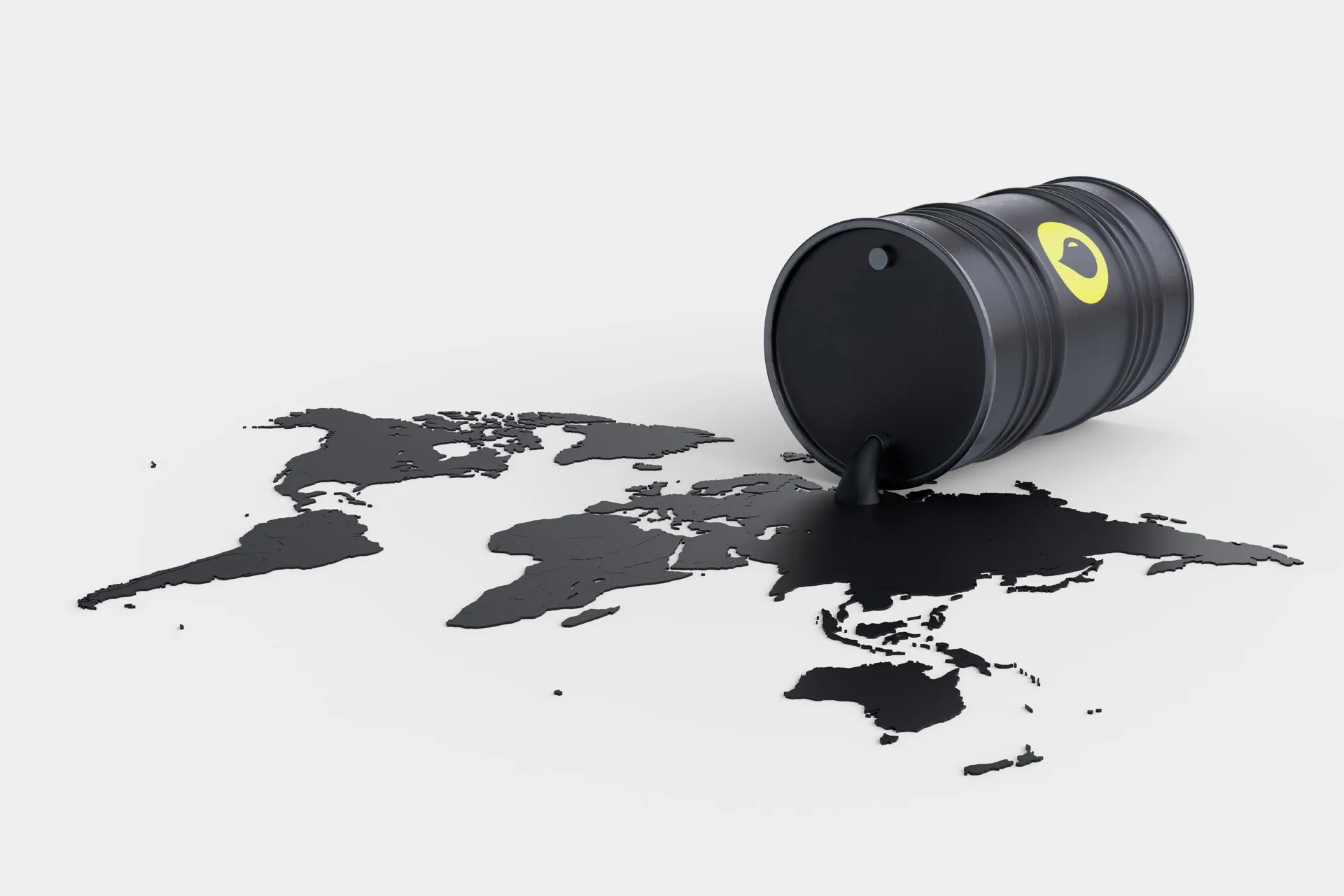
Energy markets are experiencing significant turmoil as a month has passed since the outbreak of war in Iran, with prices rising sharply amid investor fears of the prolonged conflict and the lack of any resolution in sight.
In this context, colleague Abdul Qadir Aradah explained through an interactive map that various attacks have targeted several strategic sites in the Gulf countries, including the Port of Salalah in Oman, where one crane was affected due to two strikes by drones. Additionally, the Khalifa Economic Zone in the UAE was impacted, and the radar system at Kuwait's international airport was damaged after being targeted by drones, alongside previous attacks on the Shuwaikh and Mubarak Al-Kabeer ports.
Details of the Incident
Aradah also pointed out that the Houthi group has entered the military equation by targeting Israel with a ballistic missile, making the Bab el-Mandeb Strait another pivotal point regarding strategic chokepoints, alongside the Strait of Hormuz, which has seen the passage of around 116 vessels since the beginning of March, including oil tankers and Iranian ships, according to data from Bloomberg and Reuters.
In Iran, the strikes have included nuclear facilities and steel production sites in Firuzabad, Khuzestan, and Isfahan, as well as energy facilities, exacerbating the turmoil in energy markets and impacting global supplies.
Context and Background
Regarding the markets, Brent crude closed last week at $114 per barrel, marking an increase of over 55% since the war began, compared to $72 before its outbreak, while the volume of lost oil supplies has shrunk to about 15 million barrels per day from 20 million prior to the conflict.
As for gas, energy market expert Bashar Al-Halabi stated that prices have jumped from €30 per megawatt-hour before the war to €70 currently, with Qatar halting liquefied natural gas exports, which represent about 20% of global consumption, after declaring a state of "force majeure."
Implications and Effects
Al-Halabi noted that any political statement, such as those made by U.S. President Donald Trump, could temporarily affect market sentiment and slightly lower prices, but the fundamentals remain in supply and demand, especially with the decline in supply due to attacks on vital facilities and chokepoints.
Regarding the impact of these developments on the average consumer, Al-Halabi emphasized that rising oil and gas prices will reflect on the cost of essential goods, including fuel, food, and even mobile phone prices, due to their impact on production and transport chains.
Impact on the Arab Region
He also pointed out that the Houthi group's entry into the military equation enhances the trajectory of rising prices, especially with any threats to the Bab el-Mandeb Strait or Saudi oil tankers, such as those passing through the East-West pipeline from Yanbu, which transports around 4.5 to 5 million barrels per day.
Al-Halabi added that any new security or military developments in the Red Sea or strategic chokepoints will undoubtedly lead to a renewed increase in prices, with long-term effects on global markets and consumers in industrialized and oil-producing countries.
Global energy markets are experiencing significant fluctuations due to the U.S.-Israeli war on Iran, contributing to rising oil prices and inflation levels, amid rapid governmental measures in many countries to mitigate its repercussions on the economy and individuals.
Since February 28, the region has been witnessing a war between Israel and the United States on one side and Iran on the other, resulting in hundreds of casualties, including prominent officials led by Iranian leader Ali Khamenei, according to military sources.
In an Iranian response, Tehran launched missiles and drones towards Israeli territories, declaring that it targets what it describes as "American sites and interests" in various Arab countries. However, some Iranian attacks have resulted in casualties and injuries, causing damage to civilian properties, prompting the targeted countries to condemn these operations and call for their immediate cessation to ensure civilian protection and maintain regional security.