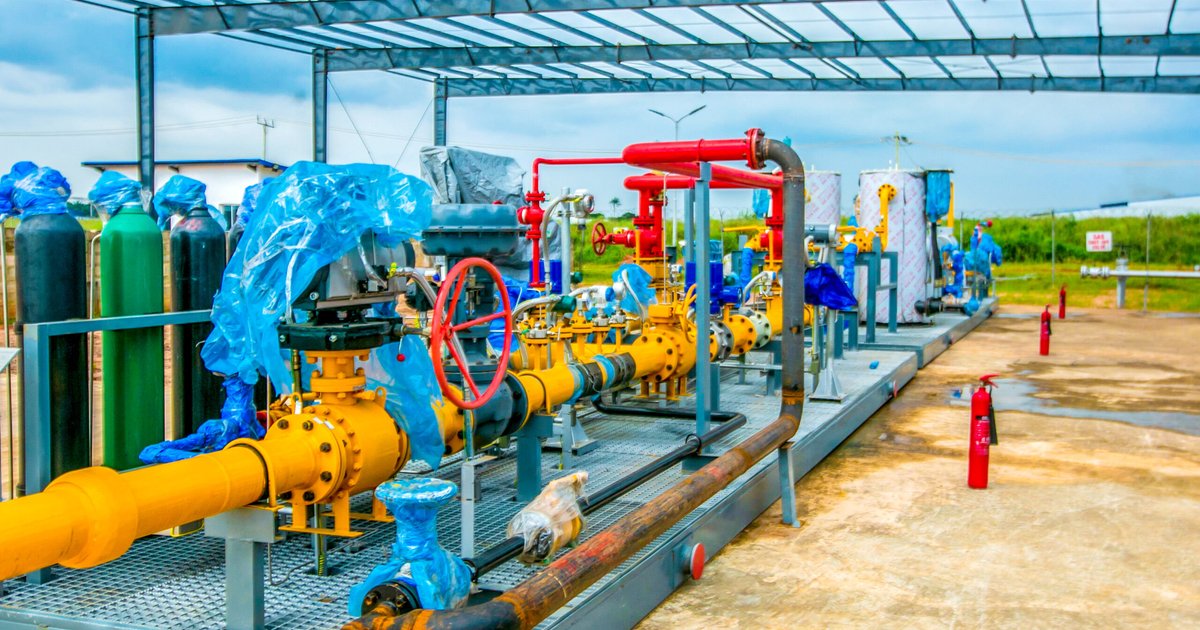
An expert from Indonesia's Ministry of Energy and Mineral Resources, Satya Hanga Yuda Widya Putra, stated that enhancing the gas infrastructure in the West Java region will significantly impact the national economy. This was highlighted during his remarks in the capital, Jakarta, where he pointed out the importance of this step given that West Java is an industrial hub in Indonesia.
Hanga explained that strengthening the gas infrastructure requires integrated efforts between the central and local governments to accelerate the development of the necessary infrastructure. He affirmed that focusing on the development of Liquefied Natural Gas (LNG) and Compressed Natural Gas (CNG), along with building gas filling stations, will enhance the region's capacity to meet the increasing energy demand.
Event Details
During a meeting with the General Director of Megas Utama West Java, Gema Akbar, the importance of using compressed natural gas as an innovative solution to reduce reliance on Liquefied Petroleum Gas (LPG) was discussed. Akbar explained that distributing compressed natural gas through cylinders represents a strategic step to provide a more economical energy alternative for commercial sectors and households in West Java.
Akbar noted that using local gas is not only an economic option but also a step towards achieving energy sovereignty for the region, contributing to energy sustainability.
Background & Context
Indonesia is considered one of the largest economies in Southeast Asia, with its economy heavily reliant on the energy sector. As the demand for energy in the country rises, enhancing energy infrastructure has become essential to meet the needs of industries and households. Historically, Indonesia has depended on traditional energy sources, but with the shift towards sustainable energy, the need to develop alternative energy sources has become urgent.
The Indonesian government aims to achieve energy self-sufficiency by 2045, which requires massive investments in energy infrastructure. In this context, West Java is one of the vital areas that need to develop gas infrastructure to meet its growing demands.
Impact & Consequences
Strengthening the gas infrastructure in West Java is expected to improve energy supply stability, leading to enhanced economic growth in the region. This development will also help reduce reliance on traditional energy sources, contributing to achieving environmental sustainability goals.
Moreover, improving energy infrastructure will attract both foreign and local investments, enhancing the competitiveness of the Indonesian economy. The collaboration between the public and private sectors will play a significant role in achieving these objectives.
Regional Significance
Indonesia is one of the largest gas producers in the world, making it a model for Arab countries seeking to enhance their energy infrastructure. Arab nations can benefit from Indonesia's experience in developing gas infrastructure, especially in light of the challenges they face in the energy sector.
Additionally, cooperation between Arab countries and Indonesia in the energy sector can contribute to enhancing energy security in the region, opening new avenues for economic and trade cooperation.