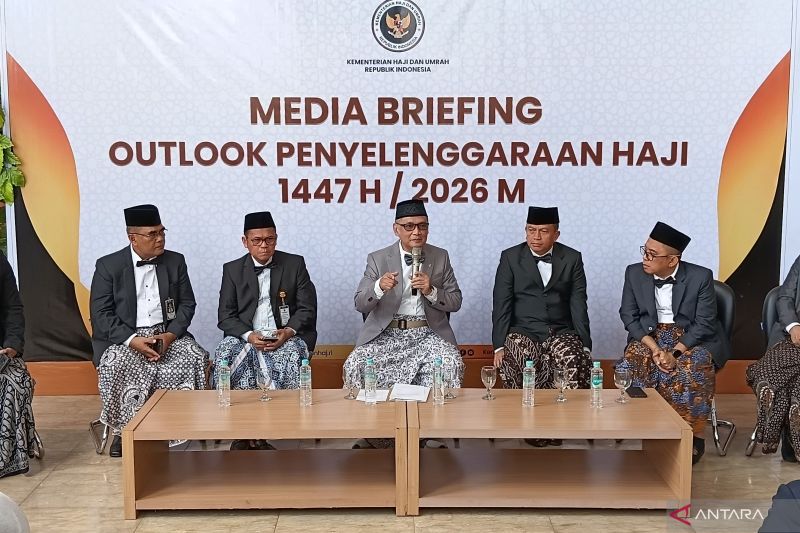
Indonesian Minister of Hajj and Umrah, Mochamad Irfan Yusuf, confirmed that preparations for the 2026 Hajj season are proceeding normally and safely, emphasizing that the Indonesian government is working to ensure the safety of pilgrims through continuous coordination with Saudi authorities. This was stated during his speech at an educational center in Majalengka, West Java.
Yusuf pointed out that the government continues to coordinate with the Indonesian Ministry of Foreign Affairs and the Indonesian embassy in Saudi Arabia, in addition to the committee responsible for organizing the Hajj in the Kingdom. He confirmed that all parties involved are still giving the green light for this year's Hajj, indicating that preparations are ongoing as planned.
Event Details
The minister discussed the importance of the safety of pilgrims, noting that the government has prepared several scenarios to deal with any emergencies that may arise. He explained that multiple plans have been coordinated with the Indonesian Parliament's Religious Affairs Committee, reflecting the efforts made to ensure a smooth Hajj experience.
Yusuf also confirmed that all necessary services for pilgrims, including food, accommodation, and transportation, have been fully prepared. He clarified that all arrangements related to cafeterias, hotels, and local transportation in Saudi Arabia have been completed, ensuring the comfort of pilgrims during their stay.
Background & Context
This confirmation comes at a time when the Middle East is experiencing increasing tensions, raising concerns about the safety of pilgrims. Historically, past Hajj seasons have faced several challenges, including health and political crises. Nevertheless, the Indonesian government consistently strives to ensure the safety of its citizens during this religious obligation.
Indonesia is the largest Islamic country by population, with approximately 221,000 Indonesian pilgrims each Hajj season. This number reflects the significance of Hajj in Indonesian culture and religion, as many seek to perform this duty every year.
Impact & Consequences
The ongoing preparations for Hajj reflect the Indonesian government's commitment to providing a safe environment for pilgrims, enhancing citizens' confidence in the government's ability to manage such major events. Additionally, coordination with Saudi authorities highlights the close relations between the two countries in the field of Hajj.
These preparations are expected to contribute to the enhancement of religious tourism, benefiting the local economy in Indonesia. Moreover, the successful organization of Hajj can serve as a model for other countries seeking to organize similar events.
Regional Significance
The Hajj is one of the most important religious rituals in the Islamic world, and its organization directly affects relations between Islamic countries. Indonesia's success in organizing Hajj reflects the ability of Islamic nations to collaborate in religious and cultural domains, strengthening ties among peoples.
Amid current regional tensions, organizing Hajj safely can symbolize hope and unity among Muslims, fostering stability in the region.