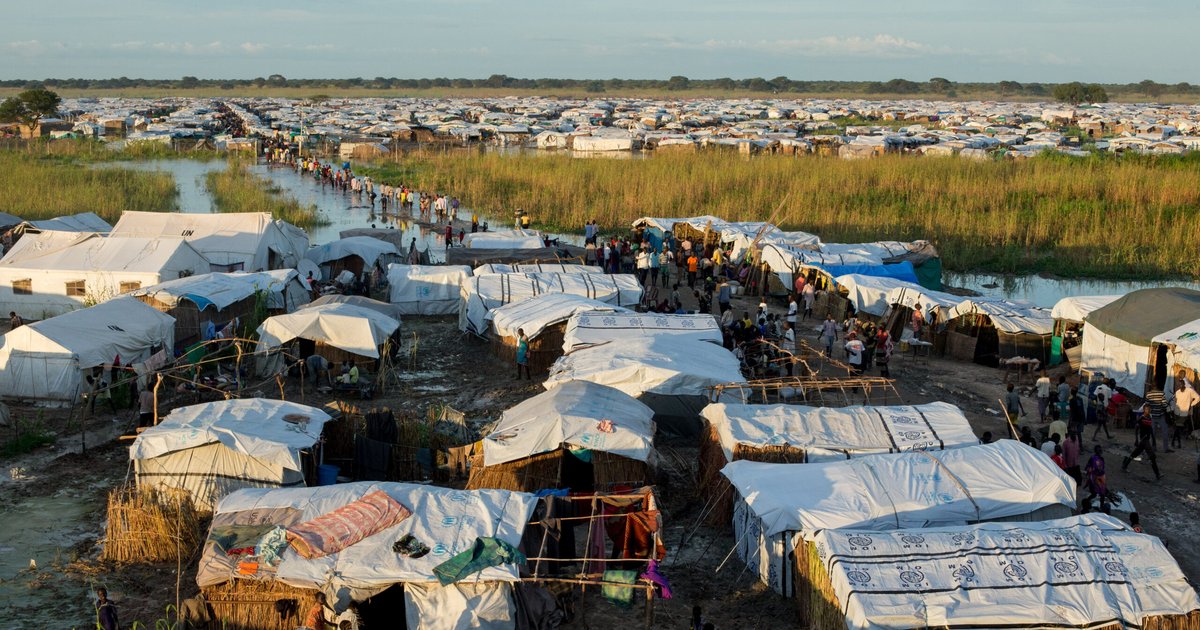
A community in South Sudan is experiencing extreme poverty after being denied vital humanitarian assistance, while the government and opposition exchange accusations regarding the responsibility for this tragic situation. This development comes at a time when the country is suffering from multiple crises, including armed conflicts and economic turmoil.
Under these circumstances, local residents have expressed their urgent need for food and medical aid, but they face significant challenges in accessing these resources due to ongoing political strife. Some residents reported that they have not received any form of assistance for several months, exacerbating their daily suffering.
Details of the Crisis
The humanitarian crisis in South Sudan is starkly evident in remote communities, where residents are under severe pressure due to food insecurity. Some activists have pointed out that the government focuses on areas under its control, leading to the marginalization of other communities suffering from poverty.
On the other hand, the opposition has accused the government of failing to provide necessary aid to affected regions, indicating that this neglect is part of a deliberate policy to undermine popular support. These accusations reflect the deep political divide in the country, with no apparent horizon for resolving the crisis.
Background & Context
The Republic of South Sudan was established in 2011 after years of conflict with Sudan, but it quickly faced significant challenges regarding security and stability. Since then, the country has witnessed internal conflicts that have led to societal fragmentation and increased poverty.
Historically, communities in South Sudan have relied on humanitarian aid, but ongoing conflicts have made it difficult for humanitarian organizations to deliver assistance effectively. This situation has exacerbated humanitarian crises, with many suffering from acute shortages of food and clean water.
Impact & Consequences
The repercussions of this crisis extend beyond South Sudan, potentially affecting regional stability. As the number of displaced persons and migrants increases due to dire living conditions, neighboring countries may experience an influx of refugees, putting additional pressure on their resources.
Moreover, the continuation of humanitarian crises in South Sudan could negatively impact peace efforts in the region, as political negotiations may falter amid worsening living conditions. This situation calls for an urgent response from the international community to provide the necessary support.
Regional Significance
Given the conditions in South Sudan, the humanitarian and political crises could affect Arab interests in the region. With rising tensions and conflicts, Arab investments in neighboring countries may be impacted, necessitating proactive measures to protect these interests.
In conclusion, the situation in South Sudan requires immediate international attention, as the continued deprivation of communities from humanitarian aid could lead to further exacerbation of humanitarian and political crises, necessitating swift action from all concerned parties.