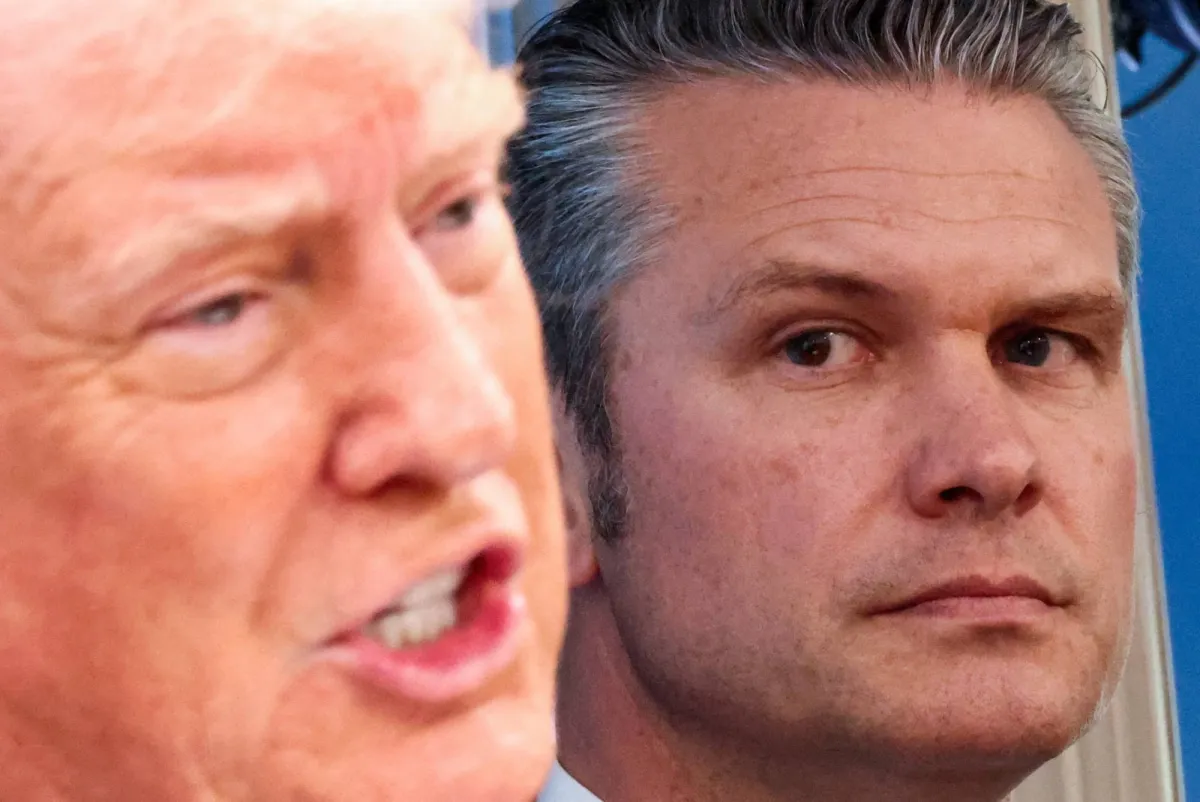
The confrontation between U.S. President Donald Trump and Democrats in Congress is intensifying, with criticisms directed not only at Trump but also at Secretary of War Pete Hegseth. This comes amid escalating tensions due to the Iranian war, where Democrats warn that Trump's threats to destroy Iranian infrastructure amount to war crimes.
In this context, Democratic Representative Yasmina Ansari, the first congresswoman of Iranian descent, expressed her intention to introduce articles of impeachment against Hegseth, accusing him of colluding with Trump in executing a dangerous policy towards Iran. Ansari stated, "Trump is escalating a devastating and illegal war, threatening to commit widespread war crimes and targeting civilian infrastructure in Iran."
Details of the Event
Attention is drawn to Trump's alarming statements, where he threatened to destroy bridges and power plants in Iran if Tehran does not comply with his demands regarding the Strait of Hormuz. Trump warned that "an entire civilization will be obliterated tonight," indicating that the world is facing one of the most significant moments in its history. Meanwhile, Vice President J.D. Vance confirmed that the U.S. has largely achieved its military objectives in Iran, noting that intense negotiations are expected in the coming hours.
Regarding the pressures on Trump, calls from Democrats have increased to activate the 25th Amendment of the Constitution, which allows the Vice President, with a majority of the Cabinet, to declare the President unable to perform his duties. This amendment was previously raised during his first term after the Capitol riot, but strong support for Trump from his administration prevented its activation.
Background & Context
Historically, U.S.-Iran relations have seen increasing tensions, especially after the U.S. withdrawal from the nuclear deal in 2018. Since then, threats between the two sides have escalated, leading to military escalation in the region. The Strait of Hormuz, through which about 20% of the world's oil passes, is a sensitive strategic point, complicating the situation further.
These events coincide with rising internal criticisms of Trump, as he faces questions about his mental health following his repeated threats. Democrats have expressed concern that these threats could lead to an unjustified military escalation, endangering the lives of U.S. soldiers and Iranian civilians.
Impact & Consequences
Analyses predict that this confrontation will have serious repercussions on both domestic and foreign U.S. policy. As the midterm elections approach, these events could impact the Democrats' position in the elections, especially if they manage to exploit these issues to undermine Trump's support.
Moreover, escalating tensions with Iran could provoke military responses from Tehran, increasing the likelihood of a larger conflict in the region. Some entities have warned that any military escalation could have dire consequences for regional and international security.
Regional Significance
The current events are particularly significant for the Arab region, as any escalation in the U.S.-Iran conflict could affect the stability of Gulf Arab states. Additionally, the tensions could lead to increased sectarian divisions in the region, threatening regional security.
In conclusion, all eyes remain on the upcoming developments, as any further escalation could shift the balance of power in the region and reshape political alliances.