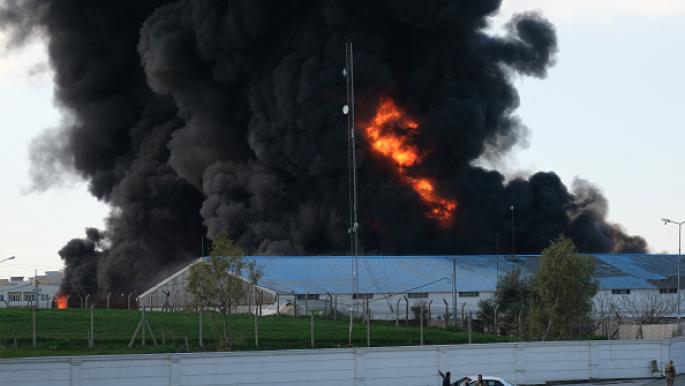
The region is witnessing escalating military tensions, with the United States and Israel exchanging strikes with Iran, raising fears of an intensifying conflict. Amidst these tense atmospheres, U.S. President Donald Trump is looking to seize the opportunity to reach an agreement that may ease tensions.
The intensity of mutual bombardments is increasing, with reports indicating that U.S. and Israeli forces have conducted military operations against Iranian targets in the region. This escalation comes at a critical time, as concerns grow over the outbreak of a comprehensive war that could impact the stability of the entire region.
Details of the Incident
In recent days, military reports have detected a series of explosions in the Iranian city of Qom, which is considered a significant religious center. These explosions are part of military reactions from the United States and Israel, both of which aim to undermine Iranian influence in the region.
On the other hand, Iran has responded to these attacks with direct threats, asserting that it will retaliate strongly against any aggressions. This military escalation raises international concerns, as it is seen as a threat to both regional and global security.
Background & Context
Historically, relations between the United States and Iran have been tense since the Islamic Revolution in 1979. Since then, the region has witnessed numerous conflicts and wars in which Iran has played a major role. In recent years, tensions have significantly escalated, particularly following the U.S. withdrawal from the Iranian nuclear deal in 2018.
The city of Qom is an important center for politics and religion in Iran, making it a strategic target in any potential conflict. Targeting this city reflects the desire of the United States and Israel to undermine the Iranian regime by attacking its religious and political symbols.
Impact & Consequences
The current military escalation could lead to serious repercussions for regional security, potentially triggering a comprehensive war involving other countries in the region. Additionally, any further escalation may affect oil prices and global financial markets, increasing economic instability.
Moreover, this escalation could exacerbate humanitarian crises in the region, where civilians are suffering from the effects of ongoing conflicts. The rise in violence may drive more people to displacement, increasing the burdens on neighboring countries.
Regional Significance
Arab countries neighboring Iran find themselves in a sensitive position, as they may be directly affected by any military escalation. Any conflict between the United States and Iran could have negative repercussions for security and stability in countries like Iraq, Syria, and Lebanon.
Under these circumstances, Arab nations must adopt cautious stances, as these events could impact their relations with major global powers. The situation also requires Arab coordination to address the increasing security challenges.
In conclusion, the situation in the region remains tense, with growing fears of military escalation that could lead to catastrophic outcomes. Urgent diplomatic efforts are needed to prevent slipping into a comprehensive war.