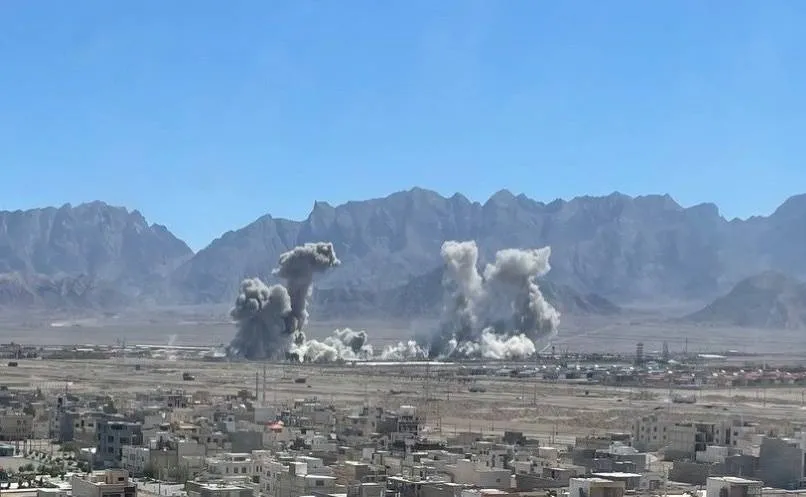
The U.S.-Iranian confrontation is moving towards a more dangerous phase as warnings from Tehran about a potential ground attack intensify. At the same time, the U.S. military is preparing for military operations that could extend for weeks, reflecting a military escalation around the Strait of Hormuz amid increasing exchanges of strikes between Iran and Israel.
In statements made by Iranian Parliament Speaker Mohammad Baqer Qalibaf on Sunday, he warned against any potential U.S. ground attack, indicating that the United States sends public negotiation messages while secretly planning military operations. Qalibaf affirmed that Iranian forces are ready to deal with any U.S. intervention, adding that Iran's fire and missiles will continue to counter any aggression.
Details of the Event
Qalibaf did not stop at warnings; he also indicated that the U.S. regional partners would face permanent sanctions if the situation escalated to a ground intervention. He described the U.S. plan, which includes 15 points, as a "wish list" aimed at achieving what Washington has failed to impose through war.
In a related context, the spokesperson for the Iranian General Staff confirmed that the Iranian army is preparing to destroy U.S. forces if the threat of a ground invasion is executed. He explained that any occupation would lead to "captivity, dismemberment, and disappearance" of any aggressor, indicating that Iran considers ground warfare as its strength.
Background & Context
These statements come at a sensitive time, as U.S. military movements in the region have increased, with thousands of U.S. soldiers and Marines arriving in the Middle East. Reports have confirmed that the U.S. Department of Defense is preparing for weeks of ground operations, although any potential operation would not rise to the level of a full-scale invasion.
The U.S. plans include airstrikes carried out by special operations forces, in addition to traditional infantry units, increasing the risk of U.S. forces being targeted by Iranian missiles and drones. Discussions within the U.S. administration suggest the possibility of seizing Kharq Island, a center for Iranian oil exports, as part of military operations.
Impact & Consequences
The military escalation between the United States and Iran raises significant concerns about the stability of the region, as any escalation could lead to a larger conflict. Iran has also begun preparing a campaign to recruit volunteers to confront U.S. forces, reflecting its readiness for a potential military confrontation.
At the same time, Iran continues to carry out missile attacks on targets within Israel, further complicating the regional situation. Reports have indicated that Iran targeted military sites in the Negev and Tel Aviv, reflecting an escalation in Iranian attacks against Israel.
Regional Significance
Arab countries are directly affected by these tensions, as any military escalation could impact security and stability in the region. Additionally, the rising tensions around the Strait of Hormuz, a vital artery for global navigation, could affect trade and oil movement in the area.
Under these circumstances, the situation in the region remains tense, with ongoing military escalation and exchanges of strikes between the involved parties. Any new developments could lead to radical changes in the regional landscape.