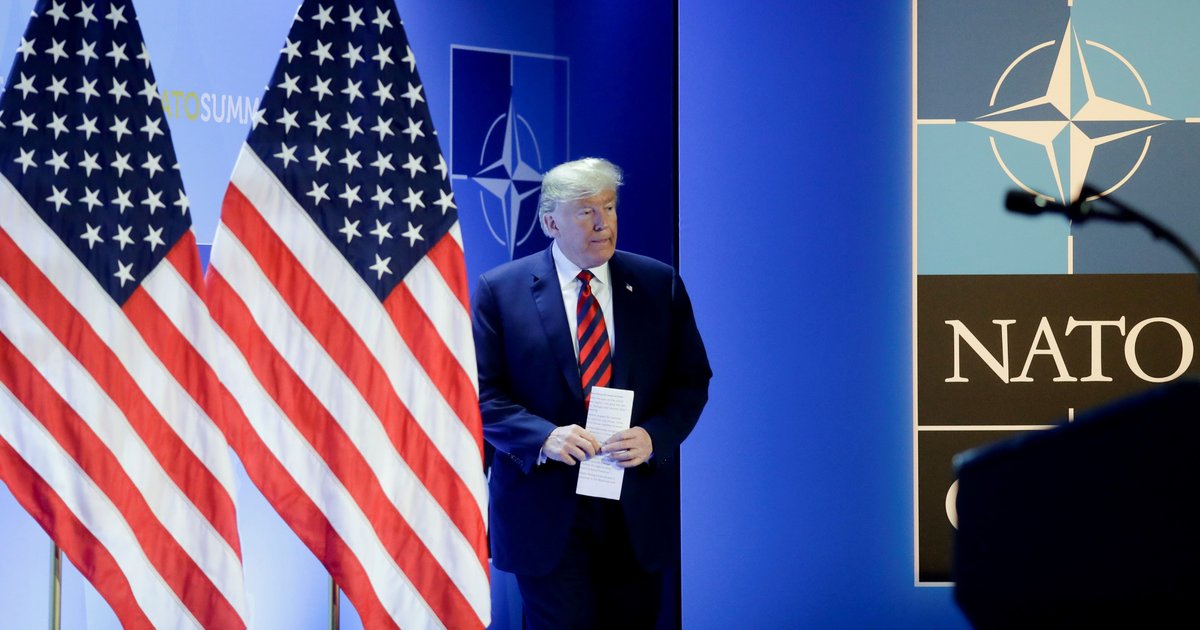
Tensions between the United States and the North Atlantic Treaty Organization (NATO) are escalating, with reports indicating that former President Donald Trump may be on the verge of taking steps that could lead to the United States withdrawing from the alliance. These developments come at a sensitive time, as NATO faces increasing security challenges amid rising geopolitical tensions in Europe.
In recent years, relations between the United States and its NATO allies have been marked by growing tensions, particularly following Trump's statements criticizing member states for not meeting their financial commitments to the alliance. This has raised concerns among many European leaders who view NATO as the cornerstone of their security.
Details of the Situation
Reports suggest that Trump, who still holds significant influence within the Republican Party, may seek to reshape U.S. foreign policy if he decides to run for president again in the upcoming elections. Some close to him have indicated that he sees NATO as a burden on the United States, reflecting his nationalist vision that prefers focusing on American interests at the expense of international commitments.
This approach could alarm European nations, many of which rely on U.S. military support to counter threats, particularly from Russia. Some European leaders have expressed their readiness to face any potential changes in U.S. policy, but they also voice concerns about the instability that could result from such shifts.
Background & Context
NATO was established in 1949 as a military alliance aimed at countering Soviet threats during the Cold War. With the collapse of the Soviet Union, NATO's role evolved to include new missions such as counter-terrorism and cybersecurity. However, new challenges facing Europe, such as escalating tensions with Russia, have reignited discussions about the importance of NATO and its role in European security.
During Trump's presidency (2017-2021), relations between the United States and its allies experienced unprecedented tensions, as Trump repeatedly criticized European nations for not paying their full share of the budget. This raised significant concerns among member states, prompting some to rethink their defense strategies.
Impact & Consequences
If Trump decides to take concrete steps towards withdrawing from NATO, it could lead to a reshaping of military alliances in Europe. European nations may find themselves compelled to increase their defense spending and develop military capabilities independently, potentially leading to a new arms race in the region.
Moreover, a U.S. withdrawal from NATO could weaken the alliance's position in facing external threats, particularly from Russia. This could escalate tensions in the region, jeopardizing security stability in Europe.
Regional Significance
U.S. relations with its NATO allies are of significant importance to the Arab region, as many Arab countries rely on U.S. military and political support. If relations between the United States and NATO deteriorate, it could affect stability in the Middle East, especially amid current tensions in areas like Syria and Libya.
Ultimately, the question of NATO's future and U.S.-European relations remains open. The upcoming U.S. elections could be a critical turning point in determining the trajectory of American foreign policy, and whether it will continue to support its NATO allies or shift towards a more nationalist policy.