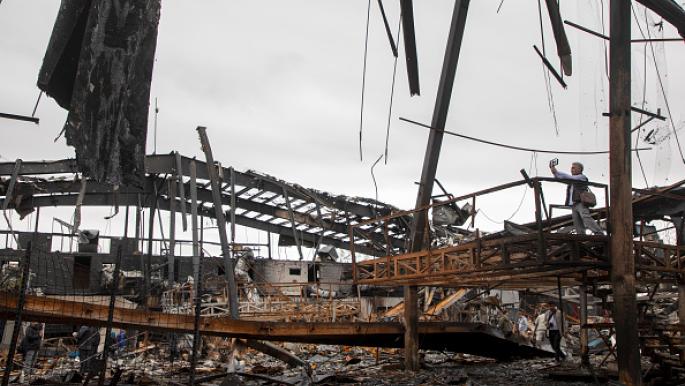
The US-Israeli war on Iran has entered a critical phase as tensions escalate, opening the door to more dangerous scenarios. The announcement of a second military operation by the Houthis further complicates the regional landscape.
These developments come at a time when the region is witnessing increasing tensions, as the United States and its allies seek to bolster their military presence in the Middle East. These moves are part of a strategy aimed at countering the growing Iranian influence in the region, which has become a threat to regional security.
Details of the Event
In recent days, military reports have noted US reinforcements in various parts of the Middle East, with additional troops and military equipment sent to bases in Iraq and Syria. These steps come at a sensitive time, as threats from Iran and its allies, including the Houthis in Yemen, are on the rise, with the latter announcing a new military operation targeting strategic sites.
The new Houthi operation involves targeting sites belonging to the Arab coalition led by Saudi Arabia, reflecting an unprecedented escalation in the Yemeni conflict. Military sources have confirmed that the Houthis have employed missiles and drones in these operations, further complicating the security situation in the region.
Background & Context
Historically, relations between the United States and Iran have seen increasing tensions since Washington's withdrawal from the nuclear deal in 2018. This withdrawal led to the re-imposition of stringent economic sanctions on Iran, adversely affecting its economy and escalating military tensions in the region. At the same time, the Houthis in Yemen have received increasing support from Iran, making them part of the broader regional conflict.
The Houthis are considered one of Iran's proxies in the region and have significantly enhanced their military capabilities in recent years, posing a real threat to Saudi Arabia and the Gulf States. This military escalation comes at a sensitive time, as the international community seeks peaceful solutions to the conflict in Yemen.
Impact & Consequences
These developments could lead to a greater escalation in the regional conflict, with confrontations potentially expanding to include other countries in the region. Additionally, the bolstering of the US military presence may provoke reactions from Iran and its allies, increasing the likelihood of new conflicts erupting.
Economically, these tensions may impact global oil markets, as any military escalation could lead to rising oil prices due to increased risks in the region. Furthermore, foreign investments may be adversely affected due to security instability.
Regional Significance
For Arab countries, the rising tensions in the region could have negative repercussions on security and stability. Gulf states, particularly Saudi Arabia, may find themselves in a difficult position, requiring them to enhance their defensive capabilities to counter the growing threats.
The situation in Yemen may also worsen, increasing civilian suffering and affecting humanitarian relief efforts. Under these circumstances, it becomes imperative for the international community to act urgently to find peaceful solutions to the multiple conflicts in the region.
In conclusion, the current escalation indicates a new phase of tensions in the Middle East, where regional and international interests intertwine in a complex manner. All parties involved must consider diplomatic options to avoid further escalation.