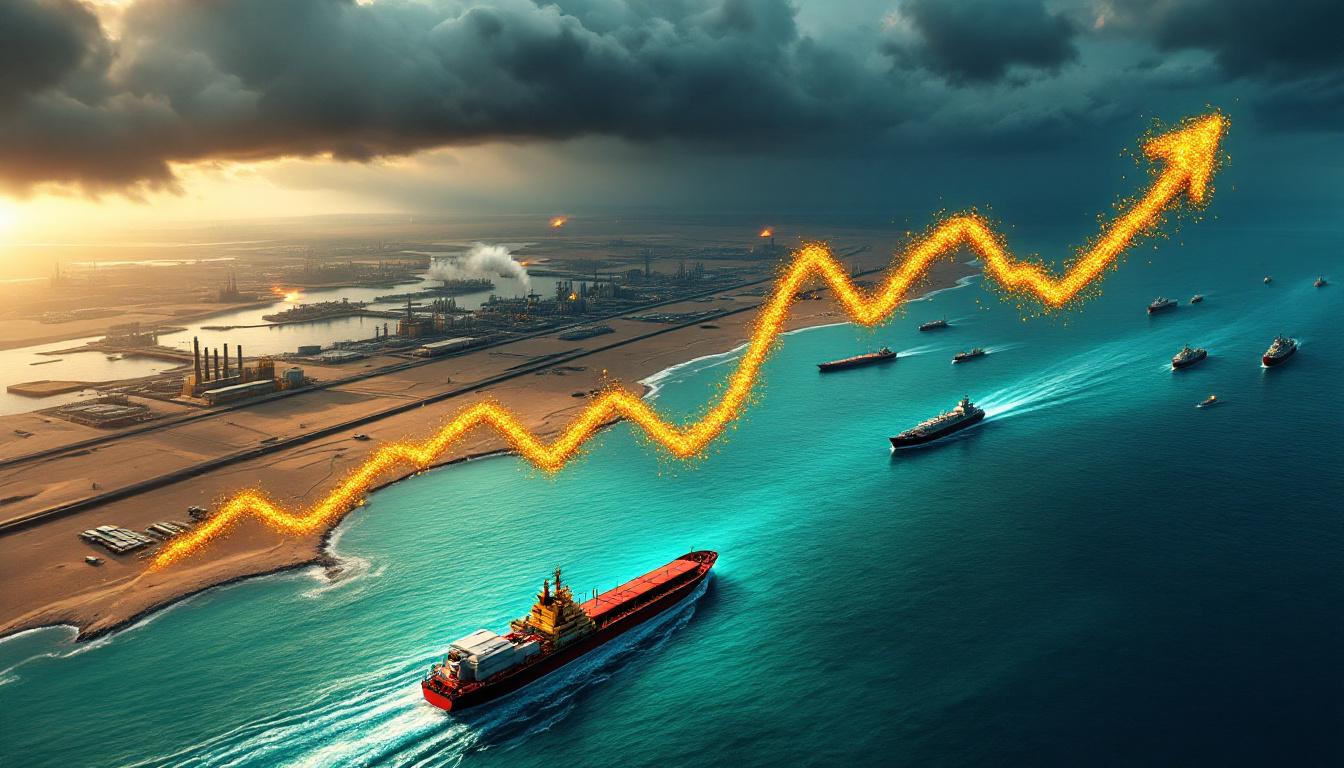
Increasing tensions in the Strait of Hormuz have led to a significant rise in global shipping costs, with companies facing additional expenses of up to 340 million euros daily. Reports indicate a notable increase in marine fuel prices, further burdening ship owners.
According to a report from the Transport and Environment Organization, marine fuel prices have surged, with the price of low-sulfur fuel in Singapore reaching 941 euros per ton, an increase of 223% since the beginning of 2026. Additionally, liquefied natural gas prices have risen by 72% since early March, adding pressure on companies.
Details of the Incident
Reports indicate that maritime companies have incurred additional costs exceeding 4.6 billion euros since February 28, when the United States and Israel launched their offensive against Iran. This situation reflects the direct impact of geopolitical tensions on the shipping industry, as 99% of the global shipping fleet relies on fossil fuels, making it vulnerable to price fluctuations.
Elouai Nord, the maritime policy officer at the organization, stated that the chaos in the Strait of Hormuz has placed global maritime trade under scrutiny, with the oil market being the most affected. He confirmed that this conflict is costing the industry millions of dollars daily.
Background & Context
The Strait of Hormuz is one of the most important maritime passages in the world, through which approximately 20% of the world's total oil passes. The region has witnessed increasing tensions in recent years, particularly with the escalation of military activities between Iran and the United States. These tensions directly affect oil and gas prices, complicating the global economic situation.
Historically, the region has attracted the attention of major powers due to its strategic importance. Previous conflicts have led to rising oil prices, which in turn have impacted the global economy. Today, the situation appears to be heading towards further escalation, raising concerns among investors and companies.
Impact & Consequences
Reports predict that this crisis will accelerate investments in clean energy solutions. Previous concerns regarding environmentally friendly shipping costs seem less significant compared to current challenges. The transition to clean energy is seen as an urgent necessity given the current circumstances.
Additionally, reports suggest potential steps to reduce exposure to fuel price fluctuations, such as electricity for short ships, which is considered a short-term opportunity. Furthermore, technologies like slow steaming and sail-assisted propulsion could improve fuel efficiency for vessels.
Regional Significance
These developments directly affect Arab countries, especially those reliant on oil exports. The rise in shipping costs may lead to increased prices for goods and services, negatively impacting local economies. Moreover, tensions in the region could lead to political instability, heightening economic risks.
In conclusion, Arab countries must adopt effective strategies to address these challenges by enhancing investments in renewable energy and developing robust infrastructure for the shipping industry.