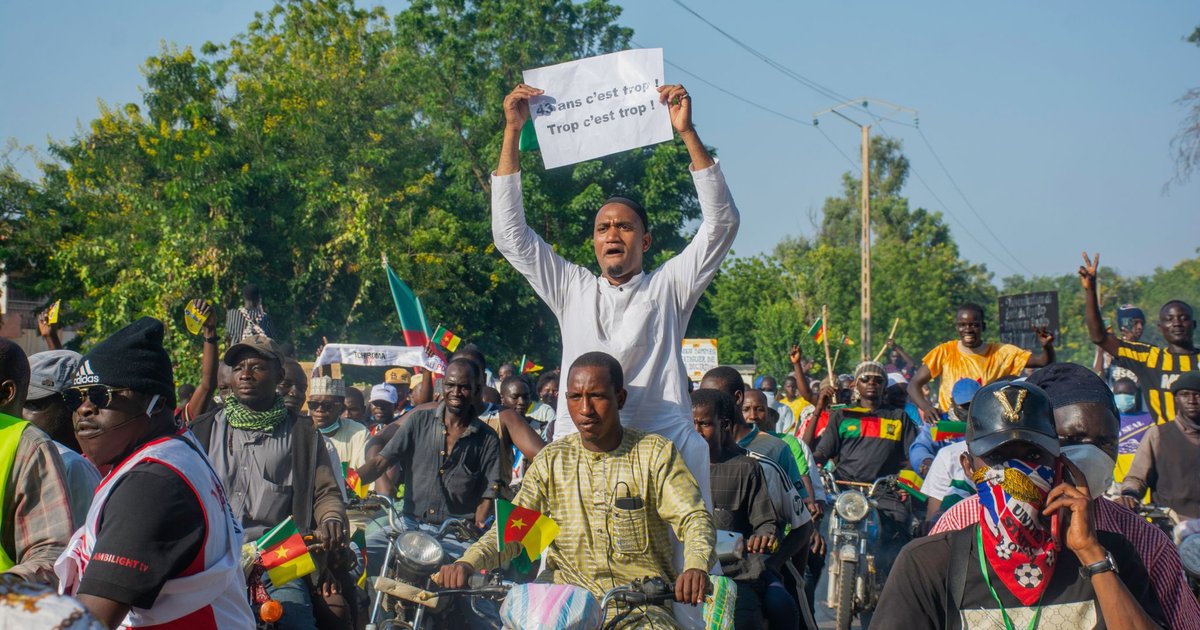
The Cameroonian parliament approved a constitutional amendment earlier this month aimed at establishing the position of Vice President, a decision that has sparked widespread debate in political and public circles. While some consider it a step toward enhancing institutional stability, others view it as an attempt to reshape power in favor of President Paul Biya, who has been in power for over 40 years.
This decision, which was endorsed by the parliamentary majority, has elicited mixed reactions, with some parties interpreting it as a desire to bolster stability amid the political challenges facing the country. Conversely, opponents regard it as an effort to cement family rule, reflecting fears of the ruling family's continued influence in the future.
Details of the Amendment
In the context of discussions surrounding this amendment, the Burkinabe newspaper Le Pays questioned the timing of the decision, suggesting that President Biya is seeking to arrange a smooth transition of power as he ages. This timing raises concerns that the new position could serve as a tool to ensure the ruling family's ongoing influence.
The opposition's response was swift, with Maurice Kamto, the leader of the Cameroonian opposition, describing the amendment as a "constitutional coup" and announcing his intention to gather signatures for a public referendum on the decision. Additionally, some European media outlets, such as the Belgian newspaper Cameroon, criticized the adoption of such a significant amendment by a parliament that has renewed its mandate twice without popular voting, raising questions about its true representation of approximately 30 million citizens.
Background & Context
Historically, Cameroon has experienced numerous political transformations; however, Paul Biya's rule, which began in 1982, is among the longest in Africa. This prolonged period of governance has heightened concerns about the entrenchment of power, especially in the absence of effective mechanisms for peaceful power transitions. The recent constitutional amendment comes at a sensitive time, as pressure on the government from the opposition and civil society increases.
Moreover, the experiences of other countries in the region, such as Gabon and Chad, which have witnessed family rule, raise alarms that Cameroon may be heading down a similar path. These experiences reflect significant challenges to democracy and human rights in the region.
Impact & Consequences
The potential implications of this amendment are varied; it could lead to enhanced institutional stability if used correctly. However, it could also serve as a tool to undermine political pluralism, exacerbating political divisions within the country. Discussions within parliament regarding this issue indicate fears that the new position may be used to restrict political freedoms rather than promote them.
Furthermore, speculation regarding the identity of the candidate for the new position has begun to stir controversy in the capital, Yaoundé. Names being circulated include Ferdinand Ngoh Ngoh, the Secretary General of the Presidency, but the most prominent is Frank Biya, the president's son, who is considered a strong candidate for the role. This speculation heightens concerns that the internal transition of power may be confined within the ruling family.
Regional Significance
These developments in Cameroon are particularly significant for the Arab region, as they reflect the challenges faced by political systems in maintaining stability amid internal and external pressures. The Cameroonian experience may serve as a lesson for Arab countries striving for political stability amid democratic transitions.
In conclusion, the decision to establish the Vice President position marks a pivotal moment in the trajectory of the Cameroonian political system. The ongoing debate raises a profound question: does this position represent a genuine reform, or is it merely a tool to prolong Paul Biya's regime?