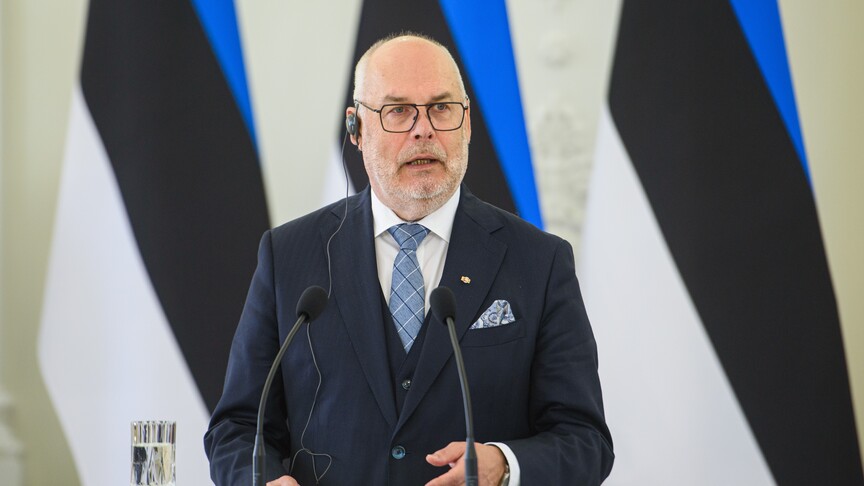
During his recent visit to Finland, Estonian President Alar Karis stressed the importance of Europe being prepared to face all potential scenarios in the Ukraine war. This statement came as he discussed Europe's role in security talks focused on the ongoing conflict between Russia and Ukraine.
Karis pointed out that the current situation requires European nations to take proactive steps to ensure security and stability in the region. He noted that cooperation among European countries is vital to address the security challenges arising from this conflict.
Details of the Visit
During his visit, Karis met with several Finnish leaders, where they discussed ways to enhance security cooperation among European nations. He emphasized the necessity for Europe to be ready to confront any potential escalation in the conflict, indicating that recent events in Ukraine necessitate a reassessment of European defense strategies.
Karis also addressed the importance of strengthening the defensive capabilities of European countries, stressing the need for a swift and effective response to any threats the region may face. He clarified that European nations must be capable of working collectively to tackle any new security challenges.
Background & Context
The Ukraine war is considered one of the most complex conflicts in modern history, having begun in 2014 following Russia's annexation of Crimea. Since then, the region has witnessed an escalation in hostilities, leading to worsening humanitarian conditions and increased tensions between Russia and Western nations.
European countries are striving to bolster their security posture through military and political cooperation, as this war poses a significant challenge to European security. Recent events have resulted in increased defense spending in many European nations, reflecting growing concerns over Russian threats.
Impact & Consequences
The escalation in Ukraine has far-reaching implications for European security, potentially leading to changes in political and military alliances. Furthermore, the ongoing conflict may affect the European economy by increasing defense costs and impacting economic stability.
Moreover, the conflict in Ukraine could influence relations between European countries and Russia, complicating the geopolitical landscape in the region. European leaders need to contemplate new strategies to address these escalating challenges.
Regional Significance
The Arab region is indirectly affected by the conflict in Ukraine, as rising tensions in Europe could lead to impacts on energy prices and global markets. Many Arab nations rely on energy imports, and any fluctuations in prices could significantly affect their economies.
Additionally, the security situation in Europe may influence regional stability in the Middle East, where political and economic alliances could be affected. Therefore, it is crucial for Arab nations to monitor developments in this conflict and its potential impacts on their interests.