An Italian expert in international law, Maurizio Deli Santi, revealed in a report published by the Italian website "Analisi Difesa" that recent European actions regarding the Strait of Hormuz indicate an alternative strategy to military escalation, focusing on the application of international law.
Deli Santi believes that the serious and responsible efforts made by European countries alongside other parties can contribute to resolving the Iranian crisis, thereby restoring the UN's central role in international conflict resolution.
Details of the Event
The European stance in response to the US-Israeli escalation against Iran has shown responsible and unexpected behavior, as the coalition of four countries (Italy, France, Germany, and the United Kingdom), supported by Canada, has taken an independent position from the escalation policy pursued by US President Donald Trump and Israeli Prime Minister Benjamin Netanyahu. This stance emphasizes the importance of international law and the necessity of de-escalation.
Moreover, major European countries reaffirmed at the recent G7 Foreign Ministers' Summit their commitment to UN Resolution 1701 regarding Lebanon, calling for a cessation of hostilities and regional stability, reflecting their desire to halt Israeli military escalation.
On March 19, six countries, namely Italy, France, Germany, the United Kingdom, the Netherlands, and Japan, signed a joint statement regarding the Strait of Hormuz, which was later supported by Canada. The Europeans were keen to avoid expanding the scope of the "ASPIDES" mission launched by the European Union in 2024 under Italian leadership, to avoid falling into the trap of accusing Iran of violating international law.
Background & Context
Iran is currently facing systematic armed attacks executed under the controversial doctrine of "preemptive war," which contradicts the rules of international law. These rules require a mandate from the UN, except in cases of self-defense against an imminent attack, as stipulated in Article 51 of the UN Charter.
In response to these attacks, Iran has taken measures to restrict navigation in the Strait of Hormuz, in addition to launching attacks on US military bases in the region. In this context, Article 51 of the UN Charter stipulates the legitimacy of self-defense, provided that it adheres to the general principles of the laws of armed conflict.
This principle is also mentioned in the San Remo Manual on international law applicable in armed conflicts at sea, which is a non-binding treaty but includes a set of rules recognized in customary international law.
Impact & Consequences
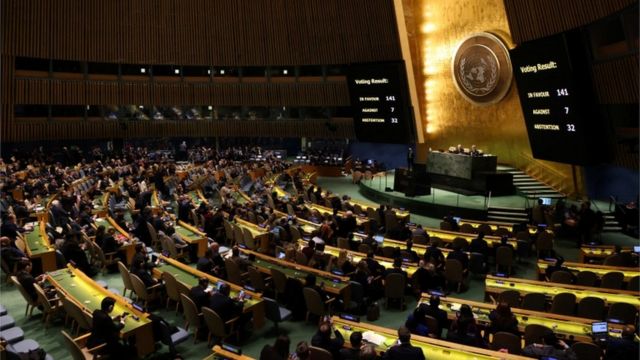
It is essential for Europe to continue its path of cooperation with all active parties in the region, as well as with other countries in the Global South affected by the repercussions of the war in Iran. There must be a coordinated effort to address the current war within the framework of the UN and work towards stopping it through a resolution in the UN Security Council or the General Assembly.
The resolution should be based on three main axes: a ceasefire from all concerned parties, appointing a team of negotiators capable of leading the de-escalation process, and the International Atomic Energy Agency conducting urgent inspections of Iranian nuclear sites.
Regional Significance
The Arab region is significantly affected by the escalating tensions in the Strait of Hormuz, as this waterway is vital for global trade. Any escalation in the conflict could lead to rising oil prices and disrupt trade flows, negatively impacting the economies of Arab countries.
In conclusion, the current situation requires diligent diplomatic efforts from European countries to ensure regional stability and avoid any military escalation that could lead to catastrophic outcomes.