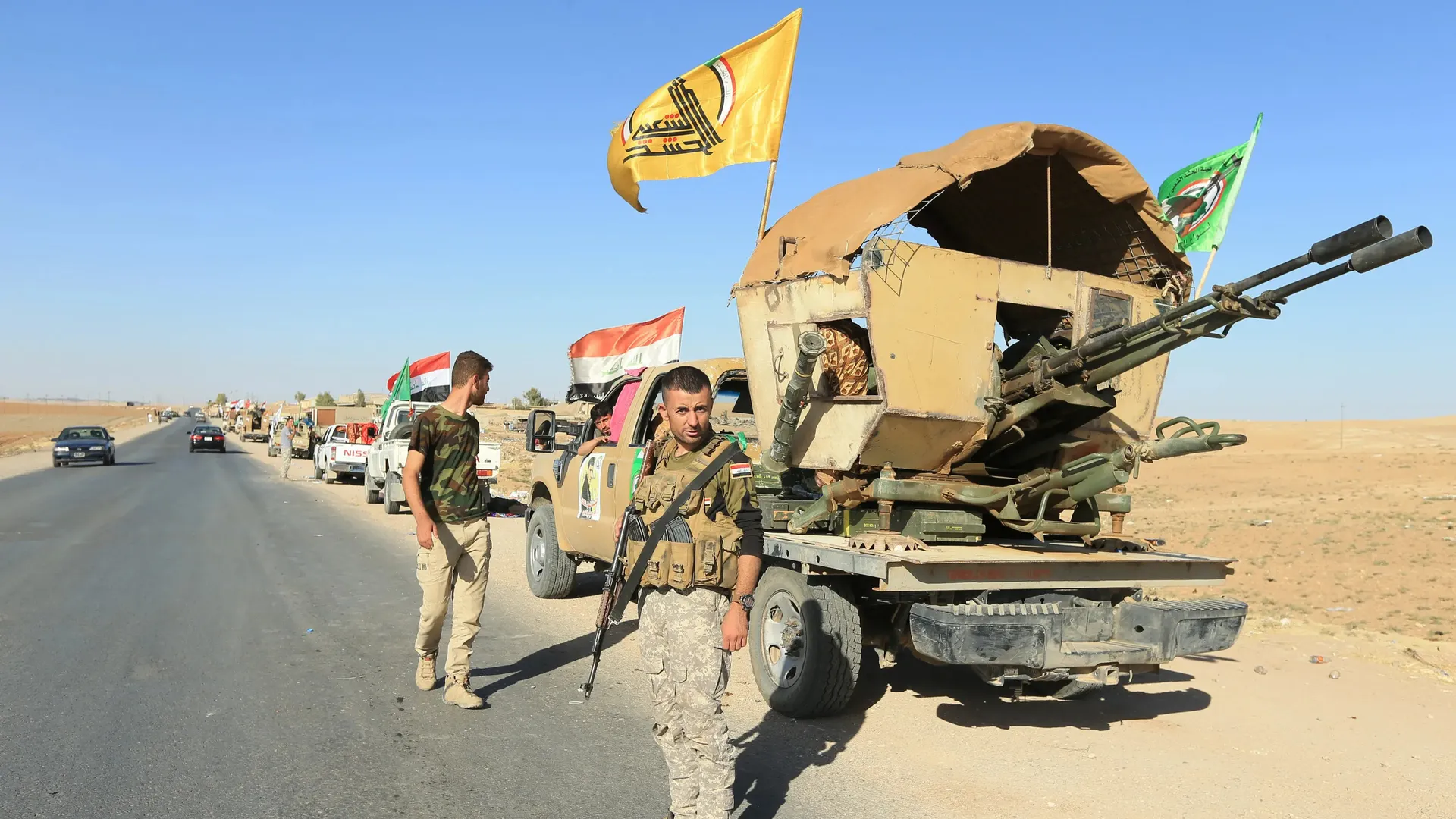
The pace of airstrikes targeting Iraqi armed factions is accelerating, with these attacks extending to new provinces such as Wasit (south) and Salah al-Din (north). This escalation comes amid the ongoing repercussions of the U.S.-Israeli war on Iran, which began a month ago.
Since the onset of the conflict, the headquarters of the Popular Mobilization Authority and various Iraqi armed factions have been subjected to multiple airstrikes believed to be attributed to the United States and Israel. At the same time, Iraqi factions are launching attacks targeting U.S. interests, while Iran is conducting strikes against Iranian Kurdish opposition groups in the Kurdistan region.
Details of Recent Events
In the latest developments, an airstrike targeted a Popular Mobilization headquarters in the Tooz Khurmatu district of Salah al-Din province, according to a source from the Popular Mobilization media. An Iraqi police source also reported that an airstrike targeted a Popular Mobilization site in the Rashidiya area of Mosul in Ninawa province.
On Saturday evening, the Popular Mobilization announced the death of three of its members in a strike on their headquarters in Kirkuk province in northern Iraq. In another development, a drone targeted one of the homes of the President of the Kurdistan Region of Iraq, Nechirvan Barzani, in Duhok province, where regional authorities confirmed that air defenses shot down a drone near a base for Peshmerga fighters in the province.
Al Jazeera's correspondent in Baghdad, Omar Al-Haj, noted that the targeting has extended to other provinces, such as Salah al-Din and Wasit, after Anbar witnessed intensive operations last week. A drone also crashed early today in the Karrada neighborhood near Al-Wathiq Square in Baghdad.
Background & Context
Airstrikes against Iraqi factions are increasing despite initiatives proposed by these factions for de-escalation. Armed factions often target the U.S. embassy in Baghdad and centers of foreign troops in Iraq. The armed factions announced a renewal of a previous five-day truce, but this truce does not include military centers, as the factions confirmed they would continue operations against what they call U.S. interests and military bases.
It is noteworthy that operations carried out by armed factions against U.S. interests have extended to neighboring countries, such as Jordan and Syria. In this context, Seiban Hamou, the Syrian Deputy Minister of Defense, announced that his forces repelled a drone attack launched from Iraq targeting a U.S. base in northeastern Syria.
Impact & Consequences
Concerns are growing that these escalations could lead to a larger escalation in the region, as countries such as Saudi Arabia, Kuwait, the UAE, Bahrain, Qatar, and Jordan have called on Iraq to take action to stop the attacks launched by armed factions towards their territories. For its part, Iraq has declared its rejection of any aggression against these countries from its territory.
Iraq has become a new battleground for the U.S.-Israeli conflict against Iran, as U.S. airstrikes continue against the headquarters of armed factions, including the Popular Mobilization, which is considered part of Iraq's security system. This situation complicates the security landscape in Iraq and reflects the increasing tensions in the region.
Regional Significance
These developments significantly impact security and stability in the Arab region. The rising tensions in Iraq could have negative repercussions on neighboring countries, as relations between Iraq and its neighbors may be affected by these attacks. Furthermore, the continuation of the conflict could open the door for greater external interventions, further complicating the security situation in the region.
In conclusion, the situation in Iraq remains under observation, as the current circumstances require an effective political and security response from all concerned parties to ensure regional stability.