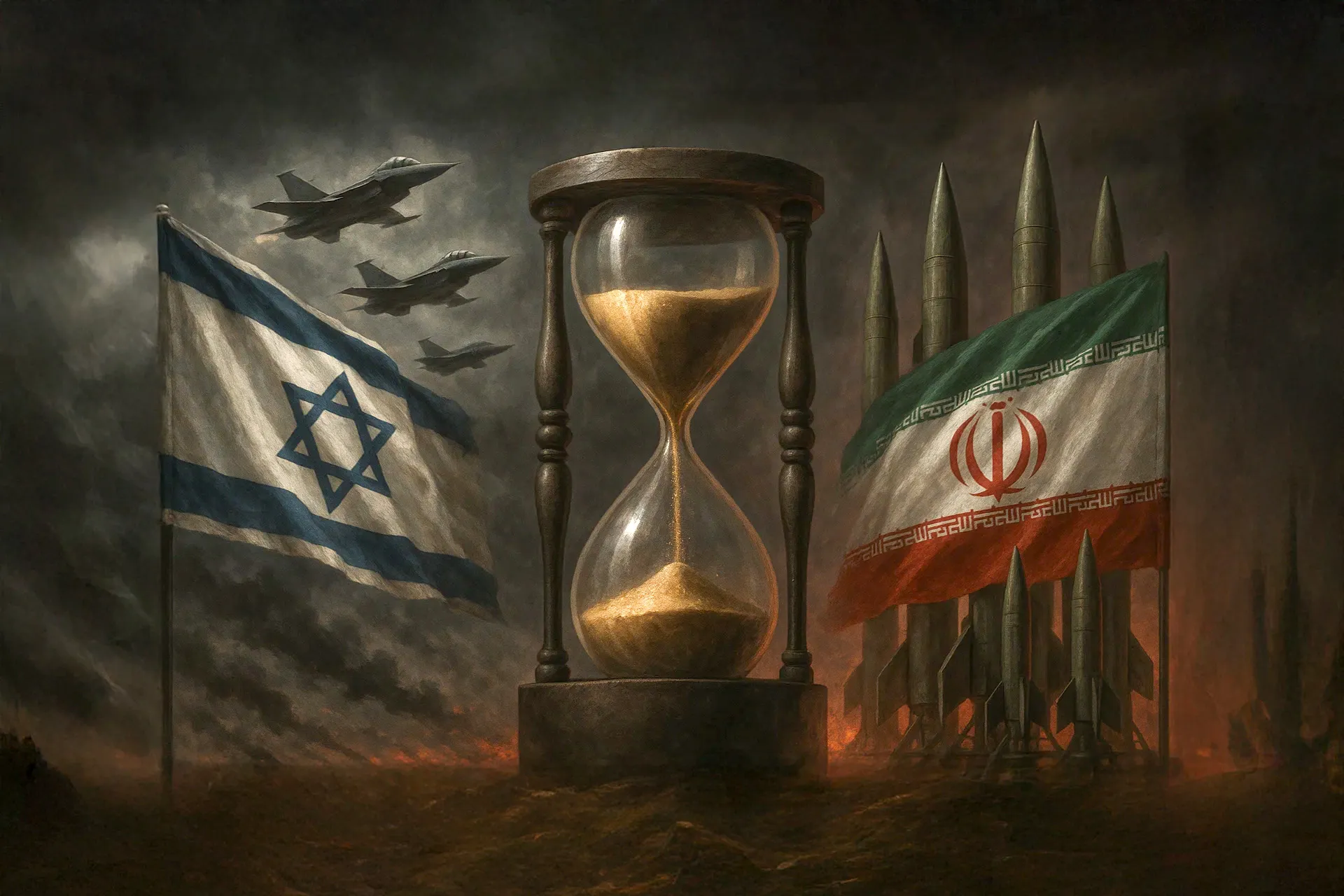
The war between the United States and Israel on one side and Iran on the other has entered its second month, revealing a striking transformation in the military target landscape. Airstrikes have markedly increased in both intensity and quality, reflecting the expansion of the target bank for both sides.
On the first day of the war, strikes targeted approximately 900 targets within 12 hours, primarily concentrated in the Iranian capital, Tehran, in a swift attempt to cripple Iran's defensive capabilities. Over time, the target bank expanded to include multiple regions such as Isfahan, Kermanshah, and Tabriz, where missile platforms and military infrastructure were targeted.
Details of the Event
The pace of strikes continued in the following days, with renewed focus on Tehran and Isfahan. The targets included strategic facilities, such as nuclear sites like Natanz, energy production sites, and steel production facilities in Firouzabad and Khuzestan, in addition to new targets in Yazd and Arak.
In contrast, Iran launched approximately 1200 ballistic missiles and drones towards Israel and regional targets on the first day, but the launch rate later declined by about 90% according to circulating estimates. Nevertheless, Tehran utilized more advanced missiles such as "Khaybar Shakan," "Sijil," and "Khoramshahr 4," increasing their destructive capability despite the reduced number of launches.
Background & Context
Military expert Brigadier General Hassan Jouni explained that the American and Israeli target map was built around clear strategic objectives, including the comprehensive destruction of Iranian military capabilities and the dismantling of the command system. The first phase focused on achieving air superiority by targeting air defense systems, which explains the high intensity of strikes in the early days.
The next phase shifted to "crippling fire capabilities" by targeting missile platforms and their storage, followed by targeting internal security infrastructure by striking the headquarters of the Revolutionary Guard and Basij, with approximately 29 provinces out of 31 in Iran being targeted. The final phase included economic targets, particularly in the energy sector, aimed at suffocating Iran's economic capacity.
Impact & Consequences
On the other hand, Brigadier General Jouni indicated that Iran's strategic goal is to "deprive Israel of security stability" by continuing to launch missiles at various areas, employing a "rationing launch" tactic to achieve the maximum possible impact. Iran focused on targeting Israeli missile defense systems to weaken their interception capabilities, alongside targeting vital areas in central Israel, such as Tel Aviv, Haifa, the Negev, and Dimona.
One of the most notable shifts in the course of the war is the entry of the "Ansar Allah" group into the confrontation by launching a missile towards Israel, adding an important geopolitical dimension. This development gives Iran a parallel leverage to the Strait of Hormuz and reflects the gradual activation of fronts according to battlefield developments.
Regional Significance
The current war reflects escalating tensions in the region, where its repercussions may affect regional security and the stability of neighboring countries. Under these circumstances, fears of a broader escalation that could destabilize the region are increasing.
In conclusion, Brigadier General Jouni considered that the war has reached a "critical juncture," oscillating between the success of diplomatic efforts led by Pakistan and regional parties or slipping into a broader escalation phase that may push Iran to utilize more of its strategic cards.