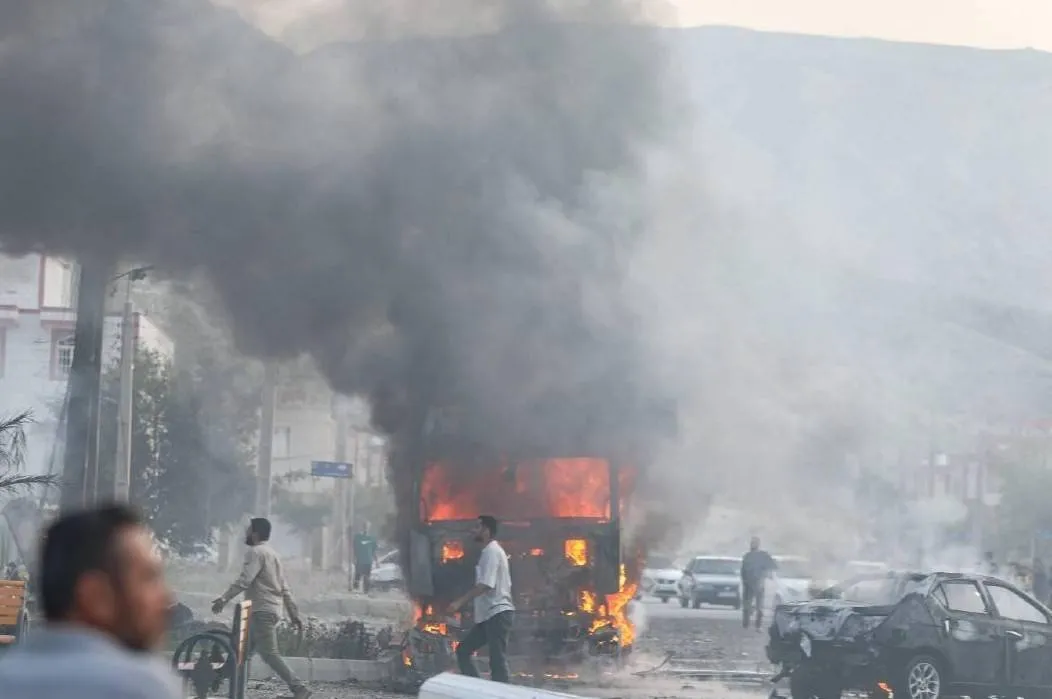
Three prominent American experts in defense and intelligence have warned that President Donald Trump's administration does not possess a clear strategic plan to achieve victory in the ongoing war with Iran, despite what they describe as a 'stunning defeat' for Iranian forces. This was stated during their separate interviews with the 'Asharq Al-Awsat' newspaper, where they noted that the repercussions are accelerating throughout the region.
Former CIA officer Chip Asher, defense policy analyst at the Middle East Institute Jason Campbell, and retired Brigadier General Mark Kimmitt discussed the 'failure' of the Trump administration's initial maneuver, where the initial military strikes did not lead to the collapse of the Iranian regime or ignite a popular uprising.
Details of the Event
Asher explained that some officials within the administration believed that the initial military strikes would force the Iranian regime to surrender quickly or lead to internal unrest. Meanwhile, Campbell pointed out the absence of a clear strategic framework guiding the military operation, clarifying that there are 'strategic aspirations' rather than specific and achievable goals.
Despite the pressures faced by Iran, including the killing of some military leaders and a decline in military capabilities, the Iranian regime remains capable of threatening the Strait of Hormuz and has shown no intention of ceasing hostilities. Kimmitt estimated that Iran's offensive capabilities have significantly decreased, but this has not led to the regime's collapse.
Background & Context
The current war with Iran is considered part of a long-standing conflict between the United States and Iran, which has seen a notable escalation in recent years. Since the United States withdrew from the Iranian nuclear deal in 2018, tensions have significantly increased, leading to a series of retaliatory attacks between the two parties.
Concerns are growing that the continuation of the war could lead to greater escalation, as Iran's allies such as Hezbollah and the Houthis become involved in the conflict. Experts indicate that the Iranian strategy relies on a 'war of attrition' aimed at exhausting the United States' will to fight.
Impact & Consequences
Analyses warn that reliance on attrition could lead to a repetition of the strategic mistakes witnessed by the United States in previous conflicts, where military victories failed to achieve tangible political outcomes. Additionally, the economic and diplomatic costs are rising, affecting global markets.
Asher identified three main options available to the Trump administration, including declaring victory and withdrawing, escalating military action, or imposing an economic embargo on oil shipments. However, any option requires careful planning to ensure that the situation does not worsen.
Regional Significance
The war with Iran significantly impacts stability in the Arab region, with increasing risks of escalating conflict in the Strait of Hormuz, a vital corridor for global oil trade. The escalation of military operations could also heighten tensions between Arab states and Iran, complicating peace and stability efforts in the region.
In conclusion, the situation in the region remains tense, with increasing pressures on the Trump administration to make decisive decisions. As the war continues, American leaders must consider the long-term consequences of any potential escalation.