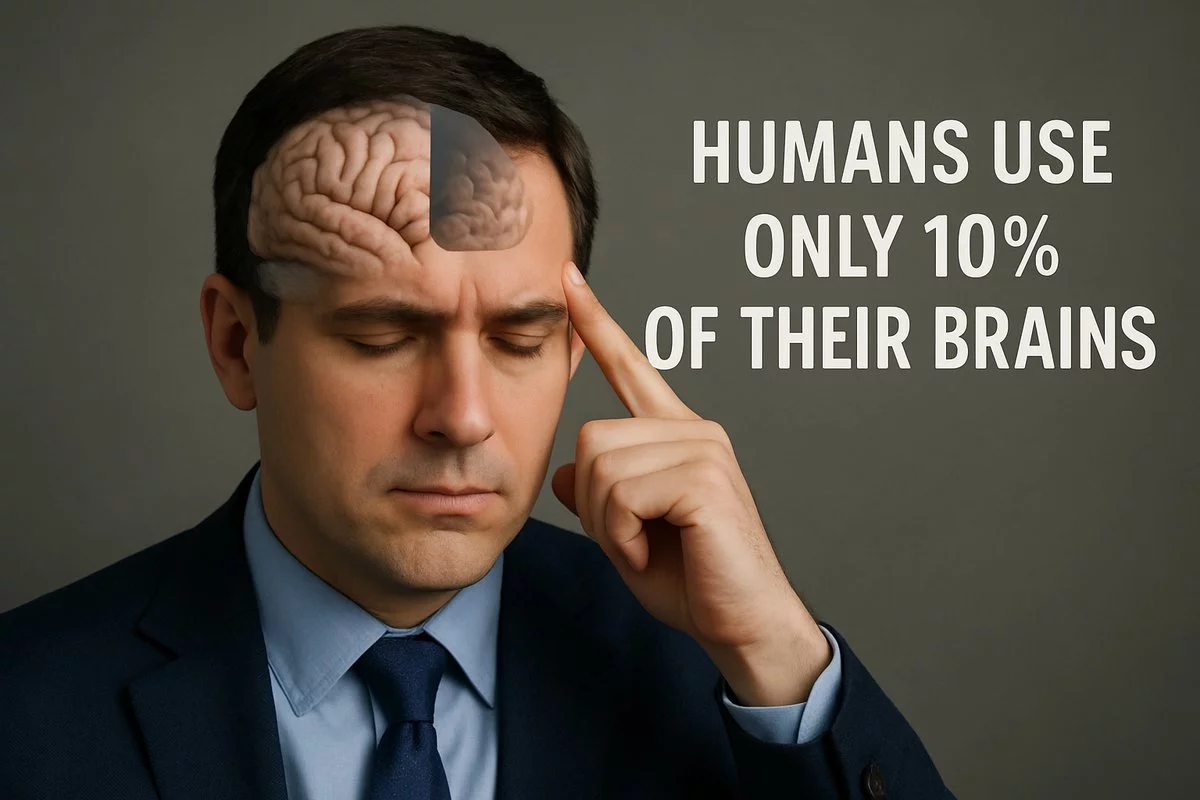
Numerous questions arise regarding the claim that humans only use 10% of their brains. Scientific research suggests that this belief may be a mere myth. In fact, studies have shown that all parts of the brain have specific functions, and we use our brains fully, even while performing the simplest daily activities.
The origin of this idea dates back to the early 20th century, where it was widely circulated in popular culture. However, scientists today confirm that the human brain is an extremely complex organ that works in an integrated manner. Each area of the brain plays a vital role in different functions, such as movement, perception, memory, and emotions.
Details of the Research
In recent years, numerous studies have been conducted that highlight how the brain functions. For example, magnetic resonance imaging (MRI) techniques have shown that most areas of the brain are active even during rest. This means that the brain does not stop working; rather, it processes information and plans for future tasks.
Moreover, research in fields such as neuroscience and psychology has proven that the brain can adapt to new experiences, meaning it can learn and grow throughout life. This ability to adapt is known as neuroplasticity, which refers to the brain's capacity to form new connections in response to experiences and learning.
Background & Context
Historically, the idea of using only 10% of the brain has been prevalent in popular culture and has been used in films and books as a means to portray superhuman abilities. However, with the advancement of science, it has become clear that this notion does not reflect reality. In fact, every part of the brain has a specific function, and the interaction between these parts is what allows us to live our lives normally.
This idea also serves as an example of how misinformation spreads in society and how it can affect our understanding of science. In the information age, it is crucial to verify facts and ensure the accuracy of information before accepting it.
Impact & Consequences
The impact of this idea on society can be significant. If people believe they are only using a small part of their brains, they may feel frustrated or incapable of reaching their full potential. It is important to understand that every individual has the ability to learn and grow, and that the brain is a powerful tool that can be fully utilized.
Furthermore, understanding how the brain works can help develop better educational strategies, enhance mental health, and increase productivity at work. By promoting scientific awareness, we can combat misinformation and foster a correct understanding of science.
Regional Significance
In the Arab region, this information is particularly important, as many young people face challenges in education and employment. By enhancing scientific understanding, we can support youth in realizing their full potential and motivate them to learn and develop. This can also help foster innovation and creativity in our communities.
In conclusion, the idea of using only 10% of the brain is merely a myth. It is essential to continue researching and learning about how the brain works and to share this knowledge with others to promote scientific understanding in our communities.