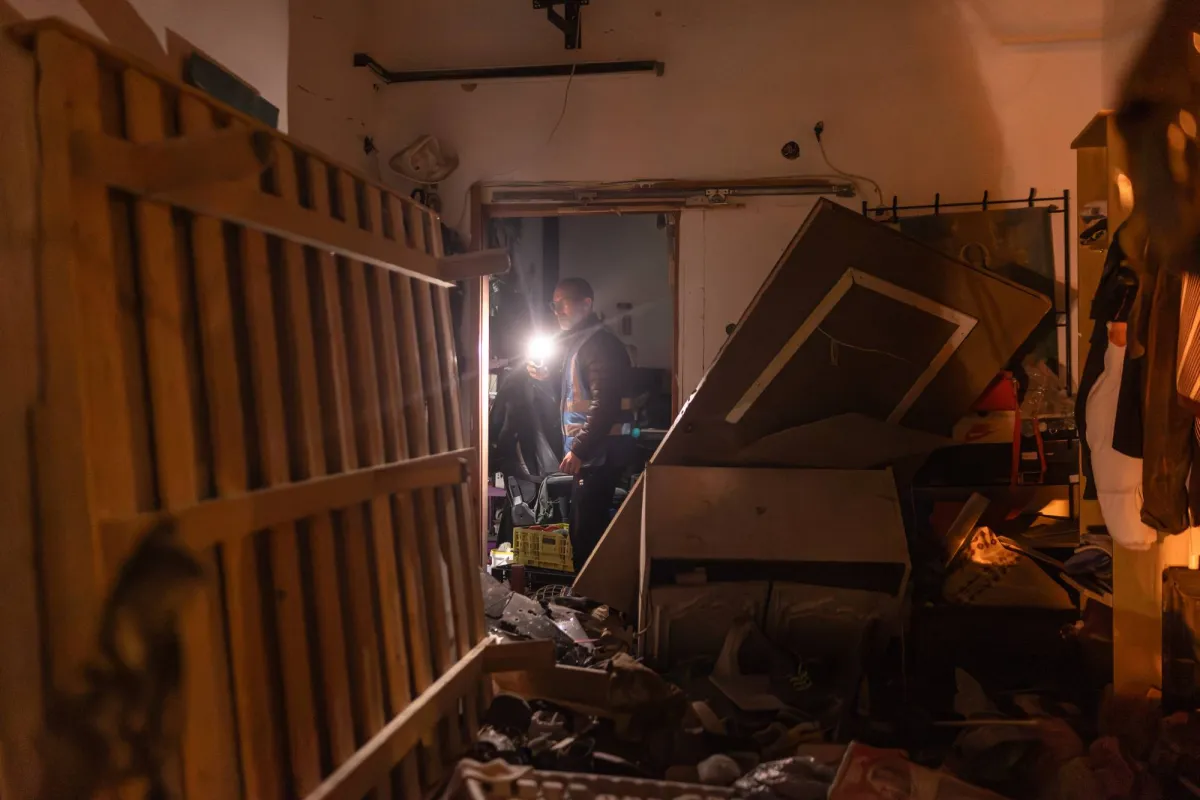
Explosions were heard in Jerusalem today (Saturday) after Iranian missiles were detected, resulting in the death of a 52-year-old man and injuries to two others in Tel Aviv last night (Friday). Israeli ambulance services confirmed that the victims included a man aged 52, along with two others aged 65 and 50.
Reports also indicated additional injuries in the Kuseifi area in the south of the country due to shrapnel. Israeli Home Front Command chief, Mickey David, explained that cluster munitions from a missile struck an apartment in a residential building, causing significant damage.
Details of the Incident
The Israeli military announced that it detected missile launches from Iran, with sirens sounding in Jerusalem and explosions heard in Jericho in the occupied West Bank. The military confirmed in a statement that defense systems were operational to intercept the threats, noting that search and rescue forces were working in locations across Israel where reports of missile impacts were received.
Hours after the incident, the Israeli military reported the detection of a new batch of missiles aimed at Tel Aviv, with media outlets stating that the attack originated from Iran and Lebanon, amid escalating tensions between Israel and Hezbollah. A missile from Yemen was also detected, believed to have been launched towards Israel for the first time since the war began, but no reports of injuries or damage were received.
Background & Context
These events come at a highly sensitive time, as the region has seen military escalation since February 28, when the United States and Israel conducted airstrikes on Iran, resulting in the deaths of several prominent figures in the Iranian Revolutionary Guard. These airstrikes have heightened tensions between Tehran and Tel Aviv, with both nations exchanging accusations of using dangerous weapons such as cluster munitions.
Iranian Foreign Minister Abbas Araghchi had vowed a harsh response against Israel for attacks targeting vital facilities in Iran, further escalating tensions in the region. A quadrilateral meeting was also announced in Pakistan, involving the foreign ministers of Saudi Arabia, Turkey, and Egypt, in an attempt to seek a resolution to the ongoing war in the Middle East.
Impact & Consequences
Concerns are rising over the escalation of conflict in the region, with experts indicating that the continuation of mutual attacks could lead to greater escalation, threatening regional security and increasing civilian suffering. Reports have indicated that 18 civilians have been killed since the war began, including 15 as a result of Iranian missile attacks.
International pressure is mounting on both Iran and Israel to de-escalate, as many countries seek to play a mediating role in the conflict. However, hostile statements from both sides suggest that peaceful solutions may be far from reach.
Regional Significance
These events directly impact the Arab region, as fears grow over the repercussions of the war on neighboring countries. The military escalation between Iran and Israel could destabilize countries like Lebanon and Syria, where armed groups linked to Iran are present.
At the same time, Arab nations are striving to enhance their diplomatic efforts to ease tensions, with the quadrilateral meeting in Pakistan seen as an important step towards achieving peace in the region. However, the continuation of attacks may hinder these efforts and complicate the situation further.
In conclusion, the situation in the Middle East remains tense, with ongoing exchanges of attacks between Iran and Israel, presenting significant challenges that require urgent and effective solutions.