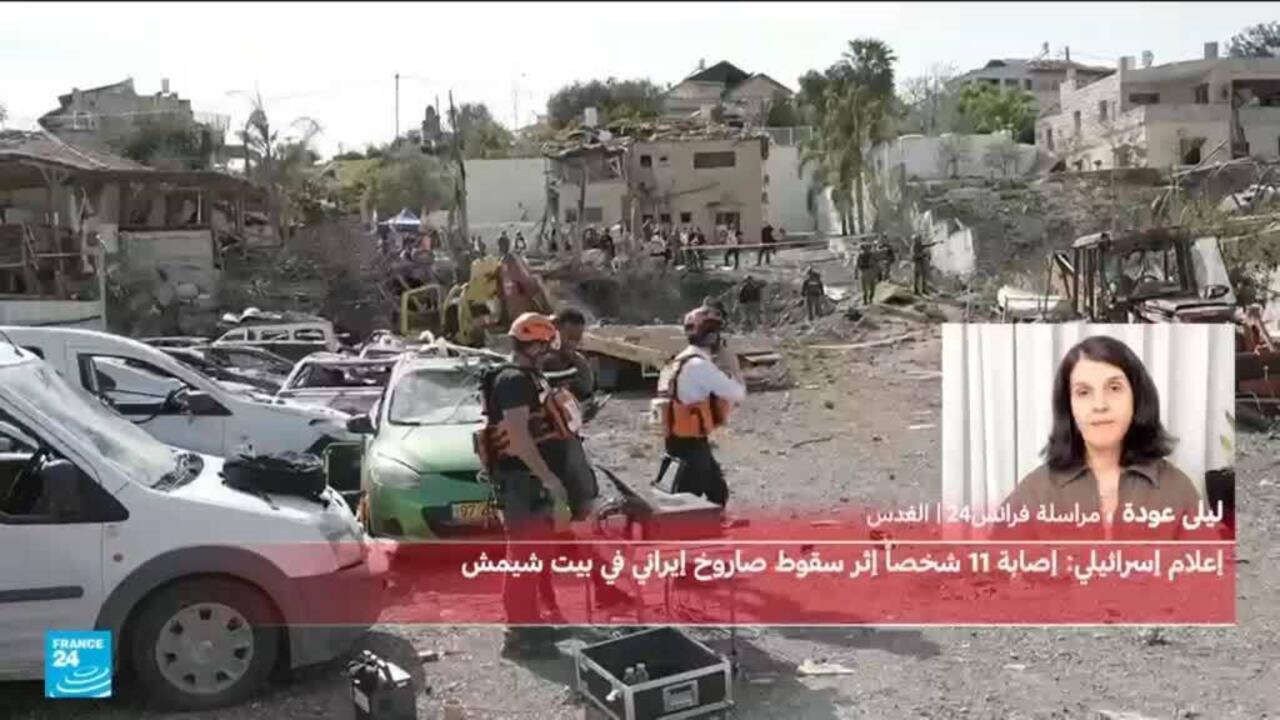
Two explosions were heard over Jerusalem on Saturday, marking a serious development following the Israeli military's announcement of detecting missiles launched from Iran. These events coincide with escalating tensions between Israel and Iran, as the Israeli military has conducted a series of airstrikes on the Iranian capital, intensifying the situation in the region.
The explosions heard in the skies over Jerusalem raised widespread concern among residents, with many questioning the nature of these blasts and whether they indicate a potential military escalation. At the same time, Israeli military sources confirmed that these missiles were aimed at strategic sites in Israel, reflecting the increasing tensions between the two parties.
Details of the Incident
According to preliminary data, the missiles were detected by Israeli defense systems, leading to the activation of sirens in several areas. Reports indicated that Israeli air defenses managed to intercept some of these missiles, but the explosions heard were the result of concurrent military operations.
The Israeli military did not specify the number of missiles launched, but confirmed that these attacks are part of a response to increasing Iranian threats. It also noted that the military operations carried out against targets in Tehran aimed to undermine Iranian military capabilities.
Background & Context
Historically, relations between Israel and Iran have seen increasing tensions, particularly in recent years. Iran is considered one of the largest supporters of armed groups in the region, such as Hezbollah and Hamas, heightening Israeli fears of potential attacks. Additionally, the Iranian nuclear program is a major point of contention between the two sides, with Israel fearing that this program could lead to Iran acquiring nuclear weapons.
In recent years, the Israeli military has intensified its attacks on Iranian sites in Syria, where it is believed that Iran uses these locations to transfer weapons to armed groups. This dynamic contributes to escalating tensions in the region, making it difficult to reach a peaceful resolution.
Impact & Consequences
The recent escalation between Israel and Iran could lead to serious repercussions for regional security. If mutual attacks continue, we may witness a broader military escalation that could affect the stability of the entire region. Furthermore, these events could increase tensions between major powers, such as the United States and Russia, which have conflicting interests in the area.
Moreover, military escalation could impact the regional economy, as conflicts may lead to reduced foreign investments and increased unemployment rates. The psychological impact on the population will also be significant, as many will feel unsafe amid these tense conditions.
Regional Significance
Considering the potential impact on the Arab region, the escalation between Israel and Iran may lead to increased divisions among Arab states. Some countries may find themselves forced to choose between supporting Iran or Israel, complicating relations among Arab nations. Additionally, the conflict could affect peace efforts in the region, potentially leading to a decline in dialogue among the various parties.
In conclusion, the situation in the region remains tense, and the international community must intervene to mitigate escalation and ensure peace and stability. Recent events serve as a reminder that conditions in the Middle East remain fragile, and any escalation could lead to catastrophic outcomes.