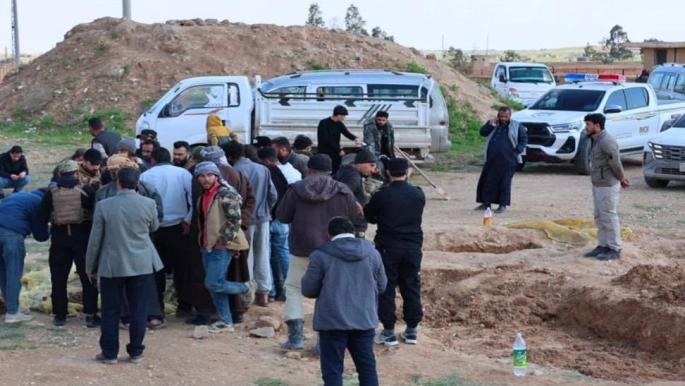
Recent heavy floods that swept through Al-Hasakah province in northeastern Syria have revealed several mass graves in the Shaddadi area, located in the southern countryside of the province. This discovery sheds light on the tragic humanitarian dimensions of the ongoing conflict in Syria and raises questions about the fate of the victims who may have been buried there.
This phenomenon is attributed to the heavy rains that the region has experienced, which led to rising water levels and uncovered lands that were previously hidden under debris. These graves were found by rescue and search teams that were assessing the damage caused by the floods.
Details of the Discovery
Reports indicate that search teams have discovered multiple mass graves, raising concerns about the number of victims who may have been buried at these sites. Human rights organizations have documented these discoveries, emphasizing the need for an investigation into the circumstances surrounding these graves.
These discoveries come at a time when Syria is suffering from the effects of the ongoing conflict, with estimates suggesting that the number of victims could reach hundreds of thousands. This makes it essential to document these cases to ensure justice for the victims and their families.
Background & Context
Since the outbreak of the conflict in Syria in 2011, the country has witnessed numerous grave human rights violations, including mass killings and enforced disappearances. Many mass graves have been documented in various regions of the country, reflecting the scale of the humanitarian tragedy that Syria is enduring.
The Al-Hasakah region is one of the areas that has seen an escalation in conflict, with several armed factions present, complicating the security and humanitarian situation. The region also suffers from a severe lack of basic services, exacerbating the suffering of local residents.
Impact & Consequences
These discoveries could increase pressure on local and international authorities to investigate these cases and ensure accountability for those responsible for the violations. They may also contribute to enhancing efforts aimed at achieving justice for the victims and their families.
Furthermore, these findings could affect humanitarian efforts in the region, as they may require additional support and assistance for those affected by the conflict. They could also lead to increased international awareness of the humanitarian conditions in Syria.
Regional Significance
These discoveries serve as a harsh reminder to the international community of the need to act to resolve the conflict in Syria and ensure the protection of civilians. They also reflect the significant challenges facing the region in terms of human rights and highlight the urgent need to support peace and reconciliation efforts.
In conclusion, these discoveries remain a testament to the humanitarian tragedies that Syria is experiencing, necessitating collective action to ensure that such events do not recur in the future.