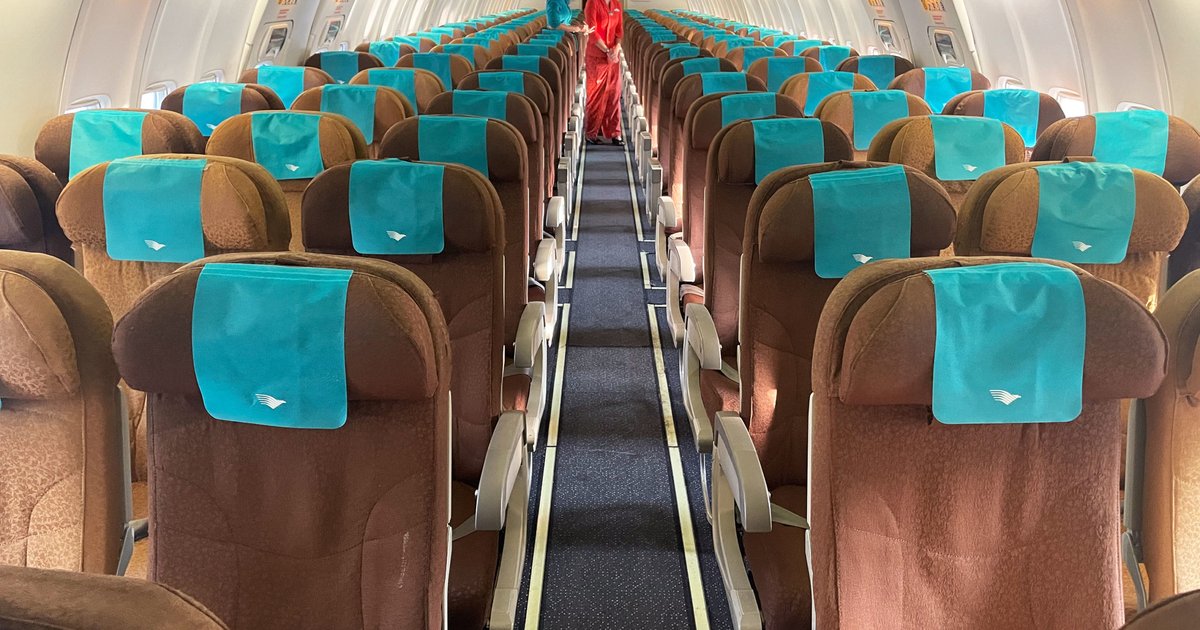
Reports indicate that Danantera Investment Management has confirmed that the performance of Garuda Indonesia, one of the largest airlines in the country, will begin to improve by early 2026. This announcement was made during a press conference held by Danantera's Chief Operating Officer, Doni Oskaria, in Jakarta, where he noted that the improvement is a result of financial interventions implemented in the previous year.
Oskaria explained that the pressures facing Garuda in 2025 are still evident in its financial reports, pointing out that these pressures stem from the period prior to the intervention. He affirmed that the improvement in performance will be clearly visible in the first and second quarters of 2026.
Details of the Situation
Garuda Indonesia faces significant challenges, having recorded a net loss of 319.39 million USD during 2025. Among the main factors affecting performance was a large number of non-operational aircraft, which led the company to incur additional costs, particularly in terms of rentals. Additionally, maintenance and repair operations for the aircraft require considerable time, complicating the situation further.
Despite these challenges, Oskaria noted that positive signs have begun to emerge, especially through the performance of Citilink, a subsidiary of Garuda, which achieved positive results in the first quarter of 2026. He confirmed that improvements are not limited to merely injecting funds but also require radical shifts in management and operations.
Background & Context
Garuda Indonesia was established in 1949 and has since become one of the leading airlines in Southeast Asia. However, the company has faced significant challenges in recent years, including intense market competition and financial pressures resulting from the COVID-19 pandemic, which has affected the aviation industry as a whole.
In recent years, the Indonesian government has made several attempts to support Garuda, including injecting substantial investments through Danantera, with 23.67 trillion Indonesian Rupiah (approximately 1.6 billion USD) allocated to support the company's operations. A significant portion of these funds has been earmarked for maintenance and service improvements, reflecting the government's commitment to supporting the aviation sector.
Impact & Consequences
The improvement in Garuda Indonesia's performance could have positive effects on the Indonesian economy as a whole. The airline plays a vital role in connecting Indonesia to the world and enhancing tourism and trade. If Garuda can regain its market position, this will boost investor confidence and promote economic growth.
Moreover, Garuda's success could serve as a model for other airlines in the region facing similar challenges. Performance improvements may encourage new investments in the aviation sector, enhancing companies' ability to compete in global markets.
Regional Significance
Given the trade and tourism links between Indonesia and Arab countries, the improvement in Garuda Indonesia's performance could open new avenues for cooperation. The company's recovery could lead to an increase in flights between Indonesia and Arab nations, facilitating the movement of tourists and businesspeople.
Amid the challenges facing the global aviation industry, Garuda's success is an example of how to overcome crises through sound planning and government support. This can serve as an important lesson for Arab countries seeking to bolster their aviation sectors.