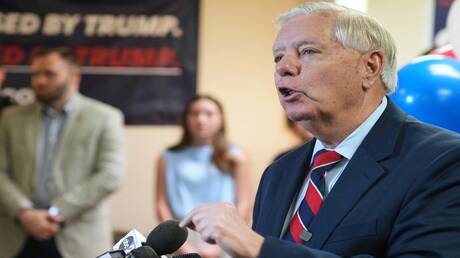
In a provocative statement, prominent U.S. Senator Lindsey Graham affirmed his full support for the ultimatum issued by President Donald Trump to the Iranian regime, indicating that there could be severe consequences for Tehran if it does not respond to two specific demands. This statement comes at a sensitive time when U.S.-Iran relations are experiencing increasing tension.
Graham, who is one of the leading Republican figures supporting Trump's policies, warned that the United States would utilize its overwhelming military power if Iran continues to ignore its demands. He pointed out that these demands relate to halting destabilizing nuclear activities and ceasing support for militias in the region.
Details of the Statement
During a press conference, Graham stated, "If Iran does not stop developing its nuclear program, and if it does not cease supporting terrorist groups, the United States will take military action." These remarks come at a time when fears are rising that Iran may be close to developing a nuclear weapon, which is considered a red line for the United States and its allies.
Graham also added that military options must remain on the table, and that the United States would not hesitate to use them if necessary. These statements reflect Trump's hardline policy towards Iran, which includes imposing strict economic sanctions as well as bolstering the U.S. military presence in the region.
Background & Context
The roots of tensions between the United States and Iran date back several decades, with a notable escalation in relations since Trump's withdrawal from the Iranian nuclear deal in 2018. This withdrawal led to the re-imposition of harsh economic sanctions on Tehran, significantly impacting its economy.
In recent years, Iran has increased its military activities in the region, including its support for militias in Iraq, Syria, and Lebanon. These activities have raised concerns among the United States and its allies, who view them as a threat to regional security.
Impact & Consequences
Graham's statements could escalate tensions between Iran and the United States, increasing the likelihood of military conflict in the region. Should any military action be taken, it could destabilize the Middle East and affect oil prices and global markets.
Moreover, these statements may impact U.S. relations with its allies in the region, as some may feel apprehensive about the potential for military escalation. On the other hand, these remarks could strengthen the position of hardliners in Iran, making it more challenging to reach a diplomatic resolution.
Regional Significance
The tensions between the United States and Iran have a direct impact on Arab countries, especially those suffering from conflicts like Iraq, Syria, and Yemen. Any military escalation could lead to negative repercussions for security and stability in these nations.
Arab countries may find themselves compelled to take decisive stances in the event of any escalation, which could affect their alliances and regional and international relations. In this context, the importance of diplomatic dialogue emerges as a means to avoid military escalation.
In conclusion, the situation in the region remains complex and requires diligent diplomatic efforts to prevent any escalation that could lead to severe consequences for regional and international security.