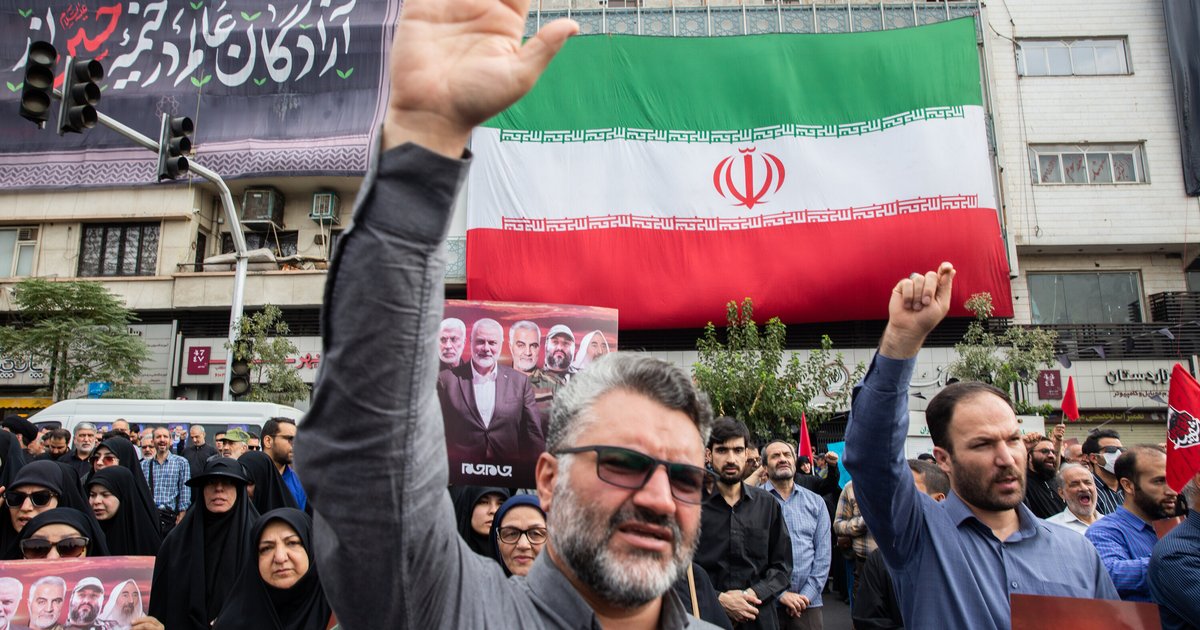
Feelings of anxiety and uncertainty are on the rise in Iran, where citizens face daily challenges manifested in continuous bombardment and strict surveillance by the authorities. Many express their fears that war may leave the ruling regime intact, further escalating tension and anxiety within Iranian society.
Under these circumstances, Iranians go to bed each night wondering if they will wake up the next day. This psychological state reflects the depth of the crisis the country is experiencing, where fears of war intertwine with internal repression.
Details of the Situation
Reports indicate that ongoing bombardment in certain Iranian regions, coupled with repressive measures taken by the authorities, has exacerbated the instability. Iranians live under constant pressure, as the government imposes strict restrictions on freedom of expression and monitors the daily activities of citizens.
Concerns are growing that any military escalation could worsen the situation, with some believing that the regime may exploit these circumstances to strengthen its power rather than initiate change. This dynamic raises significant alarm among citizens, who feel trapped between the specter of war and the regime's repression.
Background & Context
Historically, Iran has witnessed numerous political and military crises, beginning with the Islamic Revolution in 1979 and the subsequent internal and external conflicts. This historical backdrop reinforces the current state of anxiety, as citizens feel they are living in a vicious cycle of conflict and instability.
Additionally, regional tensions, especially with neighboring countries, play a role in deepening these fears. Iran, facing challenges on multiple fronts, finds itself in a difficult position that requires a delicate balance between maintaining the regime and responding to the people's demands.
Impact & Consequences
The repercussions of these conditions extend beyond Iran's borders, potentially affecting regional stability. Any military escalation could lead to a flow of refugees into neighboring countries, increasing pressure on those nations. Furthermore, continued repression may trigger popular protests, threatening the stability of the regime itself.
It is also important to note that these conditions could impact the Iranian economy, which is already suffering from international sanctions. Any escalation in conflict may exacerbate economic crises, further increasing the suffering of ordinary citizens.
Regional Significance
Iran is a key player in the region, and any changes in its domestic policy could affect neighboring Arab countries. Conflicts in Iran may lead to shifts in the balance of power in the region, warranting special attention from Arab nations.
The situation in Iran may also influence relations between Arab countries and Iran, potentially leading to increased tensions or even new opportunities for cooperation in certain areas. Therefore, monitoring developments in Iran is essential for understanding regional dynamics.
In conclusion, Iranians live in a state of ongoing anxiety, where fears of war intertwine with internal repression. These conditions are not merely a local issue but have wide-ranging regional implications that require attention and analysis.