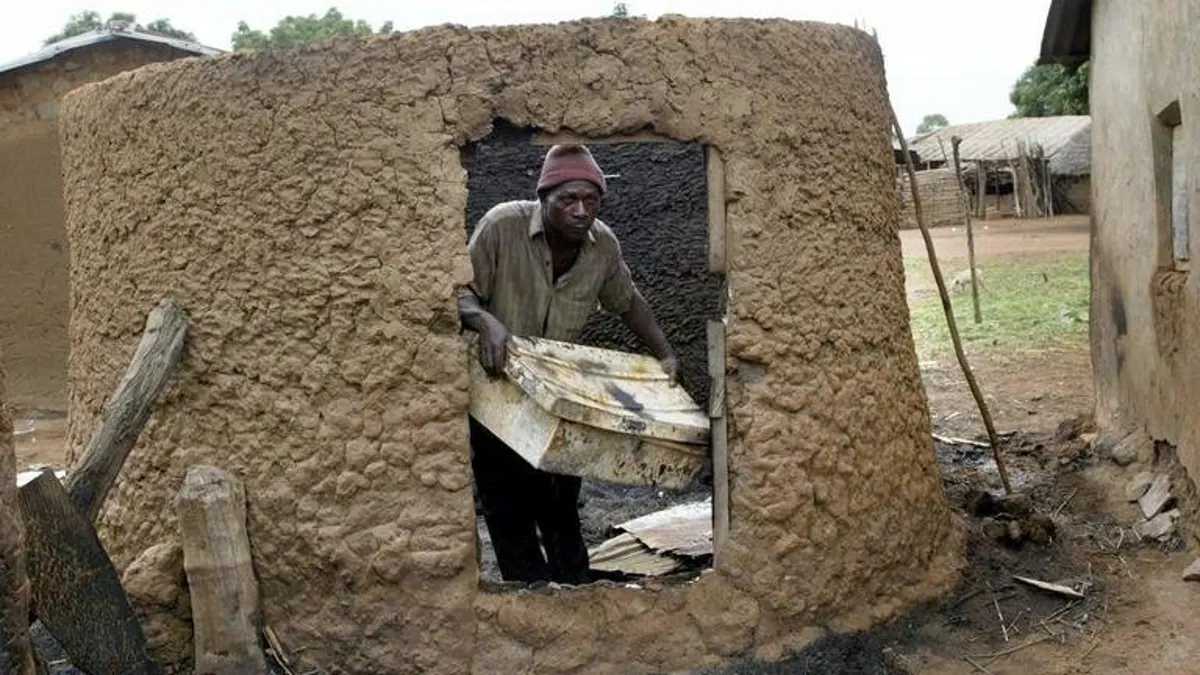
In a horrific attack, at least 20 people were killed in a village located in northwest Nigeria, where gunmen launched a nighttime assault on the residents. The incident occurred late at night, leading to panic and chaos among the local population.
This incident is one of a series of attacks that Nigeria has witnessed in recent years, where violence has notably increased, especially in the northwestern regions. The recent attack reflects the significant security challenges faced by the Nigerian government in its efforts to control the situation.
Details of the Attack
According to reports, the gunmen stormed the village in the late hours of the night, targeting homes indiscriminately, resulting in multiple fatalities. Eyewitnesses reported that the attack lasted for an extended period, with the assailants using advanced firearms, which intensified the panic among the residents.
It is worth noting that this area suffers from insecurity, with such attacks occurring periodically. Reports have shown that the gunmen often target remote villages, making it difficult for security forces to reach them in a timely manner.
Background & Context
Historically, Nigeria has seen a rise in violence, particularly since the emergence of the Boko Haram group in 2009, which has been responsible for numerous bloody attacks in the northern part of the country. As violence has escalated, other armed groups have emerged, complicating the security situation further.
The Nigerian government is striving to combat these groups, but it faces significant challenges, including a lack of resources and poor coordination among security forces. Additionally, poverty and unemployment in the northern regions play a role in the proliferation of violence, as young people find themselves vulnerable to recruitment by these groups.
Impact & Consequences
These incidents significantly affect the lives of local residents, many of whom live in a state of fear and anxiety. The increasing violence hinders development efforts and exacerbates the suffering of the population, leading to worsening humanitarian crises.
Moreover, the deteriorating security situation in Nigeria could impact regional stability, as the effects of violence may spill over into neighboring countries, increasing tensions in the region.
Regional Significance
Although Nigeria is far from the Arab world, events there raise widespread concern. Security and stability in any region directly affect Arab interests, especially in trade and investment.
Furthermore, the rise in violence in Nigeria could lead to increased illegal migration towards Arab countries, putting additional pressure on Arab governments to address migration and asylum issues.
In conclusion, the events in Nigeria serve as a reminder of the complexity of security situations worldwide and highlight the urgent need for effective strategies to combat violence and achieve stability in the region.