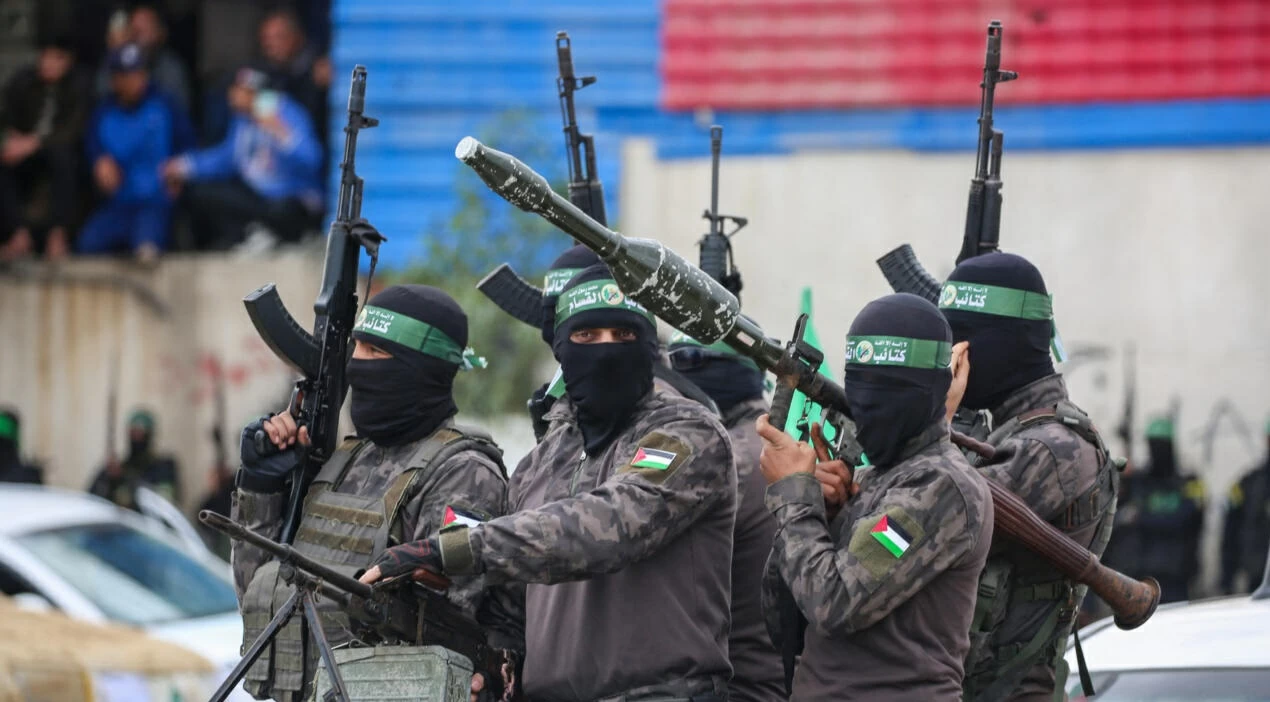
Hamas announced today, through its official spokesperson Abu Ubaida, its categorical rejection of the idea of disarming Palestinian factions before completing the first phase of the Gaza agreement. Abu Ubaida emphasized that raising this issue poses a significant threat to Palestinian resistance.
In a recorded statement, Abu Ubaida explained that there are Israeli attempts to circumvent the commitments outlined in the ceasefire agreement, noting that "Israel seeks to impose this on Palestinian resistance and the people of Gaza through intermediaries, which is extremely dangerous."
Details of the Event
The Hamas spokesperson pointed out that the Palestinian side has fulfilled its commitments with utmost sincerity and respect for the efforts of the mediators, calling for pressure on Israel to complete its obligations in the first phase before moving to the second phase. He asserted that the U.S. administration must bear its responsibilities in this context.
He also added that the Israeli side is the one obstructing the agreement, citing reports from the United Nations and international organizations, affirming that "we will not accept the issue of weapons being raised in such a blunt manner under any circumstances." He stressed that what the Israeli army cannot seize through military force will not be obtained through politics or negotiations.
Background & Context
Hamas is currently engaged in intensive diplomatic movements between Cairo and Ankara, where a delegation from the movement met with Turkish President Recep Tayyip Erdoğan in Istanbul, following a round of negotiations in Cairo. Palestinian sources confirmed that consultations will resume in Egypt next week to transition to the second phase of the ceasefire agreement.
Hamas has also requested Turkey to play a guarantor role in implementing the terms of the ceasefire agreement in the Gaza Strip, alongside the Egyptian mediation role, particularly regarding the complete Israeli withdrawal from Gaza and providing guarantees against renewed fighting.
Impact & Consequences
The Palestinian weapons file is entering a new negotiation track, where ideas are being discussed that include managing weapons within a unified Palestinian framework, while keeping heavy weapons in designated warehouses under Turkish-Egyptian supervision. A timeline extending up to three years has also been proposed to address the file according to a step-by-step mechanism, rejecting disarmament under the current Israeli conditions.
These developments indicate a complexity in the situation in Gaza, where fears of a new escalation in the conflict are increasing, especially in light of Israel's failure to adhere to the signed agreements.
Regional Significance
These events directly impact the situation in the Arab region, highlighting the importance of the Egyptian and Turkish roles in mediating between the Palestinian factions and Israel. The ongoing tension in Gaza could affect stability in neighboring countries and exacerbate regional conflicts.
In conclusion, the situation in Gaza remains complex and requires intensive international and regional efforts to achieve peace and stability in the area.