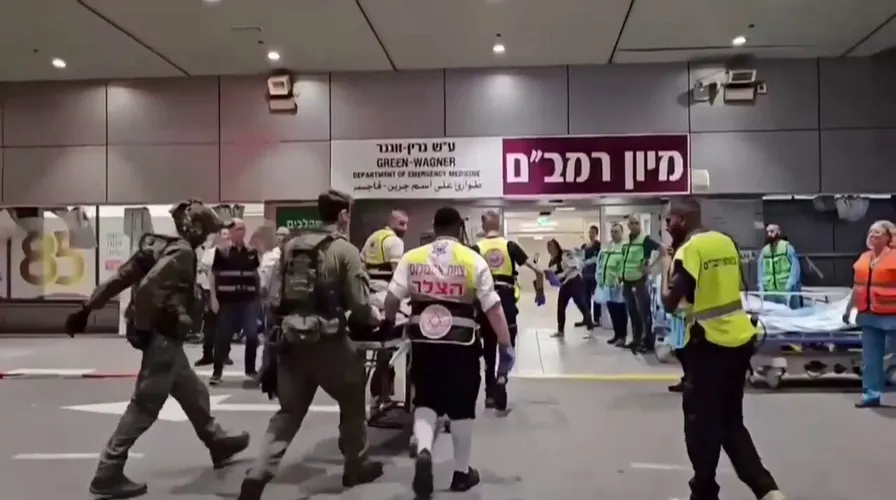
In a new escalation of tensions in the region, the Lebanese Hezbollah announced its targeting of Israeli settlements with rockets, hitting Lyman at 02:25, Hurfish at 00:30, and other settlements such as Shlomi and Nahariya.
These operations occur at a sensitive time, as the Lebanese-Israeli border is witnessing increasing tensions, raising concerns about a larger escalation in the ongoing conflict. Hezbollah confirmed in its four separate statements the targeting of these settlements, reflecting the continuity of its strategy to respond to what it considers Israeli aggressions.
Details of the Event
Hezbollah reported that it launched rockets at the Lyman settlement at 02:25, directing a rocket barrage towards it. It also announced the targeting of the Hurfish settlement at 00:30, indicating precise coordination in the timing of the attacks. Additionally, settlements in Shlomi and Nahariya were targeted, reflecting the scope of the military operations carried out by the party.
These attacks are part of Hezbollah's strategy to respond to Israeli military operations, as the party seeks to demonstrate its military strength and ability to target deep into Israeli territory. The party indicated that these operations are in defense of Lebanese sovereignty.
Background & Context
Historically, the Lebanese-Israeli border has seen numerous armed conflicts, with Hezbollah being one of the prominent armed factions in the region. The party was established in the 1980s in response to the Israeli occupation of Lebanon, and since then, it has become a key player in the Arab-Israeli conflict.
In recent years, tensions between Hezbollah and Israel have escalated, especially following the last war in 2006, which resulted in significant losses on both sides. The situation in Syria and its impact on Hezbollah have further complicated the security landscape in the region.
Impact & Consequences
These attacks underscore the rising tensions in the region, which may lead to military responses from the Israeli side. Israel is expected to respond strongly to these attacks, potentially intensifying the conflict and affecting regional security.
Moreover, these operations could impact the relations between Lebanon and Israel, possibly leading to a broader military escalation. Under these circumstances, the situation in the region remains fragile, with the potential for conflict to erupt at any moment.
Regional Significance
These events hold significant importance for the Arab region, reflecting the ongoing Arab-Israeli conflict and its impact on regional security. The escalation of tensions may also affect neighboring countries, raising concerns about the outbreak of new conflicts.
In light of these circumstances, Arab countries must take clear positions regarding these developments, as stability in the region depends on how these recurring crises are managed. Current events highlight the need for diplomatic efforts to resolve conflicts and achieve peace in the region.