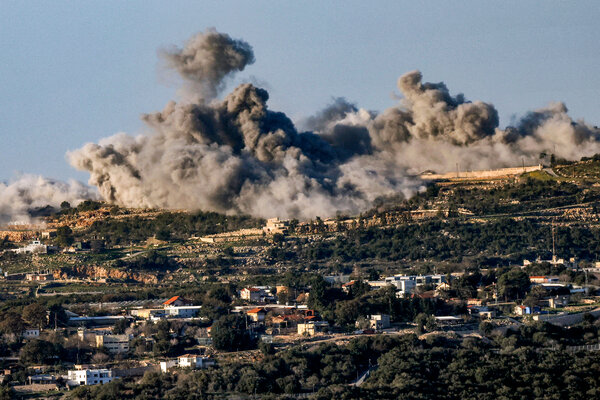
Hezbollah announced on Sunday that it targeted an Israeli warship that was preparing to launch an attack on Lebanese territory. The strike took place approximately 68 miles (109.4 kilometers) from the Lebanese coast, utilizing guided missiles after hours of monitoring the target.
The group stated in a press release that the attack was a response to Israeli escalation in the region, as the ship was preparing for military operations against Lebanon. It was confirmed that the direct strike was recorded, heightening tensions between the two parties.
Details of the Incident
These developments come at a time when Lebanon has been experiencing military escalation since March 2, when Hezbollah resumed its missile attacks on Israeli territory. These strikes are occurring amid military operations being conducted by the United States and Israel against Iran, complicating the security situation in the region.
In response, Israel has conducted airstrikes on various areas in Lebanon, including the south, the Bekaa Valley, and the suburbs of Beirut. On March 16, the Israeli army announced the commencement of a ground military operation in southern Lebanon, reflecting the increasing intensity of the conflict between the two sides.
Background & Context
Historically, relations between Lebanon and Israel have been tense, with the region witnessing numerous armed conflicts. Hezbollah, established in the 1980s, is considered one of the prominent armed factions in Lebanon and has played a key role in resisting Israeli occupation. As regional tensions escalate, the conflict between Hezbollah and Israel has become more complex, especially with the involvement of major powers in the area.
These events intersect with other conflicts in the Middle East, where regional and international powers compete for influence. Tensions between Iran and Israel cast a shadow over the situation in Lebanon, where Hezbollah is regarded as a key ally of Tehran in the region.
Impact & Consequences
The recent attack by Hezbollah on the Israeli warship could lead to greater escalation in the conflict, threatening security and stability in Lebanon and the region. Military escalation may open the door to a new round of violence, adversely affecting civilians on both sides.
This escalation may also impact relations between Lebanon and Western countries, especially amid international pressure to de-escalate the situation. Major powers, such as the United States and Russia, are expected to monitor the situation closely, as these events could influence their strategies in the region.
Regional Significance
The ramifications of this conflict extend beyond Lebanese borders, potentially affecting regional security overall. Conflicts in Lebanon may reignite tensions in neighboring countries, such as Syria and Palestine, further complicating the security situation in the region.
The rise in violence could also impact peace and stability efforts in the Middle East, as many countries seek to achieve political settlements. Under these circumstances, hope for peaceful solutions remains elusive, raising concerns about worsening conditions.