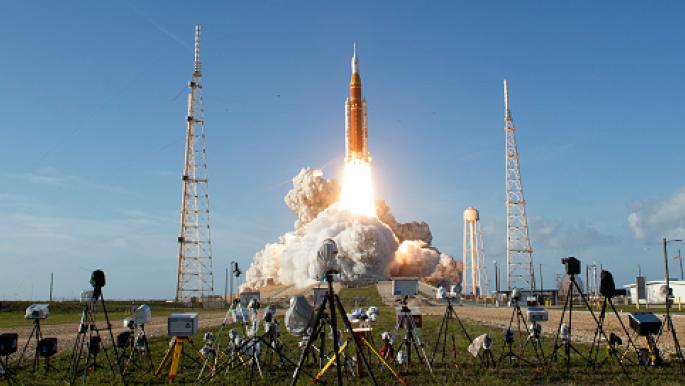
In a historic event, four astronauts launched aboard a NASA rocket on Wednesday evening for a crewed mission around the moon, the first since 1972. This mission is part of the Artemis program, which aims to return humans to the moon and explore more of outer space.
The four astronauts, representing a diverse range of backgrounds, will play their roles in this historic mission that NASA hopes will open new horizons for space exploration. This journey is part of broader efforts to enhance international cooperation in space and increase scientific understanding of the moon and outer space.
Details of the Launch Event
The rocket launched from the Kennedy Space Center in Florida, where the moment of liftoff was met with great enthusiasm from attendees and viewers around the world. The rocket is equipped with the latest technology to ensure the safety of the astronauts and the success of the mission. The journey will take several days, during which the astronauts will conduct scientific experiments and explore the lunar surface.
This mission is not just an exploratory journey; it is part of a larger plan to establish a permanent base on the moon, enabling humans to conduct further explorations in the future. Additionally, this journey will help develop new technologies that can be used in future missions to Mars.
Background & Context
The last crewed mission to the moon was in 1972, when the Apollo 17 spacecraft landed on the lunar surface. Since then, space programs have seen significant developments, but astronauts have not been sent to the moon again. This launch comes at a time when there is increasing global interest in space, with many countries striving to achieve milestones in this field.
The Artemis program, initiated by NASA, aims to return humans to the moon by 2024, focusing on empowering women and youth to participate in space exploration. This program represents an important step towards achieving larger goals in exploring other planets.
Impact & Consequences
This mission is considered a significant step in enhancing the United States' position in the space race, as it competes with other nations such as China and Russia. The success of this mission could bolster the United States' ability to lead international efforts in space exploration and provide a strong impetus for innovation in this field.
Moreover, this journey could open new avenues for international cooperation in space, allowing other countries to join these collective efforts. The success of this mission may also stimulate new investments in space technologies, benefiting the global economy.
Regional Significance
For Arab countries, this event represents an opportunity to enhance cooperation in the field of space. Many Arab nations have already begun developing their own space programs, such as the United Arab Emirates, which launched the Hope Probe to Mars. These missions can have a positive impact on education and scientific research in the region, enhancing the capabilities of Arab youth in the fields of science and technology.
Furthermore, the success of this mission may inspire more Arab countries to invest in space programs, contributing to the development of scientific and technological infrastructure in the region.
The launch of this crewed mission to the moon represents a new beginning in space exploration, reflecting NASA's ambitious goals. As developments continue in this field, there is hope for achieving new milestones that will benefit all of humanity.